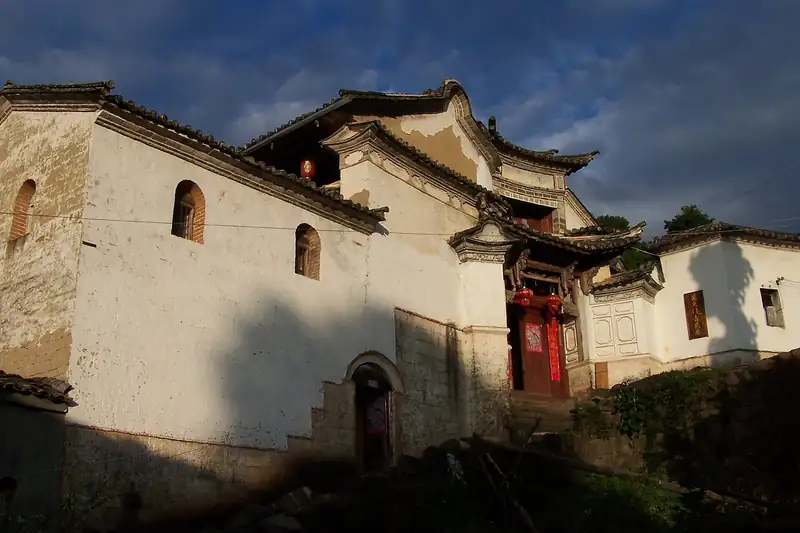
Most Yunnan trips run north from Kunming to Dali and Lijiang. This one heads west instead, to the edge of the province where China meets Myanmar: Tengchong's volcano country and hot springs, the old overseas-Chinese village of Heshun, and the palm-lined Dai towns of Mangshi and Ruili. It's the loop for a second trip, and in Heshun many repeat visitors stay three nights rather than one.
Trains don't reach Tengchong or the Dehong towns yet (the railway west of Baoshan is still being built toward Ruili), so you fly into Tengchong from Kunming, about an hour, and do the loop by road. The three towns sit roughly 1.5–3 hours apart on expressways, which makes a car and driver the easy choice. Tengchong is around 1,600 m and the Dehong towns are lower still, so altitude isn't a concern.
Prices as of 2026; check before you go.
Who it's for
- You've already seen Dali and Lijiang, or you'd rather skip them.
- You'd rather spend slow mornings in one village than tick off a sight list.
- You like hot springs, Second World War history (the 1944 battle to retake Tengchong happened here) or Southeast Asian food.
- Not ideal if you want snow peaks, need to travel only by train, or have just a few days in Yunnan.
The route at a glance
- Fly into Tengchong and settle into Heshun
- A slow day in Heshun, from lakeside mist to a sunset bookshop
- Volcanoes, a floating wetland and the war cemetery
- Drive to Mangshi for pagodas at sunset and a night market
- Ruili and the border village split between two countries
- Back to Tengchong for a Wa village and a final hot-spring soak
Prices as of 2026; check before you go.
Before you go
Getting there
- Fly (best). Kunming to Tengchong Tuofeng Airport 腾冲驼峰机场 takes about an hour, with daily flights. The airport is about 12 km from Tengchong town. To finish somewhere else, Dehong Mangshi Airport 德宏芒市机场 also has flights to Kunming, so you can fly in to one airport and out of the other.
- From Dali by road. About 4.5 hours on the expressway. This makes sense if you're already in Dali with a driver.
- By train, partly. Bullet trains reach Baoshan 保山 from Dali and Kunming. From there it's about 2.5 hours to Tengchong by bus or shared car. Since April 2026 the line west of Baoshan runs only as far as Pupiao 蒲缥, about 15 minutes away. The rest of the route to Ruili is still being built, with full opening expected around 2028, so trains don't help for the rest of the loop.
Driver or taxis?
Foreign driving licenses aren't valid in China, so you'll either hire a car with a driver or use taxis.
- Days 1–2 (Heshun): no car needed. You walk everywhere.
- Day 3 (around Tengchong): taxis work. Hops between sights cost about ¥10–50, and ride-hailing apps work in town. City bus 6 runs to Heshun and bus 2 to Rehai, but both are infrequent. A driver for the day saves waiting at the volcano park and the wetland, where taxis are scarce.
- Days 4–6 (Mangshi, Ruili, back): hire a driver. There are no trains, the loop is about 5–7 hours of driving in total, and a driver can wait at Moli and the border village. Book one based in Tengchong for the three days, and agree in writing whether tolls, fuel and the driver's meals and room are included.
Passports and the border
This is a border region. There are frontier inspection points on the roads into and out of Dehong, and police may check your passport on buses or at the roadside. Keep your passport on you every day, not in the hotel safe. You can see Myanmar from Ruili, but crossing isn't part of this route. The land border here isn't a practical tourist crossing, and Western governments advise against travel in the Myanmar areas on the other side.
Payments work as they do elsewhere in China. Set up Alipay or WeChat Pay before you arrive (see payments) and carry a little cash for village stalls.
Day by day
Day 1 Fly into Tengchong, settle into Heshun
Land, check in and walk Heshun's quieter western half before dinner.
- Morning Fly to Tengchong. A taxi to Heshun Old Town 和顺古镇 takes about 30 minutes and costs about ¥30–45. Use the taxi line or a ride-hailing app, never the unlicensed drivers in arrivals.
- Afternoon Buy the village ticket, about ¥55, valid for seven days with re-entry. Walk the west loop in this order:
- Coffee at 椿野咖啡, a café near the west end that makes a good starting point.
- The Thousand-Hand Guanyin trees 千手观音古树群, five enormous old Yunnan camphors over a stone caravan path behind the Bolian hot-spring resort 柏联温泉. People who stay in Heshun for days call this the place to sit for half an hour.
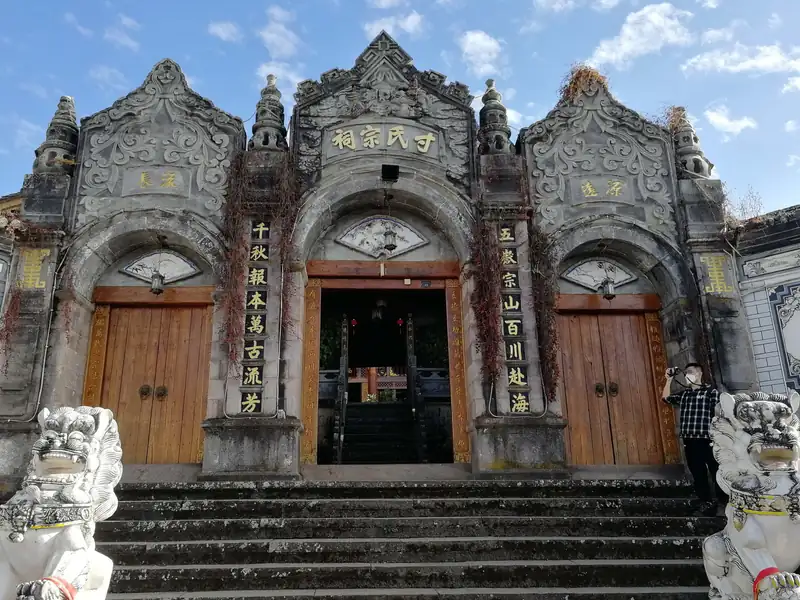
- The Cun clan hall 寸氏宗祠, the oldest of Heshun's eight clan halls (1808). Its 1935 gateway mixes Chinese and European design with Roman-style arches. Heshun families traded and worked in Burma for generations and brought ideas home with their money.
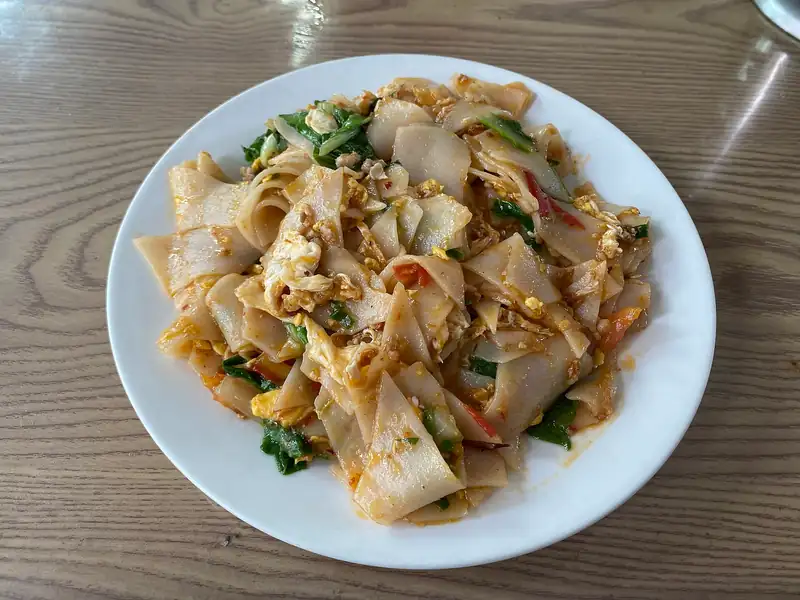
- Evening Dinner at Mama's Taste 妈妈的味道, a home-style Tengchong restaurant in the village, about ¥100 per person. Order dajiujia 大救驾, stir-fried rice cake with ham and greens. Its name means "saved the emperor," from a local legend about a fleeing Ming emperor who was fed it here.
Overnight: Heshun, a courtyard guesthouse inside the village (west side for quiet)
Day 2 A slow day in Heshun
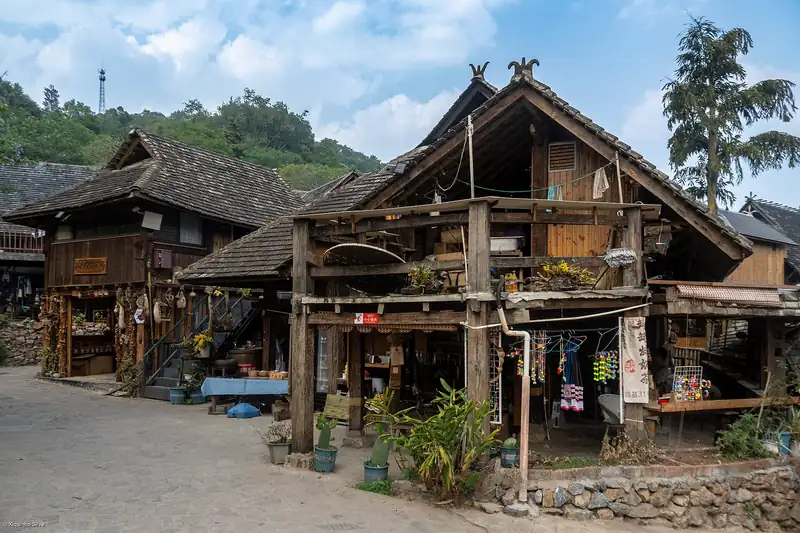
This is the day that makes the route. Heshun is a lived-in village, not a rebuilt one, and it's at its best before 10 am and after 4 pm.
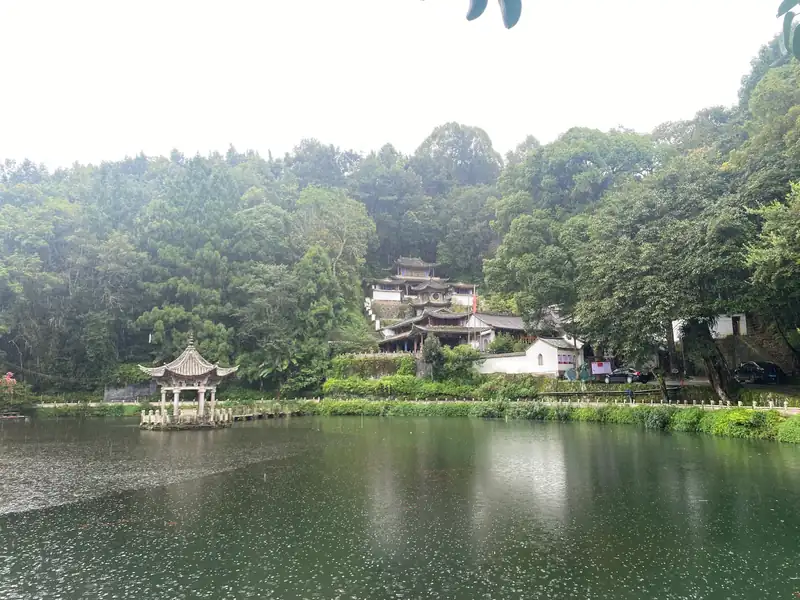
- Early morning All of China runs on Beijing time, so out here winter mornings stay dark until around 8. Walk to Wild Duck Lake 野鸭湖 as it gets light. Mist lies on the water and residents fish from the banks. Loop past the old laundry pavilions 洗衣亭 along the stream at the village front, where people still rinse clothes, to the Dragon Pool 龙潭 and Yuanlong Pavilion 元龙阁, a Taoist temple beside the water. In winter the mist over the pool often lingers until about 9, so you don't need to be out at first light.
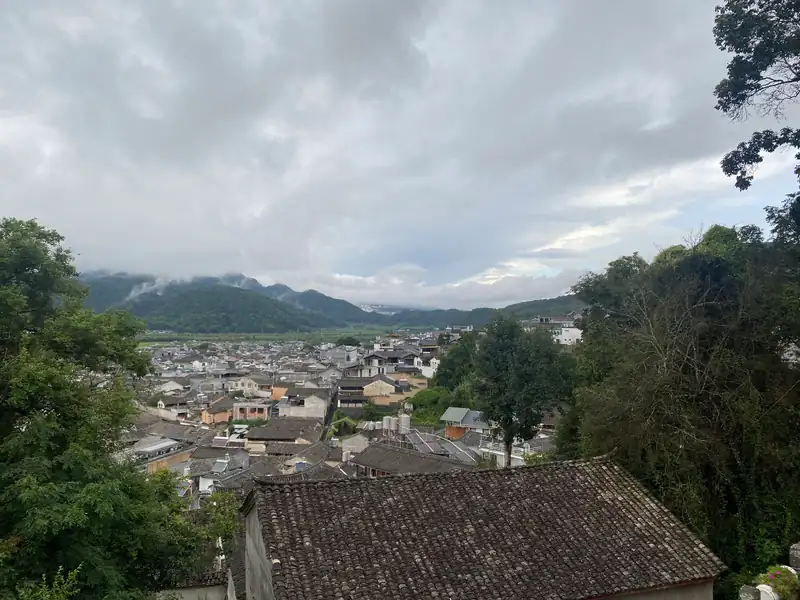
- Breakfast Find the morning market lane 小菜街 and order xidoufen 稀豆粉, a hot pea porridge you eat with fried dough or rice cake. Then climb past the market to Zhongtian Temple 中天寺 for the best free view over Heshun's rooftops.
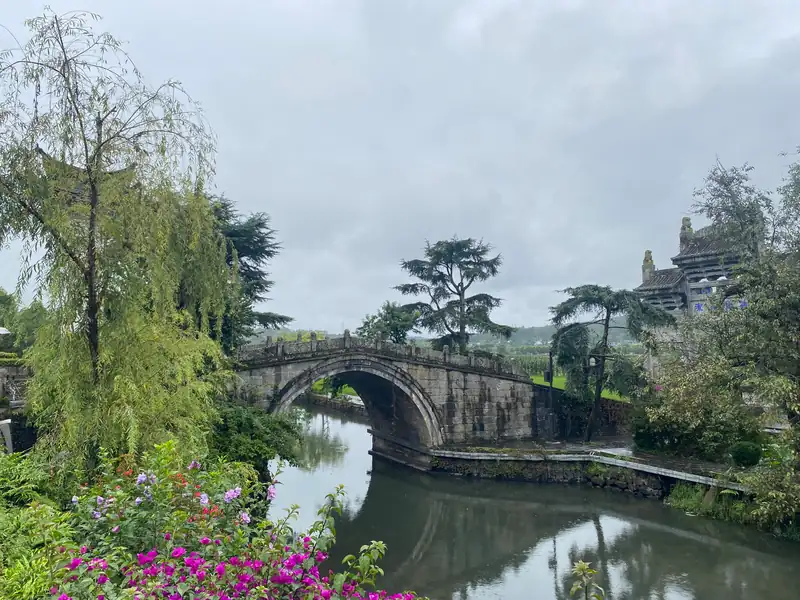
- Morning The Li clan hall 李氏宗祠 opens at about 9. Stand inside the gate and frame Wild Duck Lake through the doorway, the photo everyone comes for. Cross the Double Rainbow Bridge 双虹桥, then visit the Heshun Library 和顺图书馆. It was founded in 1928 with help from Heshun families abroad, is among China's best-known village libraries, and its 1938 main building mixes Chinese and Western styles.
- Afternoon The east side of the village is spread out, so take the shuttle or rent an e-bike if your legs are tired. Take a boat out on Xianhe Wetland 陷河湿地. Then find the lane by the Dashuya restaurant 大树丫餐厅, where old trees and a stone platform make what long-stay visitors call the least-changed corner of Heshun. Rest at your guesthouse through the heat of the afternoon.
- Evening Sunset from Shushu Bookshop 数数书局 on the east side. For dinner, book Ahua's Kitchen 阿花味厨, set in a century-old house, where the chef serves a set meal of local dishes for about ¥200 per person. For something cheaper, try the wild-mushroom hotpot at 食野菌火塘 near the big opera stage 大戏台 on the east side.
Overnight: Heshun
Day 3 Volcanoes, a floating wetland and the war cemetery
North of town in the morning, back into Tengchong in the afternoon. Hire a driver or taxi for the day.
- Early morning Drive about 30–40 minutes north to Tengchong Volcano Geopark 腾冲火山地质公园. If you want to ride a hot-air balloon, go first. They usually fly only until about 11 am and don't fly at all in wind or rain, so check the weather the night before and swap days if needed. Climb Dakongshan 大空山 for the view across the field of cones, then walk up Xiaokongshan 小空山 to look down into a crater.
- Late morning Beihai Wetland 北海湿地, a lake whose surface is partly covered by floating mats of grass and roots. You can ride a bamboo raft and step onto the mats, which give under your feet like a waterbed.
- Lunch In Tengchong town. Yansheng Xiaoguan 岩升小馆 serves Yunnan home cooking for about ¥150 per person. Or look for copper-ladle beef 铜瓢牛肉, beef simmered and served in a copper ladle, a Tengchong specialty.
- Afternoon The Western Yunnan Anti-Japanese War Memorial Museum 滇西抗战纪念馆 and Guoshang Cemetery 国殇墓园 share a site on the southwest edge of town. The cemetery was completed in 1945 for the Chinese Expeditionary Force soldiers killed retaking Tengchong in 1944. Its more than 3,000 headstones climb a hill in rings around a central memorial. A separate memorial honors the 19 American servicemen who died in the battle. The museum opened in 2013. Allow two hours. Entry is free but by timed reservation: ask your guesthouse to help book a slot, or scan the code at the entrance, and bring your passport. It's closed on Mondays, so swap Day 3 with Day 2 if it falls on one.
- Evening Back to Heshun. Try flaky pasu buns 破酥包 or a bowl of pork rice noodles 烧肉米线 if you want something light.
Overnight: Heshun
Day 4 Tengchong to Mangshi
About 1.5–2 hours south on the expressway to a warm, quiet town of palms and pagodas. It often feels more like Thailand than China. Your driver starts today.
- Morning A last Heshun breakfast, then drive to Mangshi 芒市, the Dehong prefecture seat, at about 900 m. Expect a passport check at a frontier inspection point on the way.
- Lunch Your first Dai meal. Try sapie 撒撇, a dipping salad for beef and rice noodles. The lime version 柠檬撒 is the easy one. The bitter version 苦撒 gets its taste from bitter juice from cattle and is an acquired taste. Add pounded chicken feet 舂鸡脚, sour and fiery. Dai food leans sour and spicy, so order mild if your stomach is sensitive.
- Afternoon See the Tree-Wrapped Pagoda 树包塔, a small old pagoda gripped by the roots of the tree growing out of it. Walk the palm-lined road outside Puti Temple 菩提寺, then have a coffee by Peacock Lake 孔雀湖. Dehong is one of China's main coffee-growing areas.
- Late afternoon After 4 pm, head up Leiyarang hill to the Menghuan pagodas. The gold one, Menghuan Golden Pagoda 勐焕大金塔, was finished in 2007 and, at about 73 m, is billed as China's tallest Theravada pagoda. It looks best from a distance. Spend your time at the Menghuan Silver Pagoda 勐焕大银塔, where a shallow pool reflects the pagoda and the sunset. Shared e-bikes aren't allowed up the hill, so take your car, a rented e-bike or the shuttle bus. On the way down, stop at the mid-hill viewpoint to see the last light on the golden pagoda.
- Evening Xinwanchang Night Market 新玩厂夜市 is neon-lit and has the widest choice. The night market in the Dai old town 傣族古镇 is calmer. For a sit-down dinner, go to Amiao Restaurant 阿妙餐厅 for its mint pork ribs, stir-fried porcini and mango beef.
Overnight: Mangshi, near the town center and the Dai old town
Day 5 Mangshi to Ruili and the border
Breakfast in Mangshi, then about 1.5 hours to Ruili 瑞丽, the trading town on the Myanmar border.
- Breakfast Mangshi's breakfasts are a reason to come. Try Burmese milk tea with shuaibaba 甩粑粑, a thin pancake stretched and fried like roti. Or try paoluda 泡鲁达, crisp bread and sago soaked in sweet coconut milk. For a savory start, 银家早点 lets you add your own condiments. 烂路早点 seasons its bowls with mujiangzi 木姜子, a lemony mountain pepper. Buy fruit for the road at Hongli Market 宏利市场.
- Late morning Drive to the One Village, Two Countries 一寨两国 site at Yinjing 银井. Here the border runs straight through a Dai village, with houses and even a swing straddling the line. Photograph the boundary markers, but stay on the Chinese side.
- Lunch Burmese oil noodles 缅甸油面, cold noodles dressed with oil, peanuts and herbs. Go carefully with hand-mixed rice noodles 过手米线 if you have a sensitive stomach, because some versions use raw or lightly cooked meat.
- Afternoon Choose one:
- Moli Tropical Rainforest 莫里热带雨林 outside town. It's a forest walk up a valley to a waterfall, the green option.
- Jiegao 姐告, the border-trade zone and crossing. China National Highway 320, which starts in Shanghai, ends here. Browse the jade market if you're curious, but only to look.
- Evening Ruili has been much quieter since the pandemic years. Have a simple dinner, try the Burmese-style crab if you see it on a menu, and get an early night.
Overnight: Ruili, a hotel in the town center
Day 6 Back to Tengchong, a Wa village and a final soak
About 2–3 hours back to Tengchong on expressways, depending on the route your driver takes, then an easy afternoon near the airport.
- Morning Drive back to Tengchong and continue to Simola Wa Village 司莫拉佤族村 on the town's southern side. It has rammed-earth houses under thatched roofs. People live here, so ask before you photograph anyone.
- Afternoon Rehai 热海, the "Hot Sea," a geothermal park of steaming vents and springs. Its centerpiece is the Big Boiling Pot 大滚锅, a spring hot enough to cook eggs, which you can buy and eat on the spot. Paths are wet and slippery, so wear shoes with grip. Then soak. Keep it to about 20 minutes at a time, with breaks, especially after a long drive.
- Evening Tuofeng Airport is a short drive away, so you can take an evening flight to Kunming. If you'd rather stay, spend a last night at Mayugu hot-spring village 玛御谷温泉小镇. It's quieter than Rehai, and many of its guesthouses have private pools.
Overnight: flight home, or Mayugu or Heshun
Where to eat
Ahua's Kitchen 阿花味厨
A set menu of Tengchong dishes chosen by the chef, served in a century-old Heshun house. This is the splurge meal of the trip, so book a day ahead.
Mama's Taste 妈妈的味道
Home-style local cooking in Heshun. Order dajiujia, copper-ladle beef and whatever greens are in season.
Wild-mushroom hotpot 食野菌火塘
A fire-pit hotpot restaurant near the east-side opera stage. It's best in mushroom season, roughly June to September.
Yansheng Xiaoguan 岩升小馆
Yunnan home cooking in Tengchong town, handy for lunch on Day 3.
Pea porridge at the morning market 稀豆粉
A hot, savory yellow porridge, the Heshun breakfast. Eat it with fried dough or rice cake from the market lane.
Amiao Restaurant 阿妙餐厅
The favorite sit-down Dai meal in Mangshi. Order the mint pork ribs, stir-fried porcini and mango beef.
Mangshi breakfasts 银家早点 · 烂路早点
Noodle breakfasts where you season your own bowl. Also try clay-pot rice noodles 罐罐米线 and, if you're brave, stinky-tofu rice noodles 臭豆腐米线.
Burmese milk tea and paoluda 缅甸奶茶 · 泡鲁达
Sweet tea, a stretched pancake and the coconut-milk dessert. You'll find them in tea shops all over Mangshi and Ruili.
Where to sleep
- Heshun, 3 nights. Stay in a courtyard guesthouse inside the village rather than a hotel in Tengchong town. The west side and the lanes back from the main pond are quietest. When you book, ask whether they can register foreign guests (能接待外宾吗), since not every small guesthouse can.
- Mangshi, 1 night. Stay central, walking distance from the Dai old town and the night markets.
- Ruili, 1 night. A mid-range hotel in the center. There's little reason to stay near Jiegao.
- Optional last night. Mayugu hot-spring village, for a guesthouse with its own pool.
What to skip
- Jade shopping in Ruili. Look at the market for the spectacle, but don't buy unless you know stones.
- Roadside "duty-free" shops and jewelry pitches. If a driver or stranger suggests one, say no.
- Unlicensed cars at Tengchong airport or the Heshun gate. Use the taxi line, a ride-hailing app or your booked driver.
- Heshun's main pond road at midday. Day-trippers and tour groups fill it from late morning to mid-afternoon. That's your time for the wetland, a nap or the library.
- A close-up tour of the golden pagoda. It's big rather than old. The silver pagoda at sunset is the better hour.
Seasons and festivals
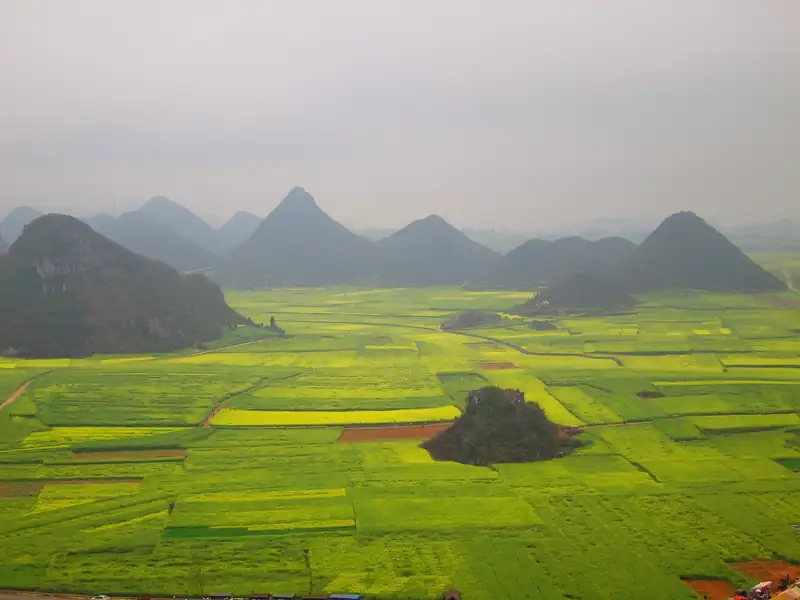
- November–April (best). Dry, sunny days and cool nights, with a big swing between them, so pack layers. From mid-November into early December, the Ginkgo Village 银杏村 near Gudong 固东, north of Tengchong, turns gold. It's an easy add-on for Day 3 if you have a driver. In February and March, canola flowers fill the valleys around Jietou 界头.
- February: the Jingpo people's Munao Zongge dance festival is held in Mangshi and other Dehong towns around the Lantern Festival (the 15th day of the first lunar month; February 20 in 2027). Exact dates are announced locally. See festivals.
- Mid-April: the Water-Splashing Festival (Dai New Year) in Mangshi and Ruili. Expect to get soaked and to pay more for hotels, so book early.
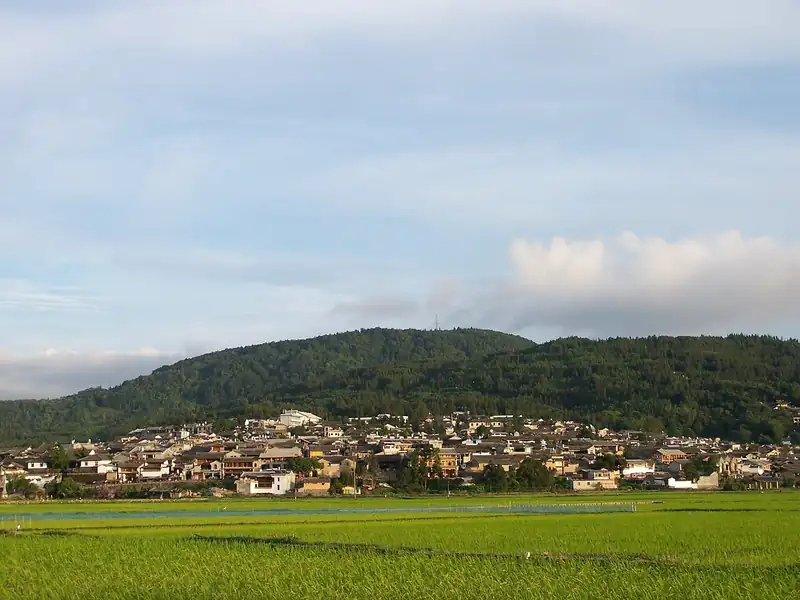
- May–October: the rainy season. Dehong is hot and humid, and the balloons fly less often. The upside is green rice fields, misty mornings in Heshun and wild-mushroom season.
The sun is strong year-round. Bring sunscreen and a hat.
Costs at a glance
- Tengchong airport to Heshun by taxi: about ¥30–45
- Heshun village ticket: about ¥55, valid 7 days with re-entry
- Taxi hops around Tengchong: about ¥10–50
- Expressway tolls: about ¥63 Tengchong–Mangshi and about ¥130 Ruili–Tengchong (check whether your driver's quote includes them)
- Dinner at Ahua's Kitchen: about ¥200 per person; Mama's Taste: about ¥100; Yansheng Xiaoguan: about ¥150
- Driver for Days 4–6: quoted per day, so compare two quotes and get the total in writing
If you'd like us to line up a driver or the Heshun guesthouse, tell us your dates.
Driver cards
Show these to your driver, a taxi or a guesthouse. Each line is written the way you'd say it.
你好,请带我去和顺古镇,我住在古镇里面。
Hello, please take me to Heshun Old Town. I'm staying inside the village.
请带我去腾冲火山地质公园,先去大空山。
Please take me to Tengchong Volcano Geopark, Dakongshan first.
请带我去北海湿地,然后回腾冲城里吃午饭。
Please take me to Beihai Wetland, then back into Tengchong for lunch.
请带我去滇西抗战纪念馆和国殇墓园。
Please take me to the Western Yunnan War Memorial Museum and Guoshang Cemetery.
下午四点以后请带我们去勐焕大银塔看日落。
After 4 pm, please take us to the Menghuan Silver Pagoda for sunset.
请带我去瑞丽一寨两国景区(银井)。
Please take me to the One Village, Two Countries site at Yinjing, Ruili.
请带我去莫里热带雨林,我们要走到瀑布。
Please take me to Moli Rainforest. We want to walk to the waterfall.
请带我去司莫拉佤族村,然后去热海大滚锅。
Please take me to Simola Wa Village, then to the Big Boiling Pot at Rehai.
我们不去购物店、免税店和玉石店,谢谢。
We won't visit shopping stops, duty-free shops or jade shops, thank you.
过路费、油费和您的食宿都包含在价格里吗?
Are tolls, fuel and your meals and room included in the price?
请少放辣,我不太能吃辣。
Less chili please; I can't handle much spice.
请送我去腾冲驼峰机场。
Please take me to Tengchong Tuofeng Airport.