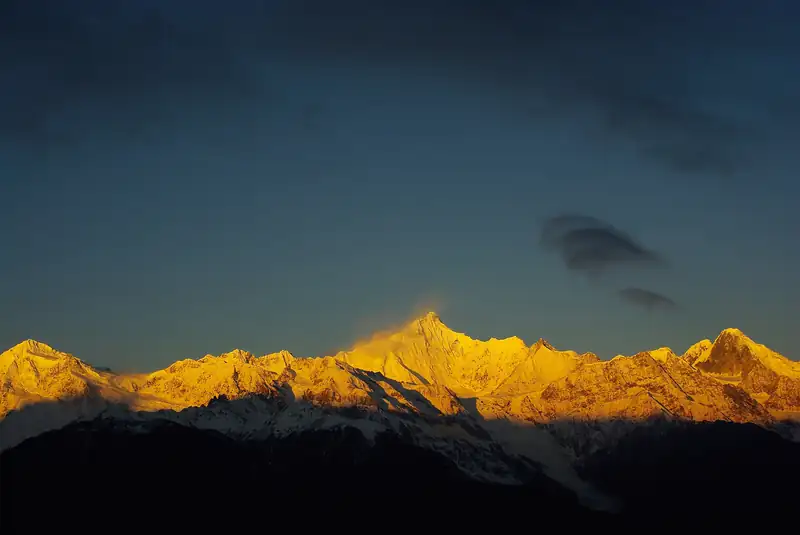
Kawagebo 卡瓦格博, the 6,740 m summit of the Meili Snow Mountains 梅里雪山, is Yunnan's highest peak and one of the most sacred mountains in the Tibetan world. It has never been climbed. On a clear winter morning, the first sun turns the whole range gold, a moment known in Chinese as rìzhào jīnshān 日照金山, "sunlit golden mountain."
The trouble is that the mountain hides. Most visitors drive up from Shangri-La, spend one night at Feilaisi 飞来寺, wake to cloud and drive back. As regulars put it: you don't come to see the mountain, you come to wait until it's willing to be seen. This route is built around waiting well. It gives you three sunrises at Feilaisi, fills the hours in between with a glacier, a monastery and a Tibetan Catholic church, and twice drops you into warm river valleys to sleep low.
Who it's for
- Travelers already acclimatized in Shangri-La. Spend at least two nights there first; our altitude guide explains why.
- People happy to walk 3–4 hours at around 3,000 m. Nothing here is technical, but it's steady uphill.
- Anyone with a spare day or two. Weather rules this corner of Yunnan, and the route only works if you don't need to be anywhere on a fixed morning.
- Not for tight schedules, heart or lung conditions that rule out 3,400 m, or summer trips where the view is the whole point. From June to September the peaks are usually in cloud.
You travel with a hired car and driver. Public buses reach Deqin 德钦, but not the viewpoints, Mingyong or Cizhong on any useful schedule. Foreign driving licenses aren't valid in China without a local permit, so self-driving isn't an option for most visitors.
The route at a glance
- Day 1: Shangri-La to Benzilan: a pottery village, then down into the Jinsha valley to sleep low.
- Day 2: Benzilan to Feilaisi, past the river's great bend, a hillside monastery and the Baima Snow Mountain range.
- Day 3: Your first sunrise, then Mingyong Glacier.
- Day 4: Your second sunrise, then down the Lancang valley to Cizhong.
- Day 5: Cizhong's church and vineyards, then back up to Feilaisi.
- Day 6: Your third sunrise, then the drive back to Shangri-La.
The full guide also covers the Yubeng 雨崩 trek extension, including the shuttle to the village that began trial runs in September 2026.
Everything below assumes a hired car and driver from Shangri-La. At the end you'll find the Yubeng 雨崩 trek extension, costs, stays, what to skip and a set of driver cards in Chinese.
Before you go
Permits and borders
Deqin County 德钦县, which covers everything on this route, is part of Yunnan. You don't need a Tibet Travel Permit, only your passport, which hotels and some ticket booths will ask to see. The G214 continues north from Feilaisi into the Tibet Autonomous Region toward Yanjing 盐井. Foreigners need a permit and an organized tour to cross that line, so don't let anyone talk you into "just popping over" to see the salt pans.
Getting to the start
Spend at least two nights in Shangri-La (about 3,200 m) before you set off. Come up from Lijiang by train (about 1.5 hours) rather than flying straight in from Kunming. If you can't hire a driver, buses run several times a day from Shangri-La's passenger bus station 香格里拉客运站 to Deqin town, taking about 3.5–5 hours for about ¥64. From Deqin, shared minivans and taxis cover the 10 km to Feilaisi. You'll be stuck for Mingyong and Cizhong, though, and you'll lose the stops along the way. For this route a driver isn't a luxury.
Choosing a driver
Book a driver based in Shangri-La who has driven the G214 in the season you're going. Get a fixed, written price that covers the car, fuel, tolls, parking and the driver's own meals and rooms for all six days. Settle in advance whether waiting time at viewpoints costs extra: this route is mostly waiting. If you'd rather not arrange it yourself, we can book a licensed driver for you.
The altitude profile
- Shangri-La: about 3,200 m
- Benzilan, in the Jinsha valley: about 2,000 m (night 1)
- Baima Snow Mountain pass: 4,292 m on the old road; most traffic now uses a tunnel below it
- Feilaisi: about 3,400 m (nights 2, 3 and 5)
- Mingyong village: about 2,300 m, with the glacier trail topping out near 2,960 m at Lianhua Temple
- Cizhong, in the Lancang valley: around 2,000 m (night 4)
- Yubeng villages (extension): about 3,100–3,200 m, with day hikes to around 3,800–3,900 m
If you get a pounding headache, nausea or breathlessness at rest, don't push on to the next viewpoint. Go down. From Feilaisi, the Lancang valley is less than an hour's drive below you. Deqin County People's Hospital 德钦县人民医院 is in Deqin town.
Weather and timing
- October to April is the window. November to January brings the clearest mornings and the hardest cold, well below freezing at dawn. February to April is milder, with more cloud as spring moves on.
- June to September is the monsoon. Expect cloud on the peaks most days and landslides that close stretches of G214 or the Lancang valley road for hours. The forests and meadows are green and flowering, but go then for the walking, not the view.
- Sunrise light hits the peaks at about 7:15–7:30 am in October, around 8 am in December and about 8:15 am in January, all on Beijing time. Be in position 30–40 minutes earlier.
- Read the sky the night before. Check a cloud-cover forecast before committing to a viewpoint. A clear sky at 10 pm doesn't guarantee a clear peak at 8 am. Guesthouse owners at Feilaisi have seen thousands of mornings, so ask what they think.
- Holidays: Avoid National Day week (October 1–7) and Chinese New Year if you can. Rooms at Feilaisi sell out, and the main viewing platform turns into a crowd.
- 2027 is a Sheep year in the Tibetan calendar, from Tibetan New Year in February 2027. The Sheep is Kawagebo's birth sign. Pilgrims walk the long circuit around the mountain in far greater numbers in Sheep years, so expect busier roads and guesthouses, and give pilgrims space on the trails.
What to pack
Even in summer: a windproof shell, fleece, gloves, hat, non-slip shoes, sunglasses, strong sunscreen and a rain poncho. Add a headlamp for pre-dawn walks and hand warmers for December mornings. Carry cash for village ticket booths, horses and small guesthouses; signal is patchy in the valleys.
Day by day
Day 1 Shangri-La to Benzilan: sleep low
About two hours of driving, roughly 80–100 km depending on stops. You descend more than 1,000 m before tomorrow's big climb.
- Morning Leave Shangri-La after a slow breakfast on the G214 northwest, passing Napa Lake 纳帕海. Within an hour, stop at Tangdui village in Nixi 尼西汤堆村, where families make black pottery 尼西黑陶 from local clay mixed with sand. Several households welcome visitors into their workshops. Buy a small cup, a butter lamp or a lidded pot. The pieces are hand-formed and fired at low temperature, so pack them well.
- Afternoon The road coils down to Benzilan 奔子栏 on the Jinsha River 金沙江, with Sichuan on the opposite bank. This was a Tea Horse Road crossing for centuries, and it's still where drivers stop to eat on the way to Deqin. After lunch, climb into the older lanes above the highway, among flat-roofed Tibetan houses and walnut trees. Benzilan is known for its hand-turned wooden bowls, and you may see a lathe at work.
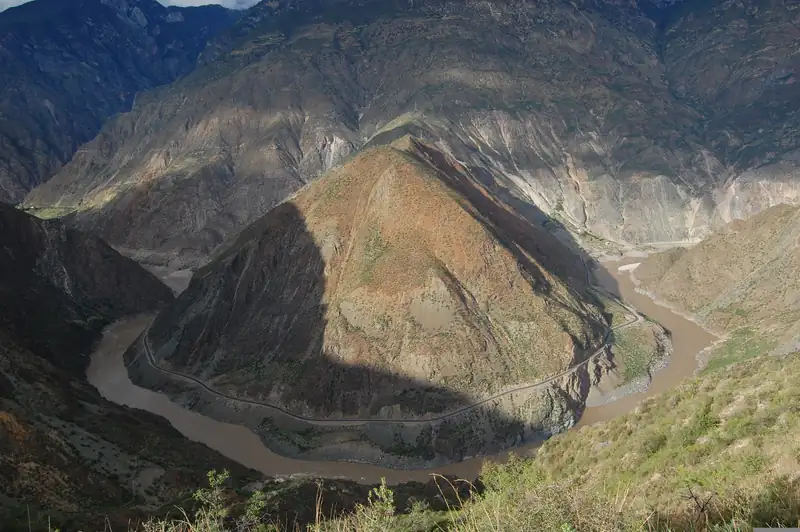
- Late afternoon If you have energy, drive about 10 km (20 minutes) on toward Deqin to the Jinsha River Great Bend 金沙江大湾 (also called Moon Bay 月亮湾), a ticketed viewpoint where the river loops almost back on itself far below. The best angle is from the side end of the railing, not the middle. Late in the day the tour vans have gone. Otherwise, go tomorrow morning.
- Evening A yak meat soup pot 牦牛肉汤锅: drink the broth first, then dip the meat in dry chili powder. Skip alcohol and go to bed early.
Overnight: Benzilan (about 2,000 m), a simple inn set back from the highway. Ask for a back room; trucks run late on G214.
Day 2 Over Baima Snow Mountain to Feilaisi
The high day, about 3–4 hours of driving plus stops. You climb from the Jinsha valley through the Baima Snow Mountain 白马雪山 nature reserve and drop to Deqin on the Lancang side.
- Morning The Great Bend if you skipped it yesterday. Then Dongzhulin Monastery 东竹林寺, a Gelug monastery on the slope above G214 north of Benzilan and one of the most important in Diqing. It's far quieter than Songzanlin. Walk clockwise, leave a small offering if you enter a hall, and ask before photographing monks.
- Midday The road climbs into fir forest and then open slopes. Most traffic now takes the tunnel beneath the old 4,292 m pass. On a clear, dry day, ask your driver whether the pass road is open and safe. If it is, the top gives you a first look at the high ranges. In winter, snow and ice can make it a firm no. Either way, don't linger at the top if your head starts to ache.
- Early afternoon Wunongding viewpoint 雾浓顶, with its row of white stupas above the road to Deqin. On a clear day this is your first full view of the Meili range. It's ticketed and busy with tour groups, so stop only if the peaks are out. Then Deqin town 德钦县城 for a late lunch, an ATM, a pharmacy and snacks for tomorrow. The county seat is slowly moving south to Yezhi 叶枝 because of landslide risk, but for now the old town's shops and services still work.
- Late afternoon Check in at Feilaisi, 10 km beyond Deqin. Then scout tomorrow's sunrise spot in daylight (see "Feilaisi's viewpoints" below). Walk the path to the hillside platform now, so you can find it in the dark.
- Evening Expect a queue for the yak skewers at "Snow Mountain Yak Skewers" 雪山牦牛肉烤串 on the food street below the main viewpoint. Order and pay first, then wait in line, usually about 30 minutes. The range lies west of Feilaisi, so at sunset it's backlit. Sunrise is the show. Check the cloud forecast and set an alarm.
Overnight: Feilaisi (about 3,400 m), in a room facing the mountains
Feilaisi's viewpoints
Every hotel window and rooftop on the west side of the road looks across the Lancang gorge at the range. These are the places to stand at dawn.
Main viewing platform 飞来寺观景台
The classic frame: white stupas and prayer flags in front, Kawagebo behind. It's ticketed, fenced, and packed at sunrise in October and on holidays. Worth one visit, ideally not your first sunrise.
Hillside platform behind Mingzhu Laka 明珠拉卡酒店后山观景台
The quiet choice. From the roadside by the Mingzhu Laka Hotel, take the small path uphill for 10–15 minutes to a wooden hut, where a small fee is collected. Take the left fork and walk 5 more minutes to a steel platform with an unobstructed view and far fewer people.
Dashuiguan viewpoint 大水罐观景台
About 4 km along G214 from Mingzhu Laka, with big boulders that make a good foreground. It's best in the morning; afternoons get very windy.
Your own rooftop
On a bitter December morning, a hotel roof terrace or a view room is no worse a seat. Choose your hotel for this, and look at a real photo taken from the window before you book.
Day 3 First sunrise, then Mingyong Glacier
Dawn at a viewpoint, a late breakfast, then down to the Lancang and up to the glacier. About 1–1.5 hours' drive each way.
- Dawn Your first chance. Start with the hillside platform behind Mingzhu Laka, where you'll share the view with a handful of people. If the peaks catch the light, the gold lasts only a few minutes, then the whole range turns white. Stay for it.
- Morning Drive down to the Lancang River 澜沧江 (the upper Mekong) and up the far side to Mingyong village 明永村. Buy the glacier ticket and ride the scenic-area shuttle about 6 km up the valley. It's effectively compulsory, since the road is too long and steep to walk. From the drop-off, steps and trail climb the rest of the way.
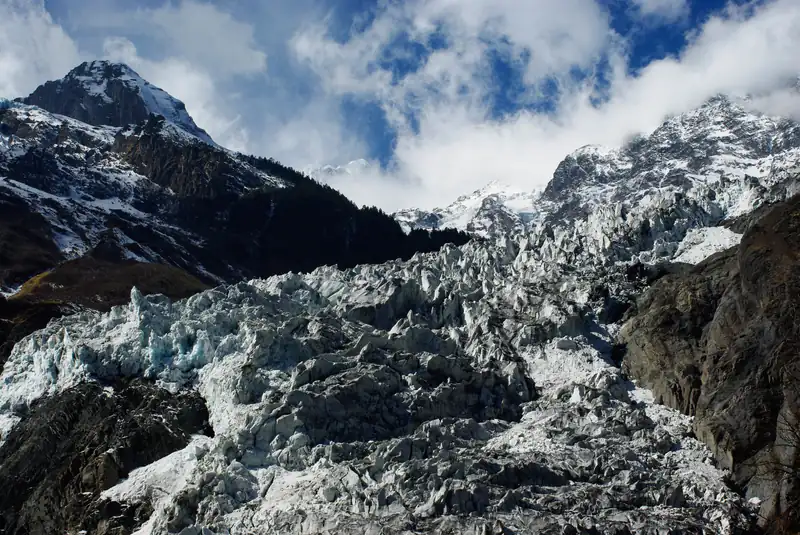
- Midday Mingyong Glacier 明永冰川 pours down from Kawagebo through forest. Its tongue once reached as low as about 2,660 m, among the lowest in China, but it retreated about 1.2 km in the ten years to 2011 alone, so expect far less ice than in old photos. Climb the steps and boardwalks to Taizi Temple 太子庙, where the path forks: left to the glacier viewing platforms, right to Lianhua Temple 莲花寺 (about 2,960 m), which has the best view of the ice and, on a clear day, the summit above it. Allow 3–4 hours in all.
- Afternoon There's no food on the trail, so bring snacks and eat properly back in the village. The boardwalks and paths are slippery after rain; wear shoes with grip. Horses work the trail if your legs are tired; recent reports put them at about ¥100 one way to Taizi Temple.
- Evening Back at Feilaisi, try butter tea 酥油茶 with a highland barley cake 青稞饼, and Tibetan yogurt 藏式酸奶 for dessert.
Overnight: Feilaisi, same hotel. For a quiet night, sleep in a Mingyong village guesthouse instead (about 2,300 m) and give up tomorrow's Feilaisi sunrise.
Day 4 Second sunrise, then down to Cizhong
Another dawn, then about 3 hours south along the Lancang to a Tibetan Catholic village in the warm valley bottom.
- Dawn Try a different spot: Dashuiguan for the boulders, or the main platform for stupas in the frame. If yesterday was clear and you have your shot, sleep in.
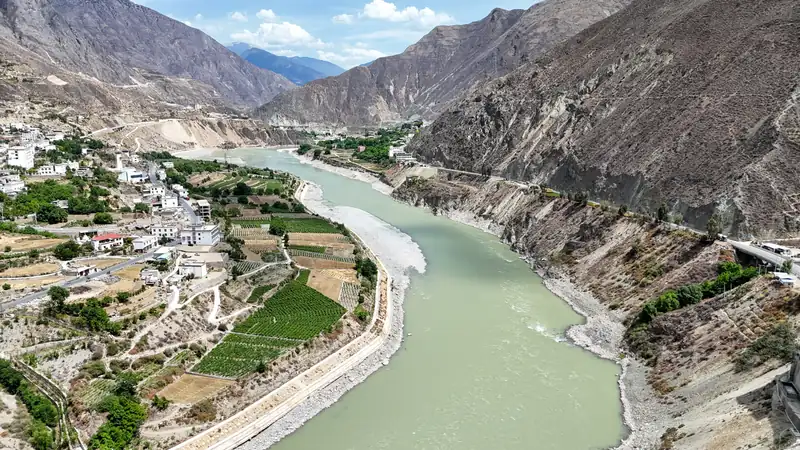
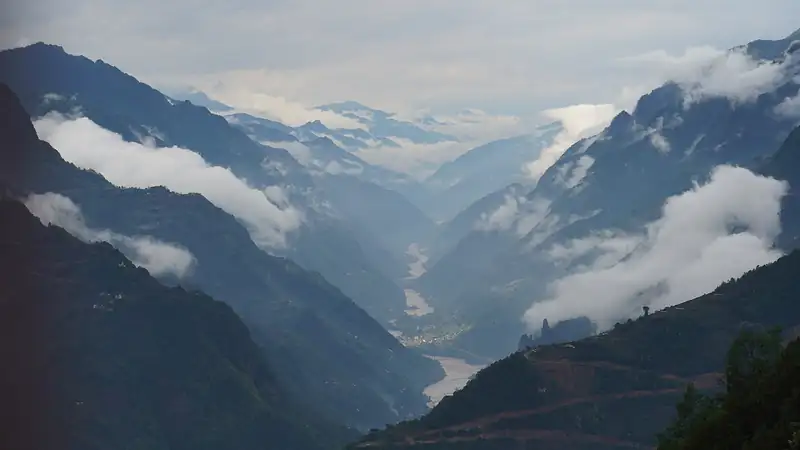
- Late morning Drive back through Deqin and down to the Lancang, then south along the river through Yanmen 燕门. The valley is deep, dry and hot at the bottom, and it's a relief for your lungs after two nights at 3,400 m.
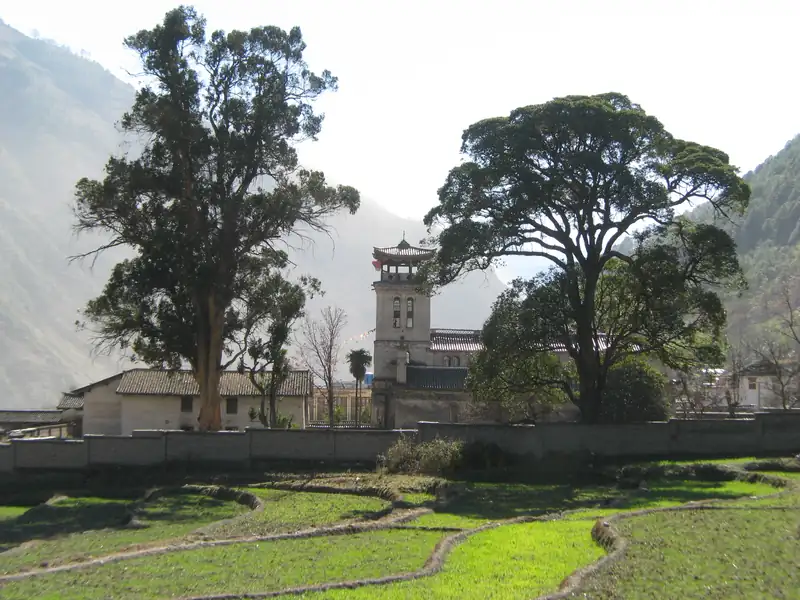
- Afternoon Cizhong Church 茨中教堂. French missionaries first built a church in a nearby village in 1867; after it was destroyed in 1905, they rebuilt at Cizhong between 1909 and 1911. The result mixes a Western Romanesque church with Tibetan, Han and Bai building traditions, and it has been a nationally protected monument since 2006. A local Tibetan Catholic congregation still worships here. If a service or prayer is under way, stay at the back and keep your camera down.
- Evening The missionaries planted vines, and families in the village still make wine. Ask at your guesthouse for a glass of the local red with dinner.
Overnight: Cizhong (around 2,000 m), a family guesthouse near the church
Day 5 Cizhong morning, back up to Feilaisi
A slow morning low down, then about 3 hours back north for one more try at the mountain.
- Morning Walk up through the vineyards and village above the church for the view down the valley. Mornings are cool and bright here even when Feilaisi is freezing.
- Afternoon Drive back to Feilaisi. If you have daylight to spare, visit the small Feilaisi monastery itself, which gives the place its name and which most visitors walk past on their way to the viewpoints.
- Evening Pack the car tonight so you can leave straight after sunrise.
Already had your sunrise? Then go from Cizhong back to Benzilan instead (about 5 hours; check the road with your driver) to sleep low again, and drive the last two hours to Shangri-La on Day 6.
Overnight: Feilaisi, or Benzilan if the mountain has already shown itself
Day 6 Third sunrise, then back to Shangri-La
A final dawn, then about 4–5 hours back over Baima Snow Mountain with lunch in Benzilan.
- Dawn Your last chance. Go to whichever viewpoint you haven't tried.
- Day Drive to Shangri-La, stopping in Benzilan for lunch. If you pass Napa Lake in good light, it's worth 20 minutes.
- Evening Yak hotpot in Dukezong Old Town 独克宗古城 to celebrate, or to console yourself.
Overnight: Shangri-La, Dukezong Old Town. See our Shangri-La guide.
The Yubeng extension (3 extra days)
Yubeng 雨崩 is a pair of villages, Upper and Lower, in a high valley directly under Kawagebo's neighboring peaks. It's the classic trek in Yunnan. It's a separate trip, not an afternoon add-on, so decide before you leave Shangri-La. Slot it in after Day 3: go from Feilaisi to the trailhead at Xidang 西当 (about 1–1.5 hours), then continue to Cizhong when you come out.
Getting in
- The Xidang trail: About 9–12 km, depending on where the road drops you, from Xidang over the Nanzong Pass 南宗垭口 (about 3,700 m) and down to the villages. You climb well over 1,000 m, and most people take 6–8 hours. Horses carry you to the pass for about ¥300, or about ¥200 for the steep middle section only. Agree on the price before you mount.
- The new shuttle: On September 22, 2026, a road to the village opened and shuttle buses from Xidang began trial runs, from 7 am to 6:30 pm. Buses leave when full, and the ride to Lower Yubeng takes about 45 minutes. Launch fares are about ¥117 to the Nanzong Pass, ¥167 to Upper Yubeng and ¥198 to Lower Yubeng, and the return costs the same. Private cars and motorbikes are banned from the village. Management says the hiking trails are unaffected. Expect fares and rules to change, and more day-trippers in the villages than before.
- The Ninong route: About 10 km along the Yubeng River gorge between Lower Yubeng and Ninong village 尼农 above the Lancang, with no supply stops and weak signal. Most hikers walk it downhill as the way out, in 5–6 hours. It narrows to cliff paths in places, and in the rainy season the river floods parts of it. Walk it only in the dry season and with experience.
Day hikes from the villages
Ice Lake 冰湖
From Upper Yubeng up through forest and past the old base camp to a glacial lake under the peaks, at about 3,800–3,900 m. Allow about 8 hours for the roughly 14 km round trip. Horses can take you part of the way for about ¥200.
Holy Waterfall 神瀑
From Lower Yubeng to the waterfall pilgrims walk beneath for blessing, about 6 hours for roughly 12 km round trip. It's the more spiritual walk of the two, with prayer flags and pilgrims along the way. In winter and spring, ask in the village about ice and avalanche risk before going close to the fall.
Sacred Lake 神湖
A 12-hour round trip to about 4,400 m. It's only for fit, acclimatized hikers with a local guide, and not for this route's usual pace.
Staying in Yubeng
Both villages sit at about 3,100–3,200 m and are full of family guesthouses. Upper Yubeng suits the Ice Lake hike and has wider views; Lower Yubeng is closer to the Holy Waterfall. Rooms are basic and get chilly at night, so ask about hot water and bedding. There's a fee to enter Yubeng; recent reports put it at about ¥55. Allow at least three days and two nights inside, and more if you want both hikes.
Costs
- Car and driver: Quoted per day, all-in, from Shangri-La. This is your biggest cost and is best split between two to four people.
- Viewpoint and park tickets: The Feilaisi platform, Wunongding, the Jinsha Great Bend, Mingyong Glacier and Yubeng are ticketed separately, and combination tickets are sold. Recent reports put single sites at roughly ¥55–80, the Mingyong shuttle at about ¥75 on top, and combos at about ¥150–230. Check locally, because prices change.
- Bus instead of a driver: About ¥64 from Shangri-La to Deqin.
- Yubeng: Shuttle fares above; horses about ¥200–300 per leg.
Where to stay
- Feilaisi is the place to be for the view. Rooms marketed as "snow mountain rooms" 雪山房 face the range. Before you book, ask for an unedited photo taken from the window. Check what the heating is (air conditioning, an electric blanket or neither) and whether there's hot water around the clock.
- Deqin town is practical for eating and changing buses but has no mountain view.
- Benzilan, Mingyong and Cizhong have simple inns and family guesthouses. Expect clean and basic.
- Some small guesthouses aren't set up to register foreign guests. Confirm before you pay, or have your driver call ahead.
What to skip
- One night at Feilaisi on a tight schedule is a lottery ticket, not a plan. On a cloudy morning you drive eight hours to see fog.
- Adding Yubeng on a whim is the most common regret hikers report. It needs its own days, gear and a decent weather window.
- The main Feilaisi platform is the classic shot, but take it on your second or third morning rather than your first, and never during National Day week.
- A summer trip suits you only if forests, flowers and walking matter more than the peaks.
- Two quiet hours at Cizhong earn their long drive, especially after the crowds at Feilaisi.
- The Benzilan night costs you nothing and makes the high days noticeably easier.
When buying local products, check the ingredients and origin on yak jerky, look for bone-dry pieces in dried mushrooms, and check the date on highland honey.
Driver cards
Show these to your driver, guesthouse or a passerby. Each card has the English meaning underneath.
请带我去奔子栏镇,路上在尼西汤堆村停一下,我想看黑陶。
Please take me to Benzilan, stopping at Tangdui village in Nixi to see the black pottery.
请在金沙江大湾观景台停车,我想拍照。
Please stop at the Jinsha River Great Bend viewpoint; I'd like to take photos.
请在东竹林寺停一下,我想进去参观。
Please stop at Dongzhulin Monastery; I'd like to visit.
今天天气好的话,可以走白马雪山垭口老路吗?不安全就走隧道。
If the weather is good, can we take the old Baima Snow Mountain pass road? If it isn't safe, take the tunnel.
请带我去飞来寺,明珠拉卡酒店附近。
Please take me to Feilaisi, near the Mingzhu Laka Hotel.
明天早上几点出发去看日照金山?请送我去大水罐观景台。
What time should we leave tomorrow for the sunrise? Please take me to the Dashuiguan viewpoint.
请问明天早上云多吗?能看到日照金山吗?
Will it be cloudy tomorrow morning? Do you think we'll see the sunrise on the peaks?
请带我去明永冰川,我要坐景区观光车,再走到太子庙和莲花寺。
Please take me to Mingyong Glacier; I'll take the scenic-area shuttle, then walk to Taizi Temple and Lianhua Temple.
请带我去西当,我要坐去雨崩的接驳车。
Please take me to Xidang. I'm taking the shuttle bus to Yubeng.
请带我去燕门乡茨中村的茨中教堂。
Please take me to Cizhong Church in Cizhong village, Yanmen.
房间有暖气或电热毯吗?热水是二十四小时的吗?可以看一下窗外的实拍照片吗?
Does the room have heating or an electric blanket? Is there hot water around the clock? Can I see a real photo of the window view?
你们可以给外国客人办理入住登记吗?
Can you register foreign guests?
我有高原反应,请带我去最近的医院。
I have altitude sickness. Please take me to the nearest hospital.
我不需要购物,请不要带我去商店。
I don't want to shop. Please don't take me to any stores.
Around the dates
Shangri-La's horse-racing festival falls around the Dragon Boat Festival in early summer (June 9 in 2027), and Songzanlin Monastery holds the Gedong masked dances in winter. Check our festival calendar and add a day in Shangri-La at either end.
Prices as of 2026; check before you go.
.jpg)