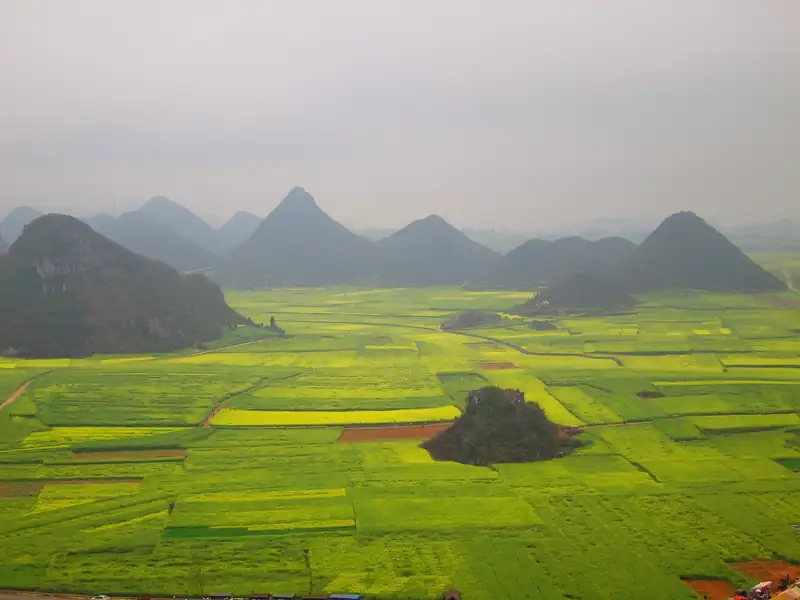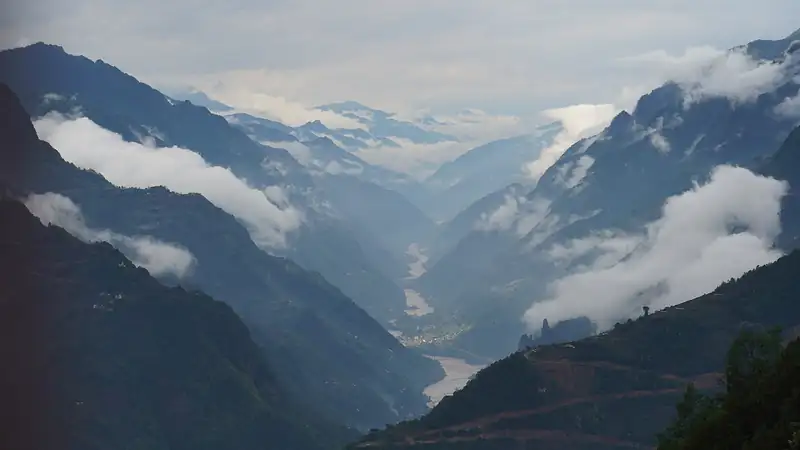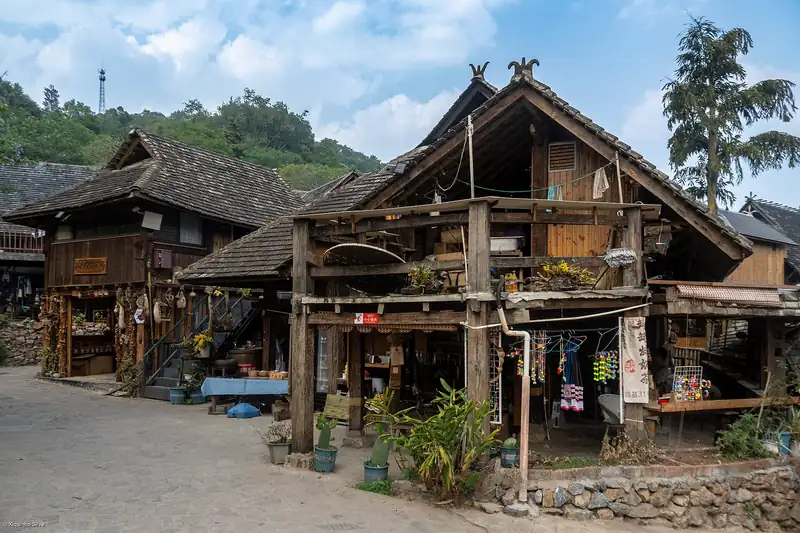
Pu'er tea takes its name from a town, but it grows on mountains: the forested ridges of Yunnan's far south, where Blang and Dai villagers have tended tea trees under the forest canopy for about a thousand years. Since 2023, the old tea forests of Jingmai Mountain have been a UNESCO World Heritage Site. This route takes you into that country slowly.
It starts from the classic southern loop, rewarding without being tiring, then cuts the rushed parts. You get a stop at a Tea Horse Road post station, two nights in a Jingmai tea village instead of a drive-through, and three warm days in Xishuangbanna to finish. This route also covers what stops most foreign visitors: Jingmai's entry reservation, the police checkpoints near the border and guesthouses that can't register you.
Who it's for
- Tea drinkers who want to see where pu'er actually grows, and drink it with the family that picked it.
- Second-time visitors who have done Dali and Lijiang and want a Yunnan with fewer tour groups.
- Slow travelers. Some days are mostly sitting over tea. If you want a new sight every hour, take the classic route instead.
You travel by fast train to Pu'er, then with one car and driver for four days, which is the only practical way onto the mountain. Altitude isn't a concern anywhere on this route. The south is warm, and the rainy season (roughly May to October) is hot, wet and full of mosquitoes.
The route at a glance
- Day 1 Kunming: a gentle start and your first proper cup.
- Day 2 Fast train south, and a Tea Horse Road village.
- Day 3 Up to Jingmai Mountain.
- Day 4 A full day walking and drinking through the tea villages.
- Day 5 Sunrise above the clouds, then down to Xishuangbanna.
- Day 6 The tropical botanical garden.
- Day 7 A rainforest walk, a Dai temple and a Dai dinner.
- Day 8 Homeward from Jinghong.
- Optional Three more days in Lincang's tea country.
Everything here comes from what Chinese travelers report and recommend, checked against official notices where they exist. Places change fast in tea country, so treat named cafés and bars as good bets rather than guarantees, and confirm anything important locally.
Prices as of 2026; check before you go.
Before you book
- Jingmai needs a reservation. Since 1 October 2025, entry has been free but must be reserved in advance through the WeChat mini program 景迈山预约服务. The system started as a trial, so check the rules before you go. If you can't use it, the rules allow foreign passport holders to register in person at the Jingmai Bridge service point 景迈大桥综合服务点. Every visitor enters there anyway, and staff check your code or passport. Cars need their own booking in the same system (up to a month ahead), so make sure your driver has registered the car.
- Carry your passport in the car, not the trunk. Roads near the Myanmar and Laos borders have police checkpoints, and you may pass one on the way to Lancang. Officers may check every passenger's ID. It's routine and takes minutes.
- Check that your guesthouse can register foreigners. Not every village guesthouse can. Ask before you pay, and have your driver or host confirm on arrival.
- Book one driver for Days 2 to 5, from Pu'er station to Jinghong. Public transport is thin: a few buses from Pu'er and Lancang, sold in the 金孔雀票务 WeChat mini program, then irregular minibuses up the mountain. Agree on a fixed, written price that covers fuel, tolls and the driver's rooms.
- Leave lighters behind. The mountain bans open flames and carrying fire sources, because the tea forest and wooden villages burn easily.
Day by day
Day 1 Arrive in Kunming
An easy afternoon and your first proper cup of tea.
- Afternoon Loop around Green Lake 翠湖, then visit Yunnan University's Donglu campus 云南大学东陆校区, which has early-20th-century buildings and a ginkgo avenue. There's a passport check at the gate. Book a free slot in the 平安云大 WeChat mini program first, and note that access pauses for exams.
- Late afternoon Zhenqing Temple 真庆观, a Taoist complex founded in the Yuan dynasty and rebuilt in the Ming, is a quiet place to drink tea under the courtyard trees.
- Evening Small-pot rice noodles 小锅米线 and flower cakes around Nanping Street 南屏街. See our Kunming food guide.
Overnight: Kunming, Green Lake area. Most southbound trains leave from Kunming South, about an hour away; a few use Kunming Station in town, so check your ticket.
Day 2 Fast train to Pu'er, and the Tea Horse Road
The train on the China–Laos line takes about 3 hours; the fastest do it in 2 hours 45 minutes. Book it on 12306 or Trip.com with your passport, and pick a morning departure.
- Morning Kunming (usually Kunming South) to Pu'er 普洱站. Your driver meets you at the station.
- Midday Drive to Nakeli 那柯里 in Ning'er County, a former overnight stop for the mule caravans that carried tea north. Allow roughly 40 minutes to an hour each way. Cross the covered wind-and-rain bridge 风雨桥, walk the stretch of old stone road and eat lunch in the village. An hour or two is plenty.
- Evening Back in Pu'er city, which locals still call Simao 思茅. Browse the tea shops and have dinner. Honestly, Pu'er city is a base, not a destination.
Overnight: Pu'er, central Simao
Day 3 Up to Jingmai Mountain
About 3–3.5 hours by road via Lancang 澜沧. Keep your passport handy for any police checkpoint on the way.
- Morning Pu'er grows much of China's coffee, and your driver will suggest a coffee farm on the way. Many of them are underwhelming: a café and a gift shop. Go only if the farm shows you the trees and the processing. Otherwise, leave early and have more time on the mountain.
- Early afternoon Show your reservation or passport at Jingmai Bridge, then drive up. Villages come in order of height: Nuogan lowest, then Wengji, then Manghong at the top. Settle into your guesthouse (see "Where to sleep on Jingmai" below) and walk your own village first, without an agenda.
- Evening For sunset, go to 槚蔎茶酒馆, a tea-and-drinks bar in Manghong that's worth it for the view. Dinner can be at 一朵菌, Manghong's most talked-about restaurant, or with your hosts.
Overnight: Jingmai Mountain, a village guesthouse
Day 4 The tea villages, one by one
The villages are about 10 minutes apart by car. Most visitors go in this order, and it fills a day at an easy pace. You can go with your driver, rent an e-scooter from your guesthouse, or flag village cars, which charge about ¥15–25 point to point.
- Morning Start at Jingmai Dazhai 景迈大寨, a Dai village with a golden pagoda 金塔 and a surviving stretch of Tea Horse Road. Allow about an hour. Stop for coffee at 北归仓咖啡, then go to Nuogan 糯干古寨. Its viewpoint looks down over a whole valley of Dai stilt-house roofs.
- Midday Wengji 翁基 is a Bulang village where tea is spread out to dry on almost every porch. You can step into nearly any house and be offered a cup. Have lunch here, where the choice is widest.
- Afternoon In Mangjing 芒景, see the Princess Banyan 公主榕 and the Bee King Tree 蜂王树, a huge tree hung with wild bees' nests that visitors call the most striking sight on the mountain. In the lower village is a second bee tree, the Bee God Tree 蜂神树. Finish in Manghong 芒洪, with the old tree locals call the tea ancestor 茶祖树 and a round-crowned one nicknamed the broccoli tree 西兰花树. This is the place to sit with Wa and Bulang families, drink and, if you want, buy a cake of old-tree tea.
- Evening A drink at 本无酒馆 in Manghong, or a cup of roasted milk tea 烤奶茶, a mountain favorite.
Overnight: Jingmai Mountain, same guesthouse
Day 5 Sunrise above the clouds, then down to Xishuangbanna
An early start, then about 3 hours (roughly 130 km, sometimes longer) down through Menghai to Jinghong.
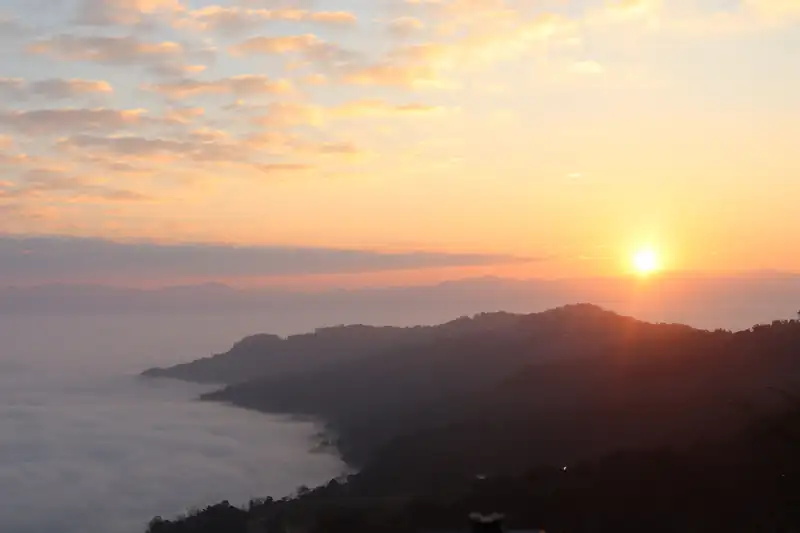
- Early Around 7:30 am, walk up the slope behind Manghong's octagonal pagoda 八角塔 for the sea of clouds. It's free. Cloud seas are most reliable from about November to February. Ask your host the night before whether the alarm is worth it.
- Morning A last tea session with your hosts. In March and April, ask if you can join the picking or watch the leaves being pan-fired and rolled.
- Afternoon Drive to Jinghong 景洪, Xishuangbanna's main town, at about 550 m. Stop for lunch in Menghai 勐海, a county town known across China for tea.
- Evening The Starlight Night Market 星光夜市 at Gaozhuang Xishuangjing 告庄西双景, for street food and people-watching.
Overnight: Jinghong, Gaozhuang area (walkable to the night market, about 15 minutes from the airport)
Day 6 The tropical botanical garden
A full day at Xishuangbanna Tropical Botanical Garden 西双版纳热带植物园, run by the Chinese Academy of Sciences at Menglun 勐仑, about 1–1.5 hours from Jinghong.
- Morning Go early, before the heat. The garden is enormous, so pick two or three sections and use the electric carts between them.
- Afternoon Head back to Jinghong and rest through the hottest hours.
- Evening Try yellow-cattle beef hotpot, the other local favorite besides Dai food.
Overnight: Jinghong, Gaozhuang area
Day 7 Rainforest, a Dai temple and a Dai dinner
For today, a day driver or ride-hailing car works better than keeping your Jingmai driver.
- Morning Take a guided rainforest walk on Jinuo Mountain 基诺山. It costs about ¥150 per person, and the guide explains the plants. Wear long sleeves and rain boots or shoes you don't mind ruining.
- Afternoon Walk through Manting Park 曼听公园 to Zongfo Temple 总佛寺, Xishuangbanna's main Theravada Buddhist temple. Entry through the park is about ¥40.
- Evening A Dai dinner: sour-spicy pounded chicken feet 舂鸡脚, mango sticky rice, fried rice with porcini, and paoluda 泡鲁达, a sweet milk drink with coconut and bread.
Overnight: Jinghong, Gaozhuang area
Day 8 Homeward
- Morning If your flight is late, visit Manyuan Village 曼远村, which feels more lived-in than Manzhang 曼掌村, a village geared to visitors and crafts.
- Afternoon Fly from Xishuangbanna Gasa Airport 西双版纳嘎洒国际机场, usually via Kunming. Or take the train back to Kunming, about 3 hours.
Where to sleep on Jingmai
Pick your village by what you want from the mountain, not by photos. The three main choices are very different.
Nuogan 糯干
The lowest village, a Dai village tucked into a fold of the hills. You won't see a sea of clouds from here, but it's the easiest place to find an old wooden house and simply drink tea and do nothing. Small places worth knowing here, for a coffee, a meal or a bed, include 喜糯有山, 里庭 and 山神屋; ask what each offers.
Wengji 翁基
The best-known village, and the most commercial. The guesthouses are the most comfortable, and there are plenty of places to eat. The catch is that there's one road in and out, and parking is the worst on the mountain, so dragging luggage is a chore. Small places that come up here include 雨林韵味 and 一树山院.
Manghong 芒洪
The highest village, with the best cloud-sea views and the easiest parking. It's also the least polished: stays are scattered, and you'll need to hunt a little. Pricier hotels line the main road outside the village. Choose Manghong if sunrise matters to you.
Buying tea without regret
Buying tea is half the point of this trip, and it's where visitors most often overpay. A few rules seasoned tea drinkers follow:
- Taste first, always. Any family will brew for you, and it's normal to drink several cups and leave without buying. A small thank-you purchase is kind but never required.
- Know the two kinds. Raw pu'er 生茶 is green, bright and bitter when young, and changes as it ages. Ripe pu'er 熟茶 is fermented to be dark and mellow right away. Buy what you like drinking now.
- Be wary of "ancient tree" labels. Old-tree tea 古树茶 sells for much more and is one of the most often faked labels in Yunnan. Buy it only from people whose trees you've seen, and in small amounts.
- Standard cakes weigh 357 g. Loose tea or smaller cakes are easier to pack and to taste your way through at home.
- Never buy where you're steered. If a driver or guide takes you to a "partner" shop, walk out. It's the oldest trick in Yunnan tourism, and our drivers make no shopping stops.
Adding Lincang's tea country
Lincang 临沧, west of Pu'er along the Myanmar border, is where serious tea drinkers go next. It's quieter, more rural and harder to reach. The draw here is the everyday life of the Wa and Dai villages more than any single sight. Go only with a driver, since the sights are far apart. Plan on three extra days, inserted after Day 1.
Bingdao, Mengku 双江勐库 冰岛
The heartland of Bingdao tea, one of the most prized, and most expensive, names in pu'er. In spring tea season you can join families picking and processing, and Bingdao Lake 冰岛湖 nearby makes a pretty stop. Base yourself in Mengku town.
Wengding Wa village 沧源 翁丁佤族村
A Wa village about 400 years old, with thatched houses and posts hung with buffalo skulls. After a fire some years ago, the villagers moved to a new village next door. The old one now hosts rituals and dances at set times. Entry is about ¥80, including the shuttle, and you must book at least a day ahead on the 游云南 app. Photos are forbidden in the sacrificial area. It's nearly 3 hours from Lincang city.
Cangyuan Cliff Paintings 沧源崖画
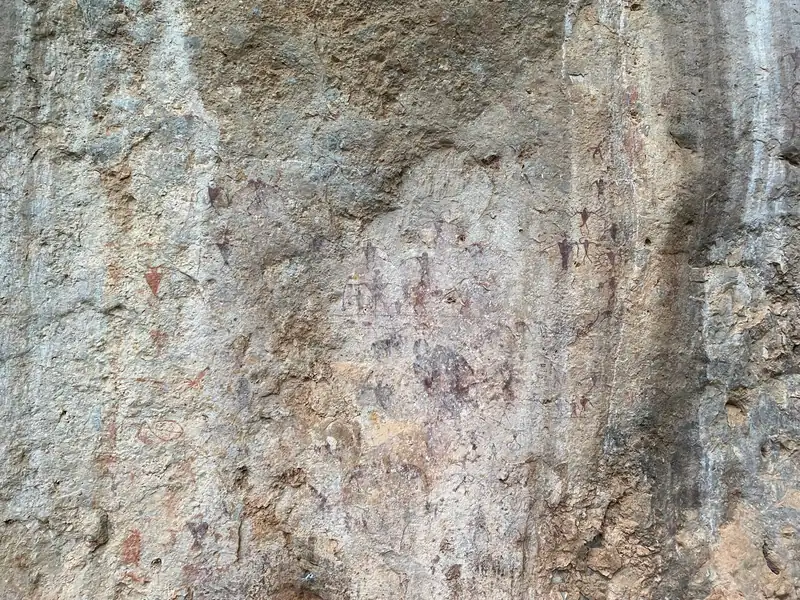
Rock paintings dated to between about 2,700 and 3,800 years ago, drawn in red iron-oxide pigment, showing hunters, animals and village life. The morning light is best. Don't touch them, and don't use flash.
Lushi Old Town, Fengqing 凤庆 鲁史古镇
If you have a fourth day, this Tea Horse Road town has stone-paved lanes, a market square and the old Luo family mansion 骆家大院. It's free, reachable only by car, and you can sleep in a century-old caravan inn. Order chicken stewed with ham and papaya 火腿木瓜鸡. Fengqing is also home to Dianhong 滇红, Yunnan black tea.
Get there by train from Kunming to Lincang station, about 3.5–4 hours via Dali and close to the city, or by flying into Lincang or Cangyuan. To eat, look for Wa chicken rice porridge 鸡肉烂饭, roast suckling pig 佤山烤香猪, Yun County chicken rice noodles 云县鸡肉米线, Cangyuan dried beef 沧源牛干巴 and Dai-style sapie 傣味撒撇, a bitter-and-sour dipping dish. From Cangyuan, either fly back to Kunming and pick up this route at Day 2, or have your driver continue east toward Jingmai. That's a long day on border roads, so confirm the time with your driver before you commit. More on the Lincang page.
Festivals and seasons on this route
- Spring tea, March to April. This is the best time to see picking and processing. Jingmai is busy then, so book your guesthouse ahead.
- Mojiang's face-blackening festival, early May. Over the May Day holiday, the Hani town of Mojiang 墨江 holds its "Monihei" festival alongside an international twins festival. Crowds on Sun Square 太阳广场 smear each other with a black powder of coffee grounds and food-grade plant charcoal, a Hani blessing that no one escapes. In 2026 the blackening sessions were on the afternoons of 1 and 3 May; check the program nearer the time. There's a free twins parade, and a long-street banquet on the pedestrian street costs about ¥80 per person. Wear old clothes and cover your hair. Showers and bag storage are set up near the square. Mojiang is on your train line, and buses from the station to the town are about ¥5, or a taxi about ¥20. Rooms sell out, so late bookers settle for homestays, Tongguan town 通关镇 about 40 minutes away, or a tent camp at Bixi old town 碧溪古镇. Cangyuan in Lincang holds a Wa version at around the same time (main days 2–3 May in 2026).
- Water-Splashing Festival, 13–15 April. The Dai New Year in Jinghong is joyful, soaking and crowded, and hotel prices jump.
- Torch Festival, late July or early August. Pu'er's Tea Horse Ancient City 茶马古城 runs a week-long caravan torch festival; in 2026 it was 2–8 August, with the main fire ceremony at 8 pm each night. It's a modern development and touristy, but fun if you're in town.
- Rainy season, May to October. Expect showers, landslips that close roads for hours, and mosquitoes, especially in August and September. November to April is drier, with cool mornings on the mountain and the best cloud seas.
Dates move every year. Check our festival calendar before you fix your dates.
What to skip
- Jingmai as a day trip from Jinghong. That's about 6 hours in the car for a few hours on the mountain. The point of this route is waking up there.
- Coffee farms that are only a café and a shop. Ask what you'll see before you go.
- Roadside cars in Xishuangbanna. Use licensed drivers or ride-hailing, and ignore offers to visit "partner" jade, tea or silver shops.
- Trying to see the whole botanical garden. Three sections done well are better than ten in a rush.
- Pu'er city sightseeing. One evening is enough; save your energy for the mountain.
Costs you can plan on
- Jingmai Mountain entry: free, with reservation. Some villages charge a small parking fee.
- Village-to-village cars on Jingmai: about ¥15–25 per ride.
- Manting Park and Zongfo Temple: about ¥40.
- Guided rainforest walk on Jinuo Mountain: about ¥150 per person.
- Lincang extension: Wengding about ¥80, Cangyuan Cliff Paintings about ¥30, Lushi free.
- Mojiang festival: square events and parade free, long-street banquet about ¥80 per person.
- Your driver for Days 2 to 5 is quoted per car, not per person, so it gets cheaper per head with two to four travelers. Get the quote in writing, including the driver's meals and rooms.
If you'd rather not arrange any of this, we can book the driver, guesthouses and trains for you.
Driver cards
Show these on your phone. Each has the Chinese on top and the meaning below.
请送我去这个火车站,我坐动车去普洱。(出示车票)
Please take me to this station; I'm taking the fast train to Pu'er. (Show your ticket, which names the station.)
你好,请到普洱站接我,然后带我去那柯里,晚上住普洱市区。
Hello, please meet me at Pu'er station, take me to Nakeli, then to Pu'er city for the night.
请带我去景迈大桥综合服务点。我是外国游客,需要用护照现场登记预约。
Please take me to the Jingmai Bridge service point. I'm a foreign visitor and need to register my reservation with my passport.
我的护照在身上,检查站需要的话随时出示。
I have my passport with me and can show it at the checkpoint.
请带我去景迈山芒洪村,我住在这家民宿。
Please take me to Manghong village on Jingmai Mountain. I'm staying at this guesthouse. (Show the booking.)
请问你们可以给外国人办理入住登记吗?我有护照。
Can you register foreign guests? I have my passport.
明天早上七点半想去芒洪八角塔后面的山坡看云海,请问天气合适吗?
Tomorrow at 7:30 am I'd like to see the sea of clouds from the slope behind Manghong's octagonal pagoda. Will the weather be good?
可以先喝茶再决定买不买吗?我想买一点自家做的茶。
May I taste first before deciding? I'd like to buy a little tea your family made.
请不要带我去购物店或合作商店,谢谢。
Please don't take me to any shops or partner stores. Thank you.
路上弯多,我容易晕车,请开慢一点。
The road is winding and I get carsick. Please drive a little slower.
今天请从景迈山经勐海去景洪,中午在勐海吃饭,晚上住告庄。
Today, please drive from Jingmai to Jinghong via Menghai, with lunch in Menghai. I'm staying near Gaozhuang tonight.
请带我去中科院西双版纳热带植物园(勐仑)。
Please take me to Xishuangbanna Tropical Botanical Garden at Menglun.
我预约了基诺山雨林徒步,请送我到集合地点。(出示预订)
I've booked the Jinuo Mountain rainforest walk. Please take me to the meeting point. (Show the booking.)
请带我去曼听公园,我想从这里去总佛寺。
Please take me to Manting Park. I'd like to walk through to Zongfo Temple.
请带我去告庄西双景星光夜市。
Please take me to the Starlight Night Market at Gaozhuang Xishuangjing.
请送我去西双版纳嘎洒国际机场。
Please take me to Xishuangbanna Gasa International Airport.
请带我去双江勐库冰岛村,我想看农户做茶,不去茶叶店。
Lincang: please take me to Bingdao village in Mengku, Shuangjiang. I want to see a family making tea, not visit tea shops.
请带我去沧源翁丁佤族村,我已经在游云南预约了。
Lincang: please take me to Wengding Wa village in Cangyuan. I've booked on the 游云南 app.
请带我去沧源崖画谷,上午光线好,想早点出发。
Lincang: please take me to the Cangyuan Cliff Paintings. The light is best in the morning, so I'd like to leave early.
请带我去墨江县城太阳广场,我来参加摸你黑。
Mojiang festival: please take me to Sun Square in Mojiang town. I'm here for the face-blackening festival.