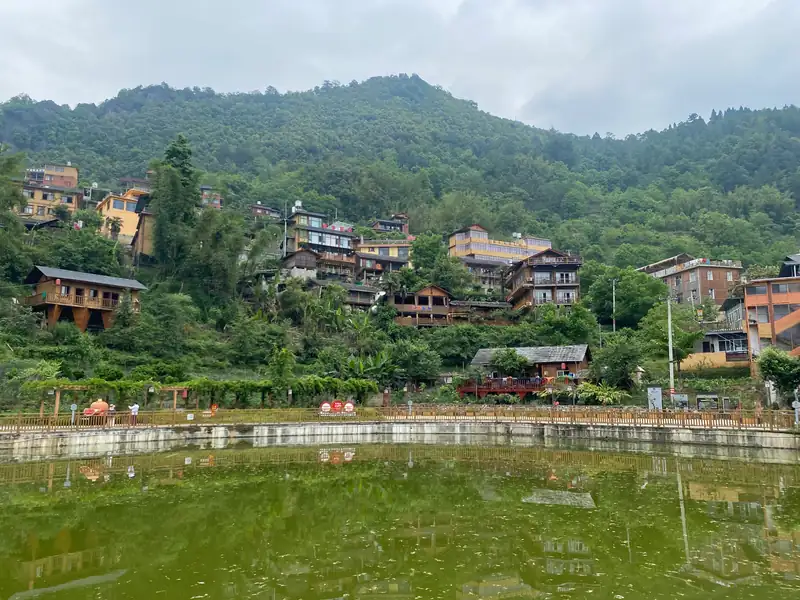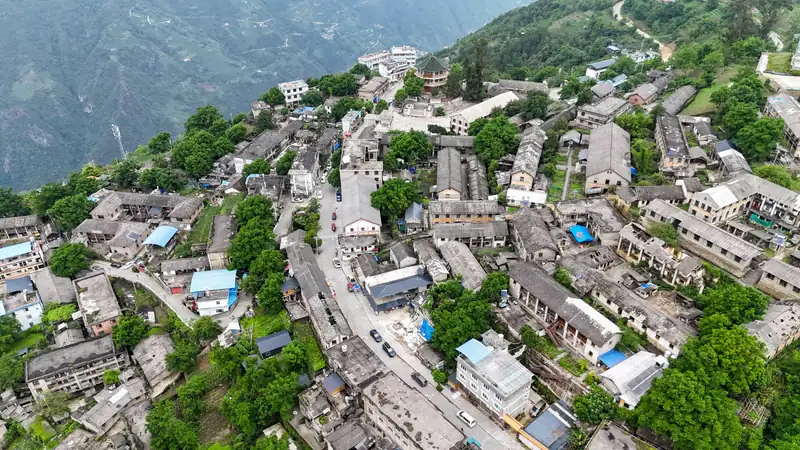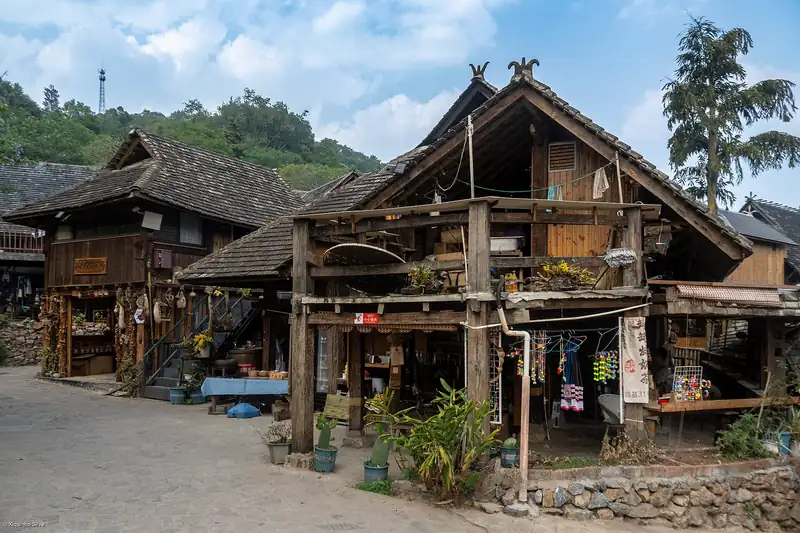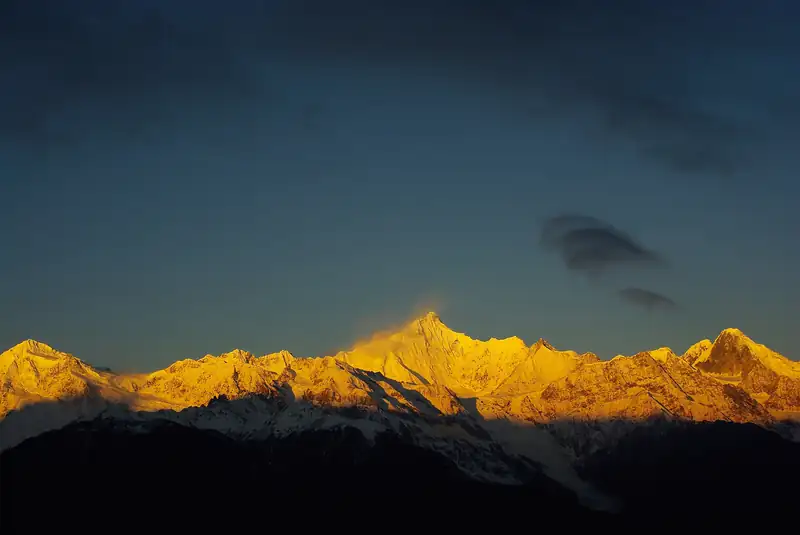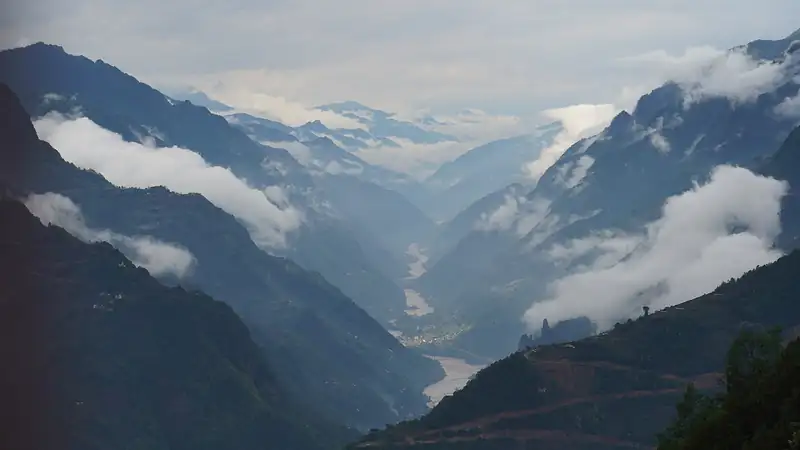
The Nujiang, the river the rest of the world knows as the Salween, runs south through western Yunnan in a canyon squeezed between the Gaoligong and Biluo mountains. It's part of the Three Parallel Rivers World Heritage area. It's often called one of the country's last unspoiled corners. Nu, Lisu and Tibetan people share the valley. A single family can include both Christians and Tibetan Buddhists, and very little here has been built for tourists.
This route goes from Dali to the top of the Yunnan section at Bingzhongluo and back in five days. Only the first leg, Dali to Liuku, is expressway. After that it's the canyon road, well paved but endlessly winding and exposed to rockfall. So this is a route for a car with a local driver, not for self-drive or buses.
Who it's for
- You've done the classic north (see our 8-day classic route) and want somewhere that still feels remote.
- You care more about villages, churches, temples and river views than big-name sights.
- You're fine with simple guesthouses, little English and several 4–5 hour drives on mountain roads.
- Not ideal if you get carsick easily, travel in the rainy season (roughly May to September) or want to stay in one base.
The route at a glance
- Dali to Liuku, a hot-spring stop, and up to a Nu village for the night
- A near-empty former county town, then the long drive north to Bingzhongluo
- The Tea Horse Road walk to Wuli, and a night in Qiunatong
- A last morning at the top of the valley, then back down the canyon
- Liuku to Dali
Prices as of 2026; check before you go.
Before you go
The road
- Dali to Liuku: about 2.5 hours on the expressway. This is the only fast road on the route.
- Liuku to Bingzhongluo: about 4.5–5 hours without stops for roughly 286 km, on national highway G219 219国道, signposted here as the Nujiang Beautiful Highway 怒江美丽公路. It's paved and in good condition, but it bends constantly and has sheer drops and rockfall zones. Experienced drivers advise newcomers not to attempt it, and nobody should drive it after dark.
- Village side roads (Yangpo, Laomudeng, Zhiziluo) are narrow, steep switchbacks.
Hire a driver who knows the valley, ideally one based in Dali or Liuku, for all five days. Foreign licenses aren't valid in China anyway. Agree in writing on the daily rate, whether fuel and tolls are included, and how the driver's meals and rooms are covered. There are long-distance buses from Liuku up the valley, which leave early in the morning and take most of the day. With them you can't stop at the viewpoints and villages that make the trip, so we don't recommend them for this route.
Passports, police and guesthouses
Nujiang borders Myanmar, and its north end touches Tibet, so expect passport checks on the road. In Bingzhongluo, police may ask where you're staying and where you plan to go. Answer plainly and show your itinerary. Keep your passport on you, not in your bag in the car.
Every guesthouse must register foreign guests with the police, and some small village places aren't set up to do it. When you book, ask "can you accept foreign guests?" (能接待外国客人吗?). Have a backup in the nearest town. If a family guesthouse can't register you online, you or your host must register at the local police station (派出所) within 24 hours of arrival; bring your passport.
North of Qiunatong, the road continues into Tibet. Foreign visitors need a Tibet Travel Permit and an agency-arranged tour to enter, so for this trip the Yunnan–Tibet boundary is the end of the line. Your driver will know whether the checkpoint lets foreigners go right up to the marker that week.
Money, signal, altitude
- Mobile payments work in towns and most guesthouses. Carry some cash for village stalls and for places where the signal drops. See payments.
- Phone coverage is good in towns and patchy between them. Download offline maps before you leave Dali, and see internet.
- The valley floor stays below about 2,000 m, so altitude isn't an issue unless you add Peacock Mountain.
Day by day
Day 1 Dali to Liuku and up to Laomudeng
Expressway to Liuku, a bookstore and a hot spring, then up to a Nu village for the night. Allow about 5 hours of driving with stops.
- Morning Leave Dali around 8 am and reach Liuku 六库 by about 10:30. Liuku is the prefecture seat, low and warm on both banks of the river. Go straight up the steep, tight switchbacks to Yangpo village 阳坡村, about 30 minutes above town, and the Nujiang Grand Canyon branch of the Avant-Garde bookstore 怒江大峡谷先锋书店. It opened in 2024 at about 1,800 m and belongs to the Nanjing bookshop known for opening branches in villages. Have a coffee on the terrace and take in your first long view of the canyon.
- Lunch In Liuku, have hand-grabbed rice 手抓饭. It's a Lisu-style spread of rice, meats and vegetables piled on leaves down a shared table and eaten with gloved hands, best with four or more people. Add lacquer-oil chicken 漆油鸡, cooked in oil pressed from lacquer-tree seeds. It's warming, slightly nutty and found everywhere in the valley.
- Afternoon Drive north on G219 to Denggeng hot springs 登埂澡塘, natural pools by the river that Lisu families have used for generations. In the first days of the Lunar New Year they hold a bathing fair here with singing contests. On an ordinary day you'll share the water with a few locals. Bring swimwear and a towel, and keep the soak short if you're heading up the mountain afterward. Continue north to Pihe 匹河 and climb the side road to Laomudeng 老姆登村.
- Evening Laomudeng is a Nu village of wooden houses, tea gardens and a church, high on the east wall of the canyon and looking across at the Gaoligong range. Watch the sunset from the village edge, then eat what your hosts cook. Ask for their tea: Laomudeng tea 老姆登茶 grows on the slopes around you. On a Sunday, listen for the hymn singing at the church.
Overnight: Laomudeng, a family guesthouse (confirm they can register foreign guests)
Day 2 Zhiziluo, then north to Bingzhongluo
A short morning in a near-empty former county town, then the longest drive of the trip, about 4 hours plus stops.
- Early morning Watch the light come over the canyon from Laomudeng. Mornings often start in cloud that lifts by mid-morning.
- Morning A short drive along the mountain road brings you to Zhiziluo 知子罗村. It was the seat of Bijiang County and, until 1974, the prefecture's capital. Then the capital moved to Liuku, and in 1986 the county was abolished, partly because geologists warned the town stood on a huge, unstable landslide mass. The offices, shops and painted slogans of the 1950s to 1970s were left behind, and villagers moved into some of the old government buildings. Walking it takes about an hour. It's quiet, a little eerie and unlike anywhere else in Yunnan.
- Midday Back down to G219 and north. Stop for lunch in Fugong 福贡, the county town about halfway up, where your driver will have a favorite noodle or rice place. Then continue past Gongshan 贡山 as the valley narrows.
- Late afternoon Arrive in Bingzhongluo 丙中洛, a basin of fields and villages at the top of the Yunnan section of the valley. Take the sightseeing bus (about ¥40) up to the Gongdang sacred mountain viewpoint 贡当神山观景台. From there you look down on the whole basin and the First Bend of the Nujiang 怒江第一湾, where the river swings in a tight horseshoe around a spur of land. If the sky is clear when you arrive, ride up now. If cloud has built up, go first thing tomorrow morning instead, before it returns; on a gray day the bend barely shows.
- Evening Dinner in Bingzhongluo town. Try xiala 吓拉, a Nu dish of chicken fried hot, then doused with rice wine and eaten warm. It's a cold-evening dish, sometimes served with oil tea.
Overnight: Bingzhongluo town (the widest choice of rooms in the upper valley)
Day 3 Stone Gate, the Wuli walk and Qiunatong
An easy day of short drives, one walk and one more village at the end of the road. You'll probably be less than 20 km from where you started.
- Morning Drive north a few minutes to Stone Gate Pass 石门关. Here the Nujiang squeezes between two walls of rock, and you can see the old caravan trail cut into the cliff. Morning mist often fills the gorge.
- Late morning The Wuli walk. Your driver drops you at Chaohong Bridge 朝红桥. Cross and follow the Tea Horse Road 茶马古道, a path hacked into the cliff above the river, for 15–20 minutes to Wuli village 雾里村. About 60 Nu, Lisu and Tibetan families live here in wooden houses on a sloping shelf of fields between the mountains and the river. The whole walk, there and back with time in the village, takes about an hour. It's gentle enough that families bring their grandparents. In places you'll duck under the overhanging rock. The village visitor center serves coffee.
- Lunch In a village restaurant or back in Bingzhongluo. Wuli's name means "in the fog," and it's often misty in the morning, so a later start is fine.
- Afternoon Drive to Qiunatong 秋那桶, about 18 km north of Bingzhongluo town, a Nu village of wooden houses in forest and fields close to the Tibet boundary. Walk the Tea Horse Road out of the village, following a stream through the woods, for as long as you like. An hour out and back is plenty.
- Evening Dinner at your guesthouse. Qiunatong nights are dark, quiet and cold in winter.
Overnight: Qiunatong, a village guesthouse. Good picks are Stone Mushroom 石蘑菇客栈 and Yunshang Renjia 云上人家客栈 for its host's cooking and mountain-view rooms; confirm location and foreign-guest registration when booking.
Day 4 The top of the valley, then back down to Liuku
A slow morning up north, then about 5 hours of driving back down the canyon. Leave Bingzhongluo by about 11 am so you're in Liuku before dark.
- Early morning If the checkpoint allows it that week, take the short drive north to the Yunnan–Tibet boundary marker 滇藏分界线 for a photo, then turn back. Go no further.
- Morning On the way south, stop at Chongding Church 重丁教堂, a Catholic church among fields near Bingzhongluo. French Catholic missionaries reached the upper valley around 1900. This church was finished in 1935, destroyed in the Cultural Revolution and rebuilt in 1996. Then visit Puhua Temple 普化寺, a Tibetan Buddhist temple nearby. Between them they show how the valley's faiths sit side by side.
- Afternoon The long drive south, with a lunch stop in Gongshan or Fugong. Ask your driver to pull over at the viewpoints you passed on Day 2. The light is different going south.
- Evening Liuku. Have a riverside dinner and one more round of hand-grabbed rice if you missed it.
Overnight: Liuku, a hotel near the river
Day 5 Liuku to Dali
About 2.5 hours on the expressway. You'll be back in Dali for lunch.
- Morning An unhurried breakfast, then the drive back to Dali.
- Afternoon In Dali, or connect by train to Kunming or Lijiang. See our Dali guide and trains.
Overnight: Dali, or onward
What to eat
Hand-grabbed rice 手抓饭
The Nujiang feast: rice, meats and vegetables piled on leaves down one table, eaten with gloves. It's better with a group, and Liuku has the most places serving it.
Lacquer-oil chicken 漆油鸡
Chicken stewed in oil from lacquer-tree seeds, the valley's signature dish, on almost every menu. Try a little first if you're prone to plant allergies.
Xiala 吓拉
Chicken fried until very hot, then doused with rice wine and eaten warm. It's a Nu cold-weather dish, and a good first dinner in Bingzhongluo.
Laomudeng tea 老姆登茶
Tea grown on the slopes around the village. Buy a bag from your hosts rather than a shop.
Guesthouse dinners
In Laomudeng and Qiunatong, the best meal is usually whatever the family cooks: river fish, mountain greens, cured pork, corn. Tell them in the afternoon that you'll eat in.
Where to sleep
- Laomudeng (night 1). A family guesthouse with a canyon view. It's simple, warm and quiet.
- Bingzhongluo town (night 2). The upper valley's biggest choice of rooms, from guesthouses to mid-range hotels. It's the easiest place to confirm foreign-guest registration.
- Qiunatong (night 3). Wooden village guesthouses. If none can register you, sleep in Bingzhongluo again and visit Qiunatong as a day trip. It's only about 18 km.
- Liuku (night 4). Ordinary city hotels by the river.
With more time
- Peacock Mountain 孔雀山: high meadows, snowfields and glacier views above Bingzhongluo. In the right season you may see the dawn light turn the peaks gold. It needs an extra day, a clear forecast and a local vehicle, and winter snow can close it. Here altitude does matter, so go slowly.
- Peach Blossom Island 桃花岛: a spot near Bingzhongluo that's covered in peach blossom in March, when there's a local blossom festival.
- Dulongjiang 独龙江: the Dulong valley, reached from Gongshan. We don't include it. The road is rough and partly unpaved, unsuitable for ordinary cars, and rules for foreign visitors in this border valley can change, so check with police in Gongshan first.
What to skip
- Driving after dark. Plan every leg to finish in daylight, and let your driver cut a stop to make that work.
- The rainy season, roughly May to September. Landslides and rockfall close the canyon road for hours or days, and the river turns brown.
- Trying to rush Bingzhongluo in a single overnight from Liuku. It's 9–10 hours on the road for one evening at the top.
- Crossing into Tibet without the permit and tour, and flying drones anywhere in the valley.
- Dulongjiang in a normal car. See above.
Seasons and festivals
- October–April (best). Dry, clear and cool. In January the river runs a clear blue-green, the color in the best photos. Winter nights in Bingzhongluo and Qiunatong are cold, so bring warm layers. Snow can close Peacock Mountain from winter into early spring.
- March: peach blossom in Bingzhongluo.
- Around Chinese New Year: the Lisu bathing fair at the Denggeng hot springs.
- Spring: the Nu people's Fairy Festival 仙女节 in Bingzhongluo, on the 15th day of the third lunar month (April 21 in 2027), over about three days. Program details are announced locally.
- Around December 20: Kuoshi 阔时节, the Lisu New Year, with singing, crossbow contests and feasts across the prefecture. See festivals.
- From around May Day: the rains begin, and the river rises high and muddy through the summer. Avoid it.
Costs at a glance
- Driver and car, Dali and back, 5 days: quoted per day. Get two quotes and the total in writing, including tolls, fuel and the driver's rooms.
- Gongdang viewpoint sightseeing bus: about ¥40
- Guesthouses and meals: generally simple and modest. Pay by mobile where you can and keep cash as backup.
- Check locally whether a scenic-area ticket applies in Bingzhongluo during your visit.
If you'd like us to find the driver and book guesthouses that can register foreign guests, send us your dates.
Driver cards
Show these to your driver, police or a guesthouse. Each line is written the way you'd say it.
你好,我们五天从大理出发去丙中洛再回大理,请您开车。
Hello, we'd like you to drive us from Dali to Bingzhongluo and back over five days.
请先带我们去阳坡村的怒江大峡谷先锋书店,然后去六库吃手抓饭。
Please take us first to the Avant-Garde bookstore (Nujiang Grand Canyon branch) in Yangpo village, then to Liuku for hand-grabbed rice.
我们想去登埂澡塘泡温泉,然后去老姆登村住。
We'd like to soak at the Denggeng hot springs, then stay in Laomudeng.
请带我们去知子罗村看老县城。
Please take us to Zhiziluo to see the old county town.
请在朝红桥放我们下车,我们走茶马古道去雾里村。
Please drop us at Chaohong Bridge. We'll walk the Tea Horse Road to Wuli.
请带我们去秋那桶村。
Please take us to Qiunatong village.
我是外国游客,没有入藏许可,我们不进西藏。
I'm a foreign tourist without a Tibet permit. We won't enter Tibet.
天黑以后我们不开车,安全第一。
We don't drive after dark. Safety first.
如果下雨或者有塌方,我们可以改计划。
If it rains or there's a landslide, we can change the plan.
我有点晕车,请开慢一点,谢谢。
I get a little carsick. Please drive a bit slower, thank you.
你们能接待外国客人吗?可以登记护照吗?
Can you accept foreign guests? Can you register a passport?
今晚我们在这里吃饭,请做漆油鸡和本地菜。
We'll eat here tonight. Please cook lacquer-oil chicken and local dishes.