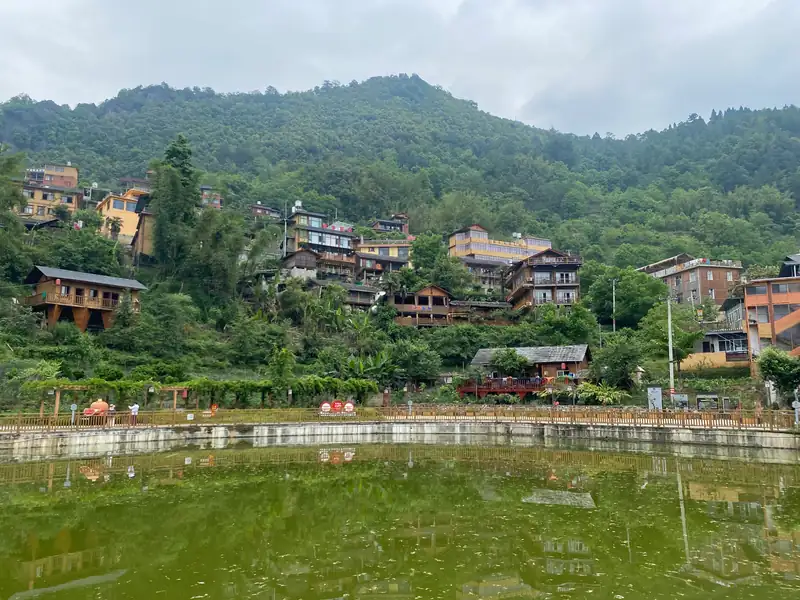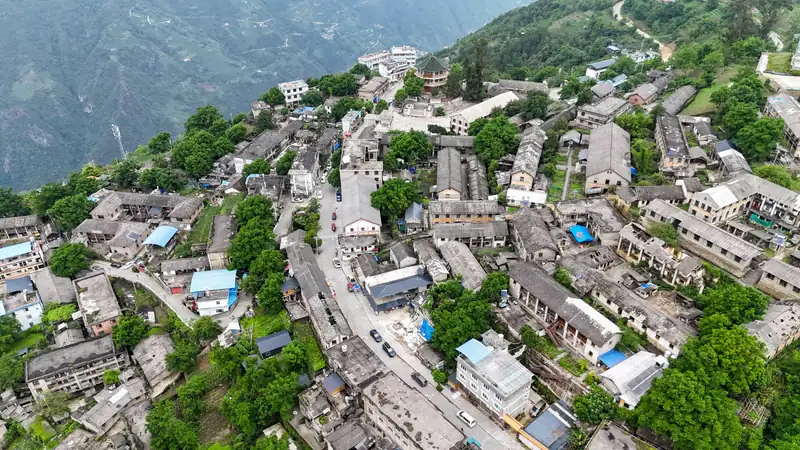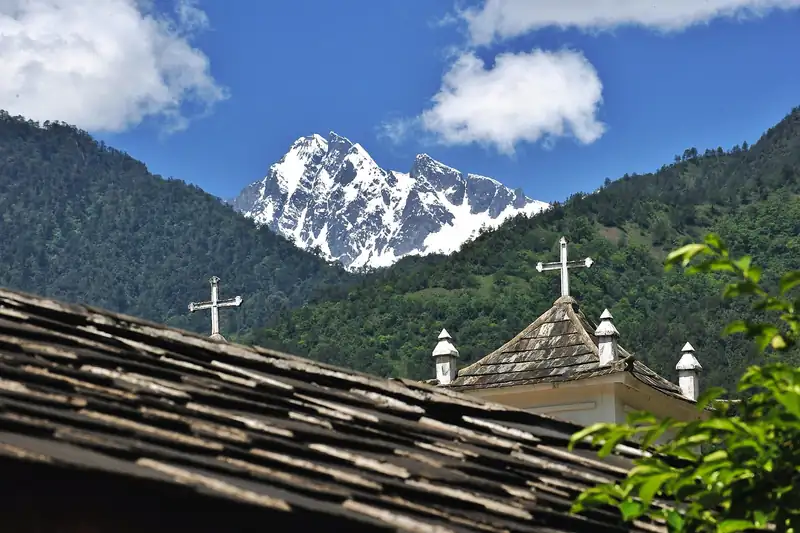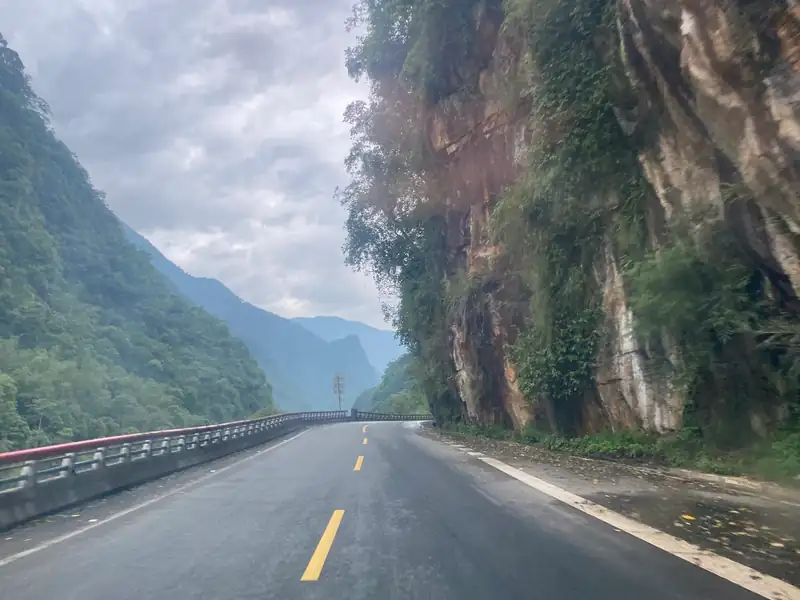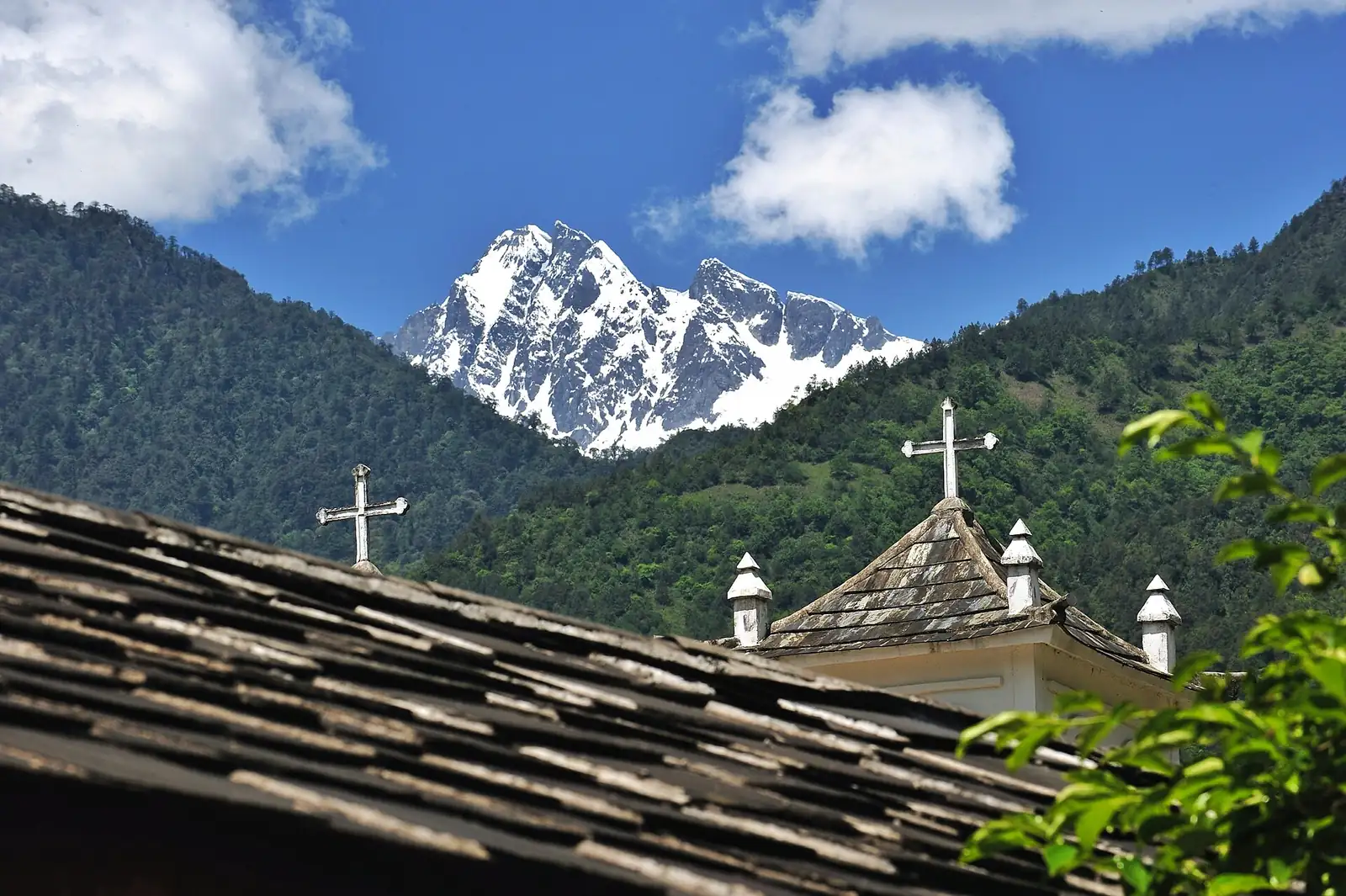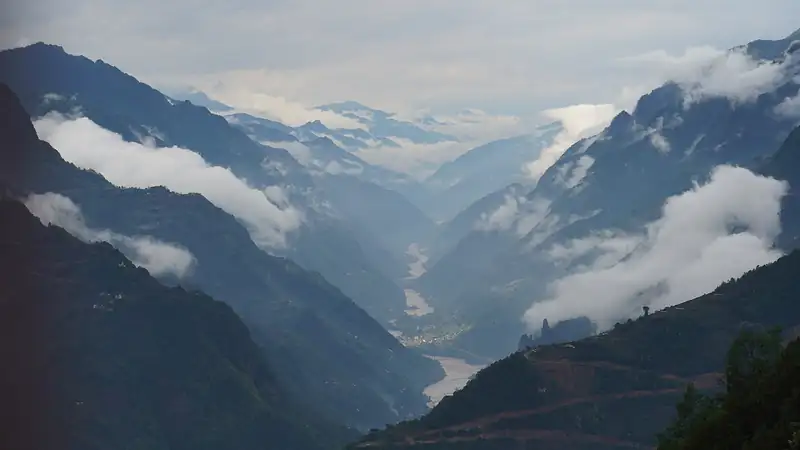
Nujiang is Yunnan's stretch of the Salween River, squeezed between the Gaoligong and Biluo mountains along the Myanmar border. A single canyon road runs north from Liuku 六库, the prefecture seat, to Bingzhongluo 丙中洛, a few bends short of Tibet.
It's often called one of the country's last unspoiled corners. Lisu, Nu and Tibetan communities share the valley, with the Dulong in their own valley to the west; a single family can follow three faiths, and few villages have been turned into shopping streets. The trade-off is long drives, simple rooms and very little English.
How locals do it
Prices as of 2026; check before you go.
Most treat the canyon as a four-day loop from Dali with a hired car, sleeping in villages rather than towns. The usual shape:
- Day 1: Dali to Liuku on the expressway, about 2.5–3 hours. Detour up to the mountainside bookstore in Yangpo village, soak at the Denggeng hot springs, eat a hand-grabbed rice feast, then drive north to sleep in Laomudeng.
- Day 2: An hour in Zhiziluo, the abandoned county town, then the long drive to Bingzhongluo. Ride the shuttle up to the Gongdang Mountain viewpoint (about ¥40) for the valley and, on a clear day, the First Bend of the Nujiang.
- Day 3: Walk the Tea Horse Road into Wuli village, continue north through Stone Gate Pass 石门关 toward the Yunnan–Tibet boundary, and sleep in Bingzhongluo again, or drive about an hour back south to Gongshan 贡山 for a shorter last day.
- Day 4: Back down the canyon to Liuku, about 4.5 hours from Bingzhongluo, then 2.5–3 hours on the expressway to Dali. It's a long day, so leave early.
The slower version adds a night in Qiunatong 秋那桶, the last Nu village before Tibet, to walk the old caravan trail along a stream through the forest. In season, a day on Peacock Mountain 孔雀山 gives snowy meadows and, on clear mornings, gold light on the peaks. Our Nujiang Canyon route has the full plan and driver cards.
Timing matters more here than almost anywhere in Yunnan. January brings blue-green water, peach blossom colors Bingzhongluo in early spring, and December is Kuoshi, the Lisu New Year (see festivals). The rains usually start around early May; by summer the river runs brown and high and landslides close roads.
Where locals eat
Restaurants here are simple and rarely have English menus. Point at dishes, and carry some cash as a backup; see payments.
Hand-grabbed rice 手抓饭
A shared feast: rice, meats and vegetables piled onto leaves across the table, eaten by hand, usually with disposable gloves. Liuku restaurants make it for groups; lacquer-oil chicken is often on the spread.
Lacquer-oil chicken 漆油鸡
The canyon's signature: chicken cooked in oil pressed from lacquer-tree seeds, into a rich, nutty soup. Lisu and Nu families serve it to guests and on cold days.
Xiala 吓拉
Chicken fried hot in the pan, then doused with local liquor and heated through. You eat the meat and sip the warm, boozy broth, slowly.
Guesthouse dinners in Qiunatong 秋那桶
Up at the end of the road, the best meals are at your inn. The owner's cooking is the draw at Yunshang Renjia 云上人家, which also has mountain-view rooms.
Hidden corners and free viewpoints
Yangpo village bookstore 阳坡村 先锋书店
Opened in September 2024 by the Avant-Garde bookstore chain, it sits at about 1,800 m in the Lisu village of Yangpo, with a café and an open terrace looking straight down the canyon. The road up is steep with tight switchbacks.
Denggeng hot springs 登埂澡塘
Rough hot pools on the river's west bank, about 12 km north of Liuku. Lisu families traditionally camp here for a bathing fair from the second to the sixth day of Chinese New Year. Bring swimwear and follow what locals do.
Zhiziluo 知子罗
The seat of the former Bijiang county until 1986, when the county was abolished over fears that the town sat on a huge landslide. The slide never came, and the old offices, bank and post office still make it feel stuck in the 1970s.
Laomudeng 老姆登村
A Nu village around 1,800 m, high above the river, with a village church and wide views across the canyon to the Gaoligong range. Guesthouses are simple and quiet.
Wuli village 雾里村
From Chaohong Bridge 朝红桥, the Tea Horse Road is cut into the cliff above the river; the village is 15–20 minutes along it. The full walk takes about an hour, and the visitor center has coffee.
Chongding Church 重丁教堂
A Catholic church in Bingzhongluo, first built by French missionaries, a short drive from the Tibetan Buddhist Puhua Temple 普化寺. Seeing both in one morning explains the valley better than any sign.
Honest verdicts
- Wuli village is worth the stop, because the caravan path is dramatic yet gentle enough for older travelers.
- Zhiziluo is worth an hour, since nowhere else in Yunnan feels so frozen in time.
- Peacock Mountain depends on the season, because heavy winter snow can close the road even when the valley is clear.
- The Dulong River valley 独龙江 depends on your time and driver, since the road from Gongshan is long, narrow and prone to landslides, and access rules for this border valley should be checked locally.
- Driving the canyon yourself needs a Chinese driving license and real mountain experience, because the surface is good but the bends never end.
- The canyon in midsummer is a poor trade, with a muddy river, clouded peaks and landslide closures.
Getting there and around
- By road: The expressway only reaches Liuku, about 2.5–3 hours from Dali. North of there it is the G219 canyon road: well paved, very winding, about 4.5 hours from Bingzhongluo back to Liuku. Hire a car and driver in Dali; we can arrange one.
- By bus: Buses run up the valley from Liuku, but they are slow and the villages are spread out, so you will miss most of the stops.
- Never at night: Don't drive the canyon after dark, and check for landslide closures in the rainy season.
- Documents: Carry your passport at all times; this is a border prefecture and police check IDs on the road. Confirm when booking that each guesthouse can register foreign guests. If a family guesthouse can't register you online, you or your host must register at the local police station (派出所) within 24 hours of arrival; bring your passport. Foreigners can't continue into Tibet on this road without Tibet permits arranged by an agency, so treat the boundary as the end of the line and ask your driver whether foreigners can currently go that far.
- Next stops: Loop back via Shaxi and Dali, or go south to Baoshan and Tengchong.