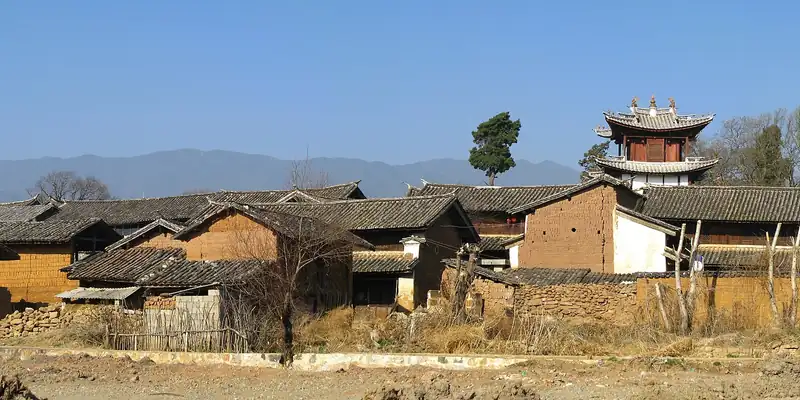
For centuries, mule caravans carrying tea and salt across Yunnan stopped in Shaxi to trade, rest and pray. The market town they left behind, in a farming valley between Dali and Lijiang, is one of the best-preserved stops on the old Tea Horse Road 茶马古道, thanks partly to a careful restoration project in the early 2000s.
When time is short, more and more visitors choose Shaxi over Dali's lakeshore. The old town is small, about 700 m from end to end, so the sights take a morning. The real reason to come is to stay the night and have the lanes almost to yourself at dawn and after dark.
Top things to do
Go out early, rest at midday when day-trippers arrive, and head back out in the evening.
Prices as of 2026; check before you go.
Sideng Street and the market square 寺登街
The heart of Shaxi: a sloping square of worn flagstones, framed by old wooden shopfronts, where caravans once traded. The side lanes of earthen walls and wooden doors reward aimless wandering.
The old theater stage 古戏台
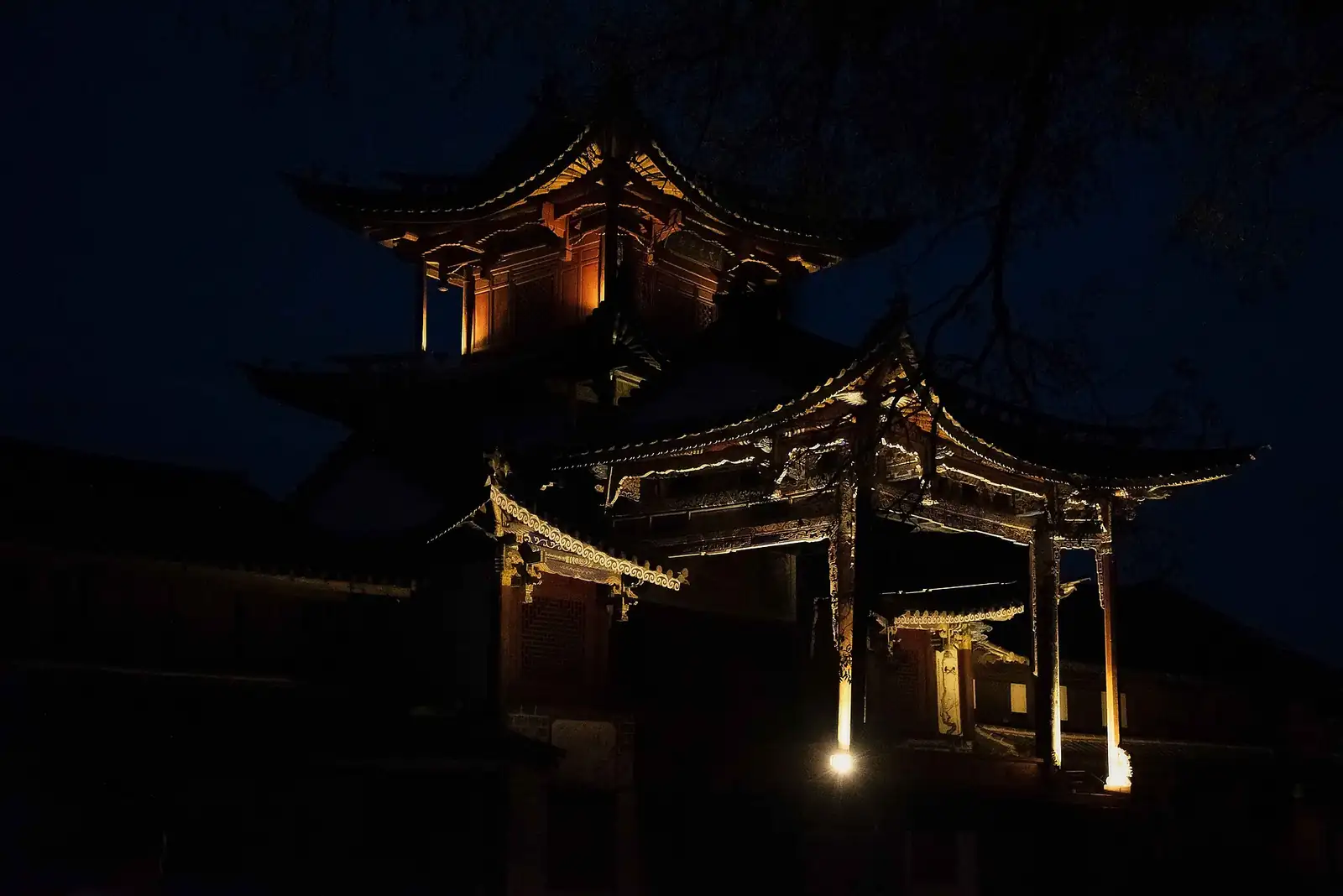
Facing the temple across the square, this tall wooden stage with stacked, upturned eaves once hosted opera on market days. It's the town's landmark and the best place to sit and watch the square wake up.
Xingjiao Temple 兴教寺
An early Ming-dynasty temple, often described as a rare survivor of Azhali, the esoteric school of Buddhism once practiced by the Bai. Take time over the faded murals inside the main hall.
Yujin Bridge 玉津桥
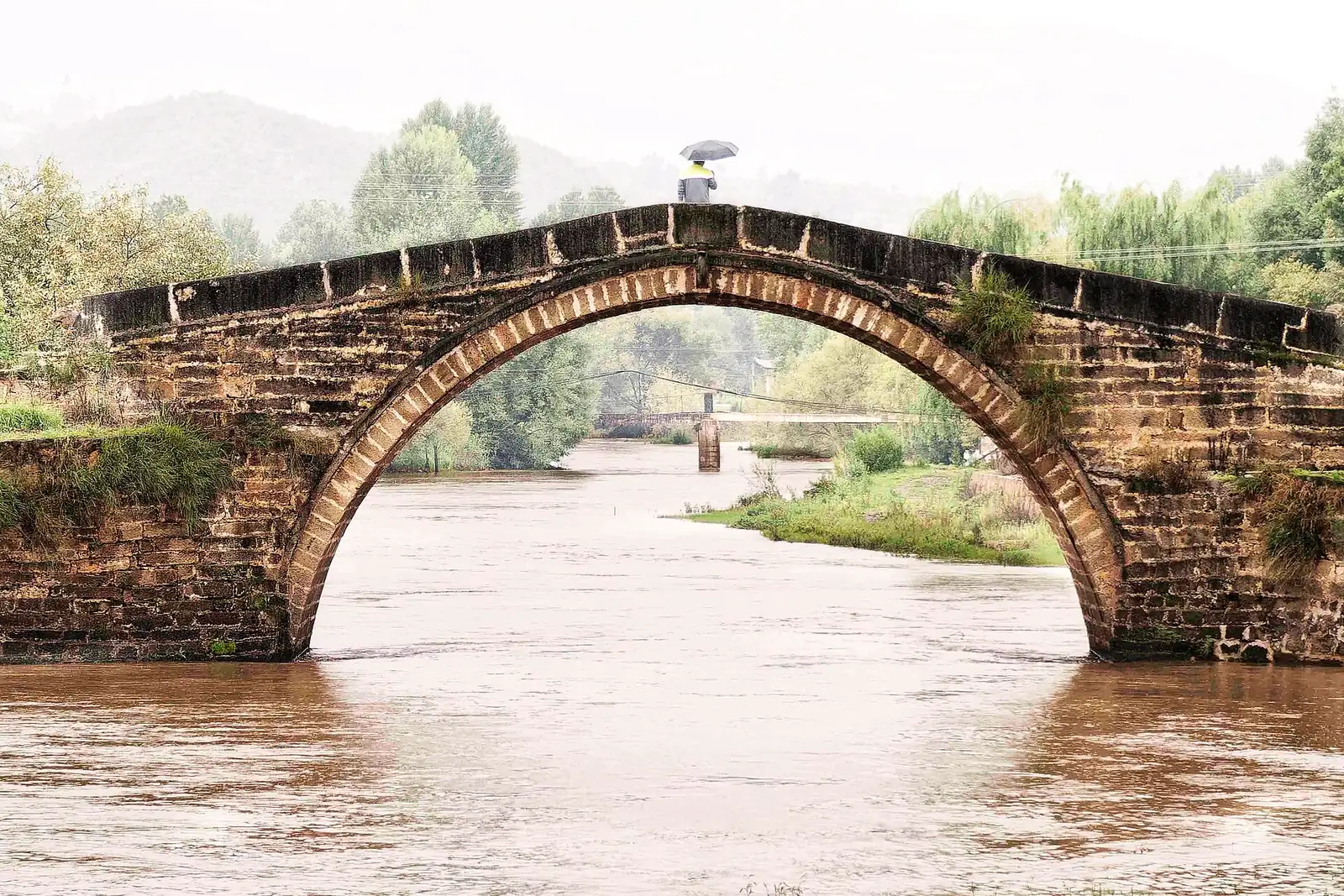
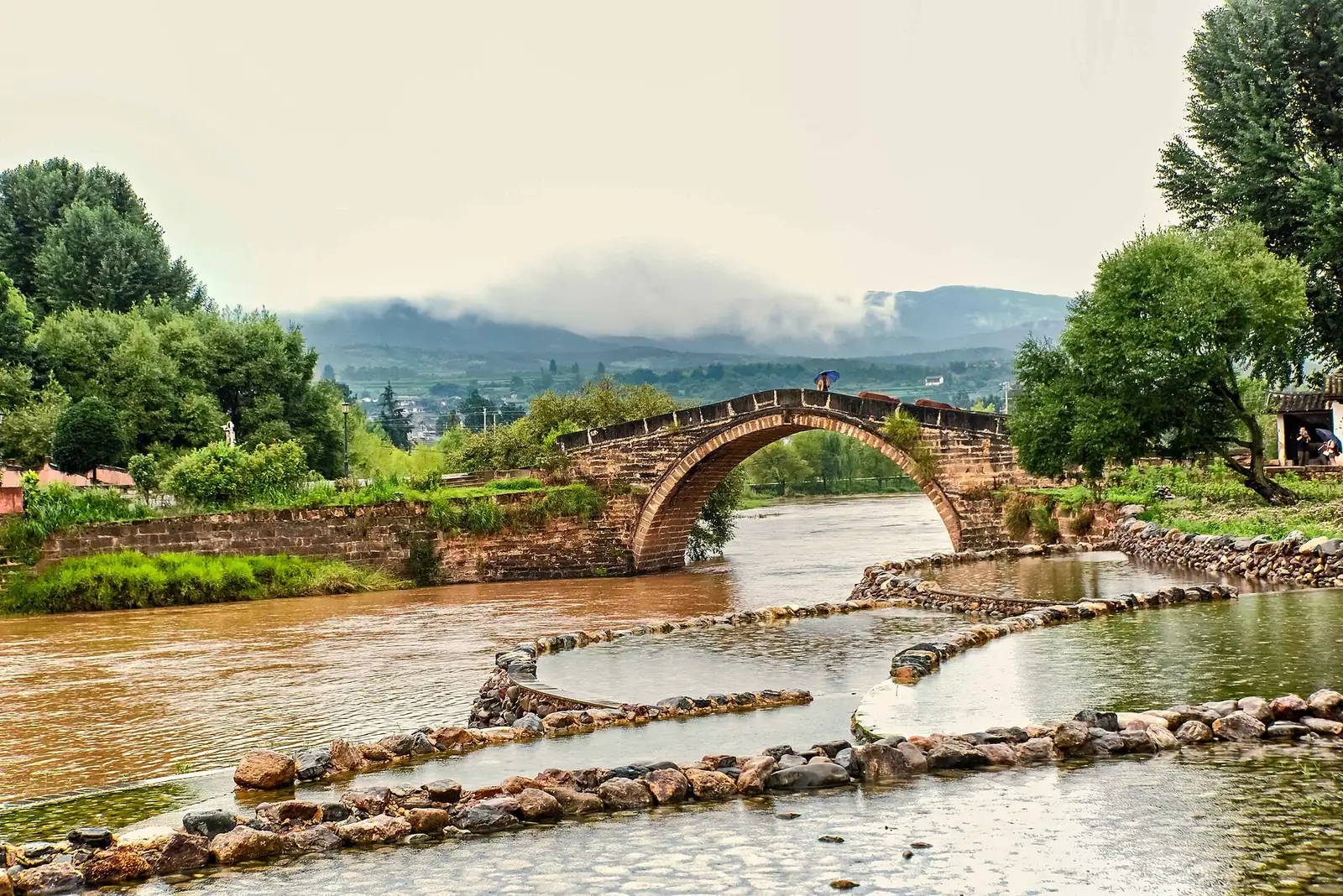
Leave through the east gate and walk down to this single-arch stone bridge over the Heihui River 黑惠江, where caravans set off across the valley. A tricycle from the visitor center can drop you here if you'd rather not walk.
Ouyang Courtyard 欧阳大院
A merchant family's compound in classic Bai style, with linked courtyards, carved wooden screens and a whitewashed screen wall that bounces light into the rooms. It shows how comfortably successful Tea Horse Road traders lived.
Friday market 沙溪集市
Shaxi still holds a weekly market, traditionally on Fridays, when Bai and Yi villagers from around the valley come to buy and sell produce, livestock, tools and snacks. It's a working market, busiest in the morning; confirm the day locally.
Shibaoshan Grottoes 石宝山石窟
Buddhist cliff carvings from the Nanzhao and Dali kingdoms, roughly 9th to 12th centuries, in forested hills a short drive from town. A good half day once you've seen the old town.
Where to stay
- Inside the old town: Courtyard guesthouses a minute from the square. Atmospheric and walkable, but rooms can be simple, and the uneven stone lanes are hard work with wheeled luggage.
- On the edge of town, by the fields: Quieter, roomier, with valley and paddy views, 10–15 minutes' walk from the square. Best for a longer stay.
- As a day trip from Dali: Possible, but you'd spend about four hours on the road and arrive when the lanes are busiest. We'd give it at least one night.
What to eat
Menus here are mostly Bai farmhouse cooking built on mountain produce, plus a growing number of courtyard cafés.
Fried goat cheese 乳饼
Firm, fresh goat's-milk cheese, pan-fried until golden. Dip it in salt and chili, or sugar if you prefer.
Wild mushrooms 野生菌
In the rainy season, local wild fungi are stir-fried with chili and garlic. Only eat them at restaurants, fully cooked.
Farmhouse chicken hotpot 土鸡火锅
A free-range chicken simmered for hours, then vegetables cooked in the broth at the table. Simple, filling and good on cool evenings.
Home-cured pork 腊肉
Salt-cured, air-dried pork sliced thin and stir-fried with garlic shoots or seasonal greens. Salty and smoky; pair it with plain rice.
Yunnan coffee 云南咖啡
Yunnan grows most of China's coffee, and Shaxi's courtyard cafés brew it well.
The honest take
Shaxi has a reputation as the Dali alternative: the place to find the old-Yunnan atmosphere that bigger towns have traded for bars and souvenir shops. Travelers who have done both often say it was the better use of a spare day. Early and late, that reputation holds up.
Be realistic, though. Shaxi is no longer a secret. Guesthouses, cafés and craft shops now fill most of the old lanes, weekends and holidays bring a midday crowd, and new building is spreading around the edges. The old town is small enough to see in half a day, so if you need a full schedule, one night is plenty. If you like reading in a courtyard and walking the fields, two nights pass quickly.
Getting there and around
- From Dali: About 2 hours by road. Shaxi sits between Dali and Lijiang, so it works well as a stop on the way north instead of a return trip.
- By train: There's no railway station in Shaxi or in Jianchuan, the county town. Take the train to Dali or Lijiang and go on by road: about 2 hours from Dali or from Lijiang, where a shuttle bus to Shaxi has run from the main bus station (check it's still operating and the current times). See trains.
- By private car: With public transport this awkward, a driver who takes you from Dali to Shaxi and on to Lijiang a day or two later is the simplest option. We can arrange one.
- In town: Walk. Cars stop outside the old town, and a tricycle runs from the visitor center toward Yujin Bridge.


.jpg)
