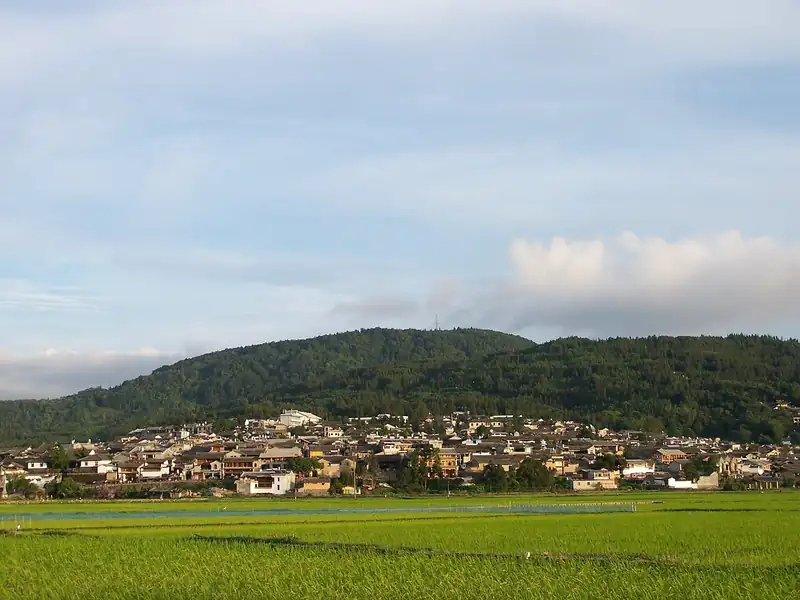
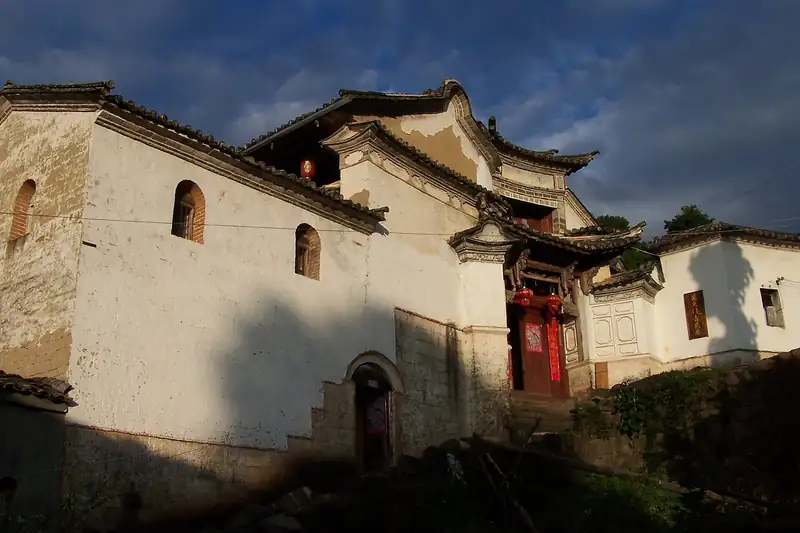
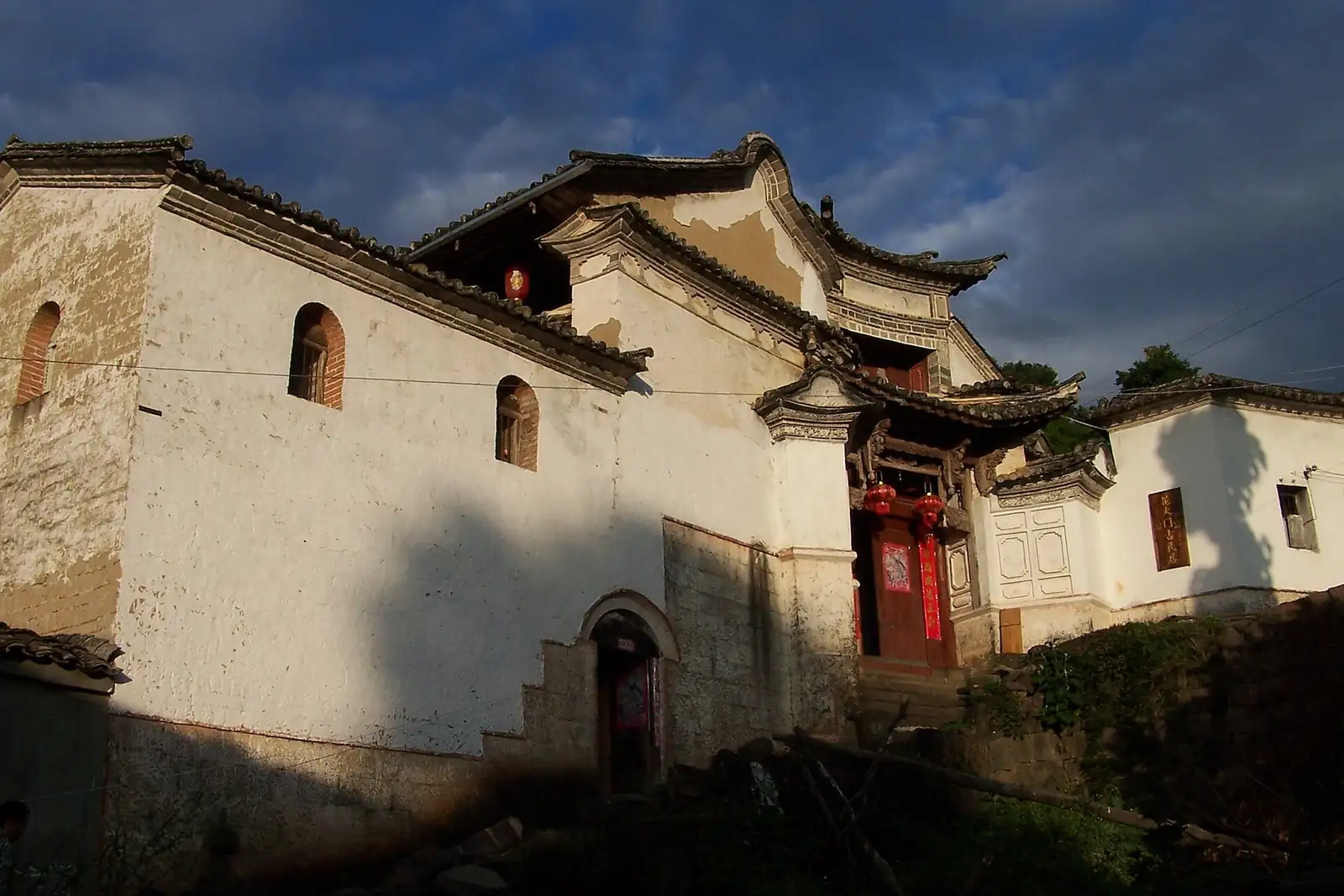
Baoshan is a prefecture-level city on Yunnan's western edge, but when people say they're going there, they almost always mean Tengchong 腾冲, a county-level city close to the Myanmar border. It has young volcanic cones, steaming hot springs and Heshun 和顺古镇, a village of stone lanes and clan halls paid for by families who traded in Burma for generations.
It sits well off the Kunming–Dali–Lijiang line, so it draws people on a second Yunnan trip who want slow days, warm water and history. This was also the China–Burma front in World War II, and Tengchong tells that story better than anywhere else in the province.
How locals do it
The pattern is simple: three nights in Heshun rather than Tengchong city, with day trips out. The village is only about 4 km from town, and staying there means you see it before the day groups arrive and after they leave.
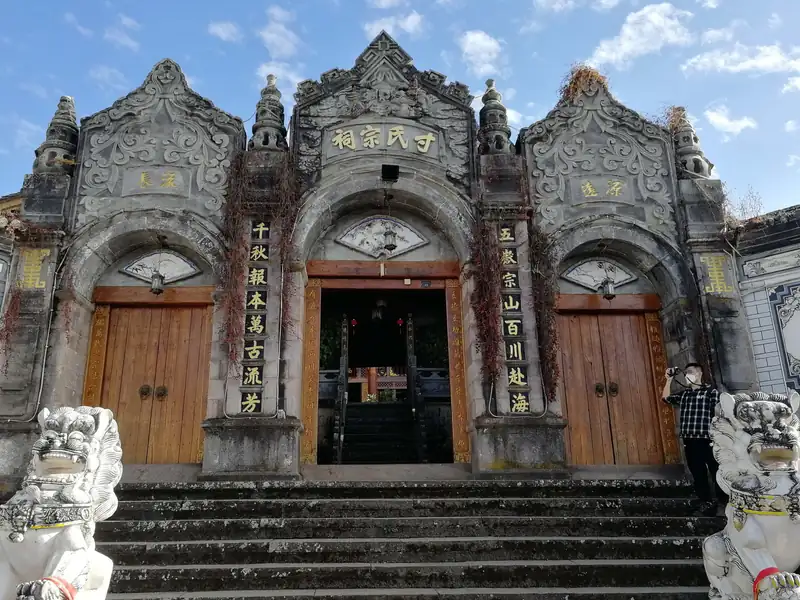
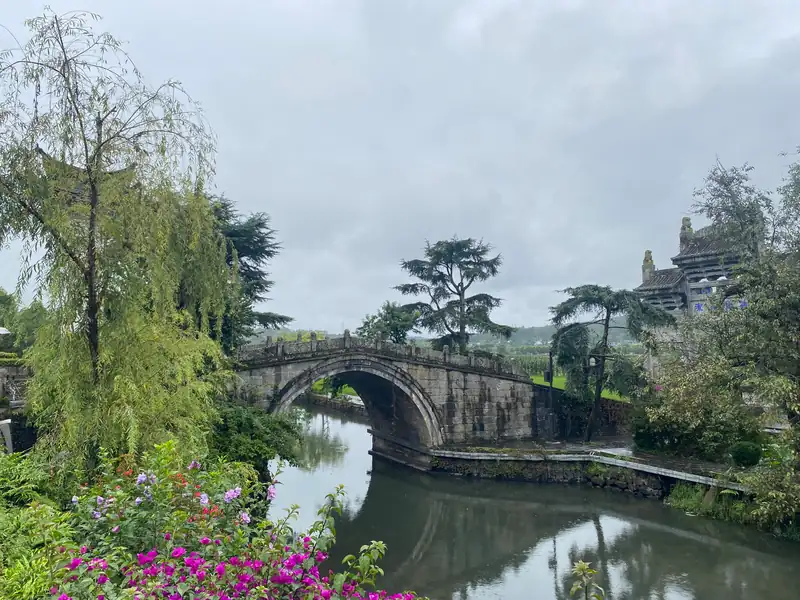
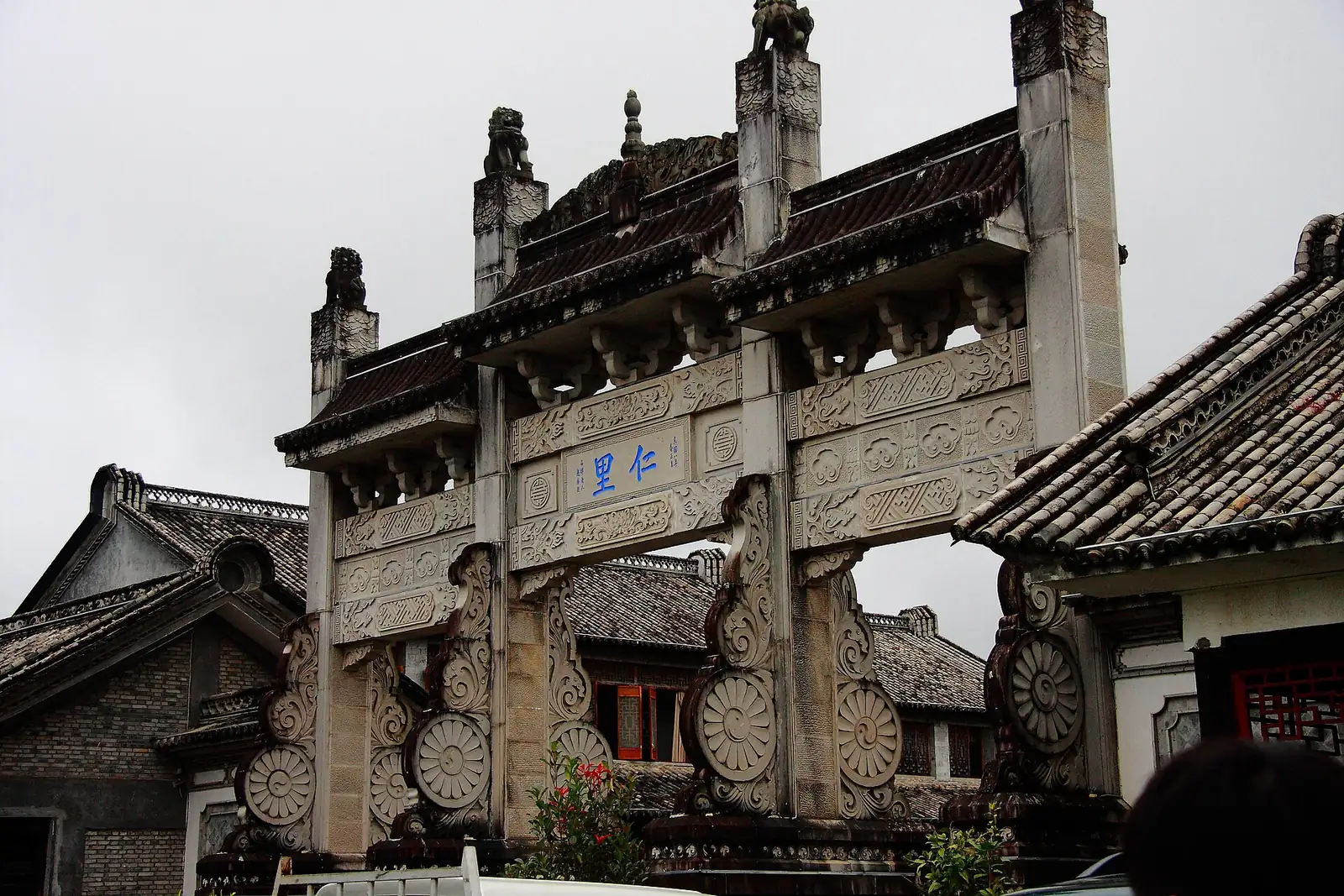
- Walk Heshun in two halves. The west side follows an old caravan path past five enormous camphor trees to the Cun Clan Hall 寸氏宗祠, one of the village's eight clan halls, with a Western-style arched gateway. The east side takes in the Twin Rainbow Bridge 双虹桥, Wild Duck Lake 野鸭湖 and the Li Clan Hall 李氏宗祠. It's longer, so take the village shuttle or rent an e-bike.
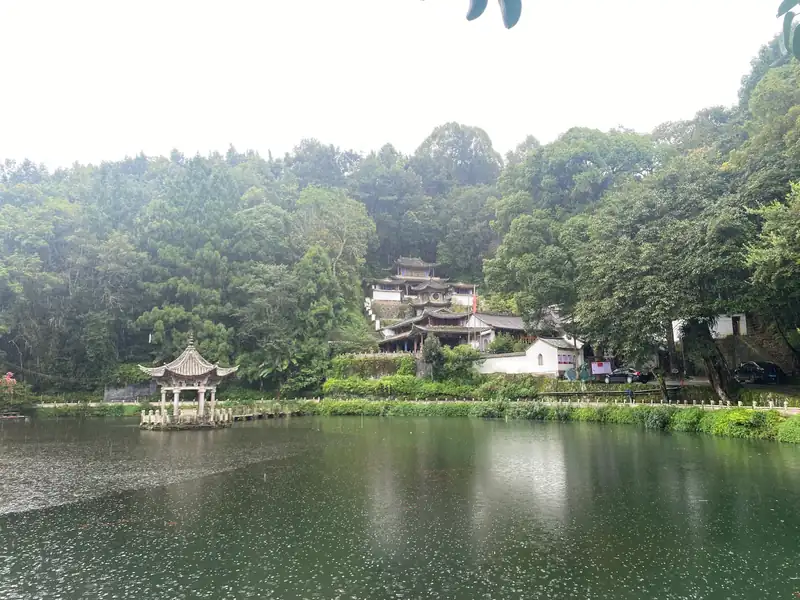
- Get up early at least once. At dawn, mist hangs over the lake and the Dragon Pond below Yuanlong Pavilion 元龙阁, and residents fish and wash clothes by the old laundry pavilions. In winter it stays dark until about 8 a.m., and the mist often lasts past 9.
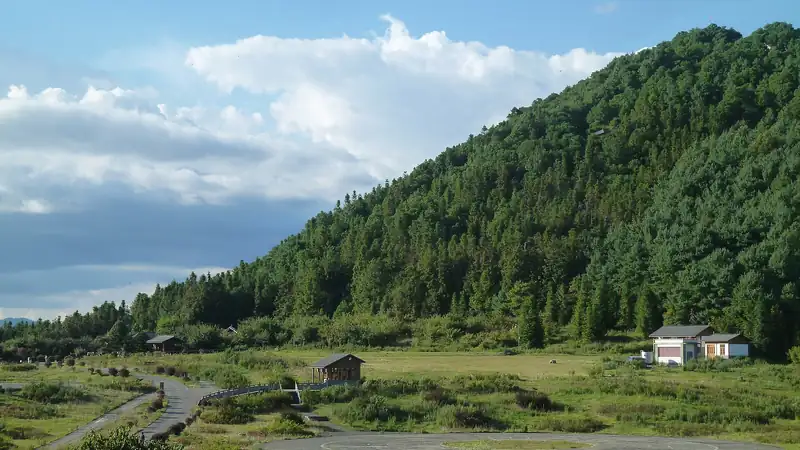
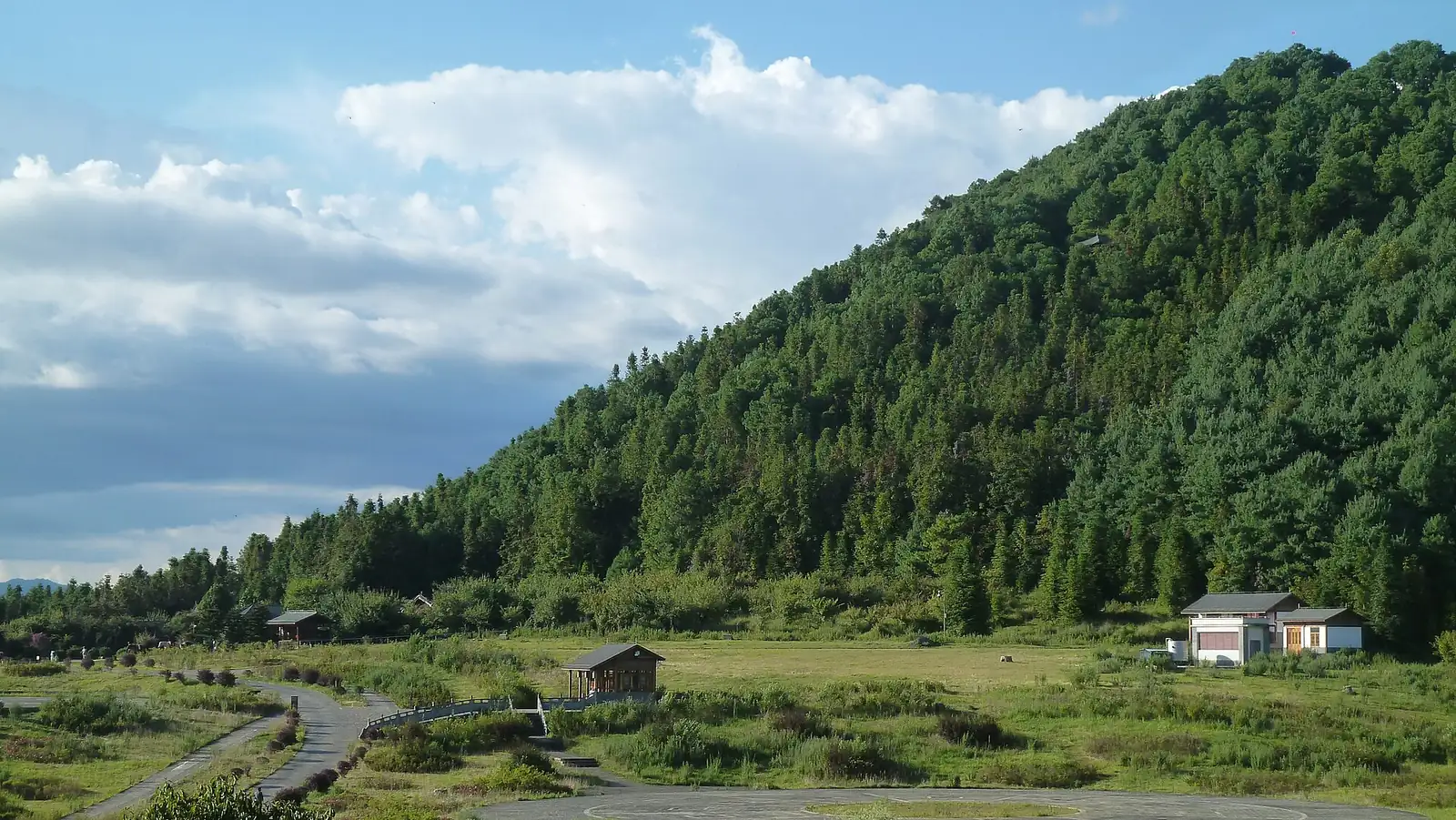
- Do the volcanoes before 11. Hot-air balloons over the Volcano Geopark 火山地质公园 generally only fly in the early morning and are grounded by wind or rain, so watch the forecast and shuffle your days around it. Pair it with Beihai Wetland 北海湿地, where you can cross floating grass mats on foot or by bamboo raft.
- Save an afternoon for Rehai. The Rehai geothermal area 热海 has boiling pools, sulfur vents and eggs cooked in the springs. Stay on for a soak as it gets dark.
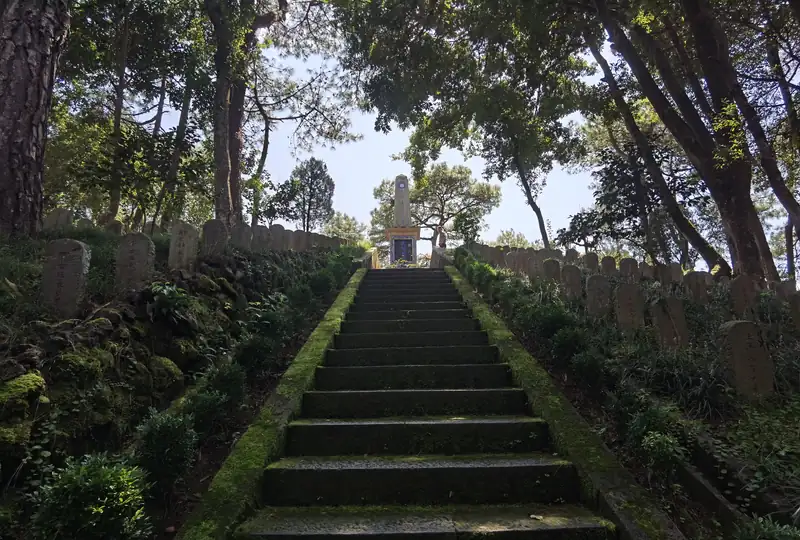
- Give the war history half a day. The Western Yunnan Anti-Japanese War Museum 滇西抗战纪念馆 and the Guoshang Cemetery 国殇墓园 beside it tell the story of the Chinese Expeditionary Force.
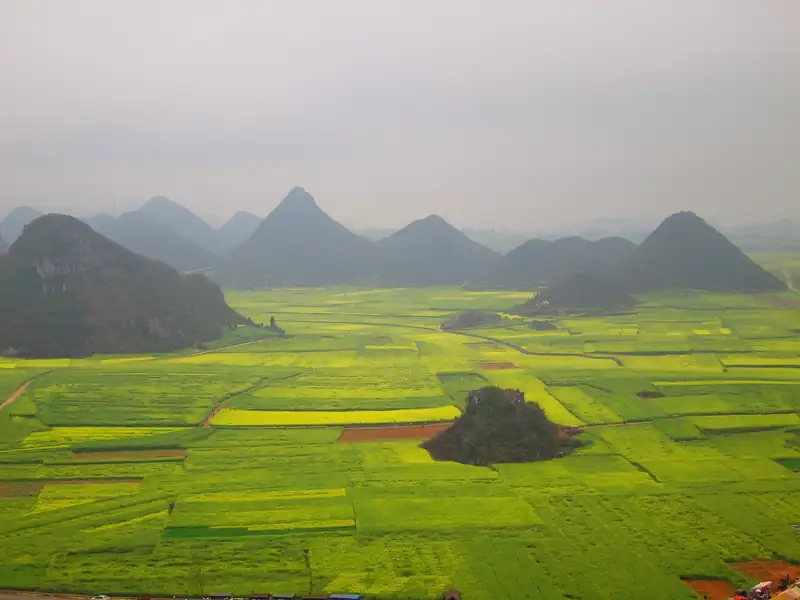
Canola fields around Jietou 界头 start flowering in mid to late February and peak in March under the Gaoligong range, and the trees of Jiangdong Ginkgo Village 江东银杏村 turn gold from mid-November to early December. Our festival and season calendar has the dates.
Baoshan city itself is mostly where the train stops. History buffs add the Songshan battlefield 松山战役旧址 in Longling County, on the old Burma Road from Baoshan toward Mangshi.
Where locals eat
Prices as of 2026; check before you go.
Clay-pot hotpot 土锅子
Tengchong's signature shared dish: a clay pot with a charcoal chimney in the middle, layered with vegetables, meatballs, egg rolls and pork, and simmered at the table.
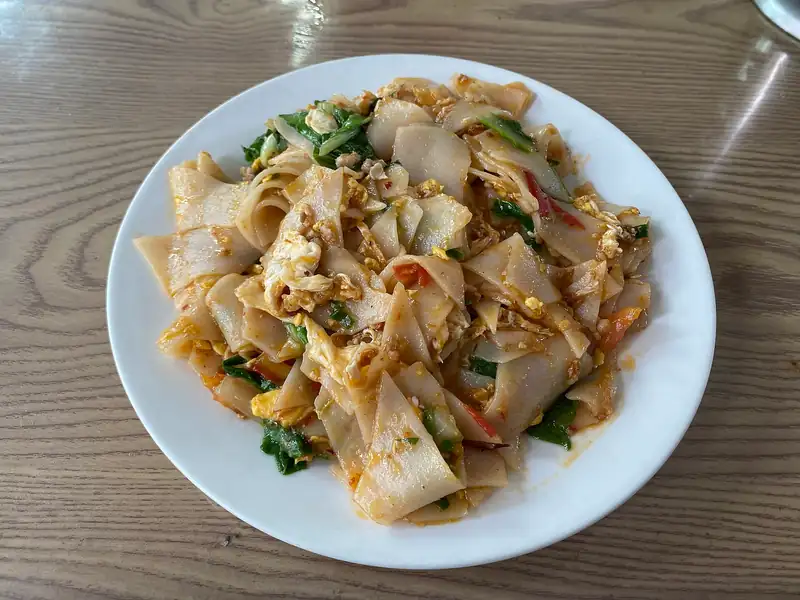
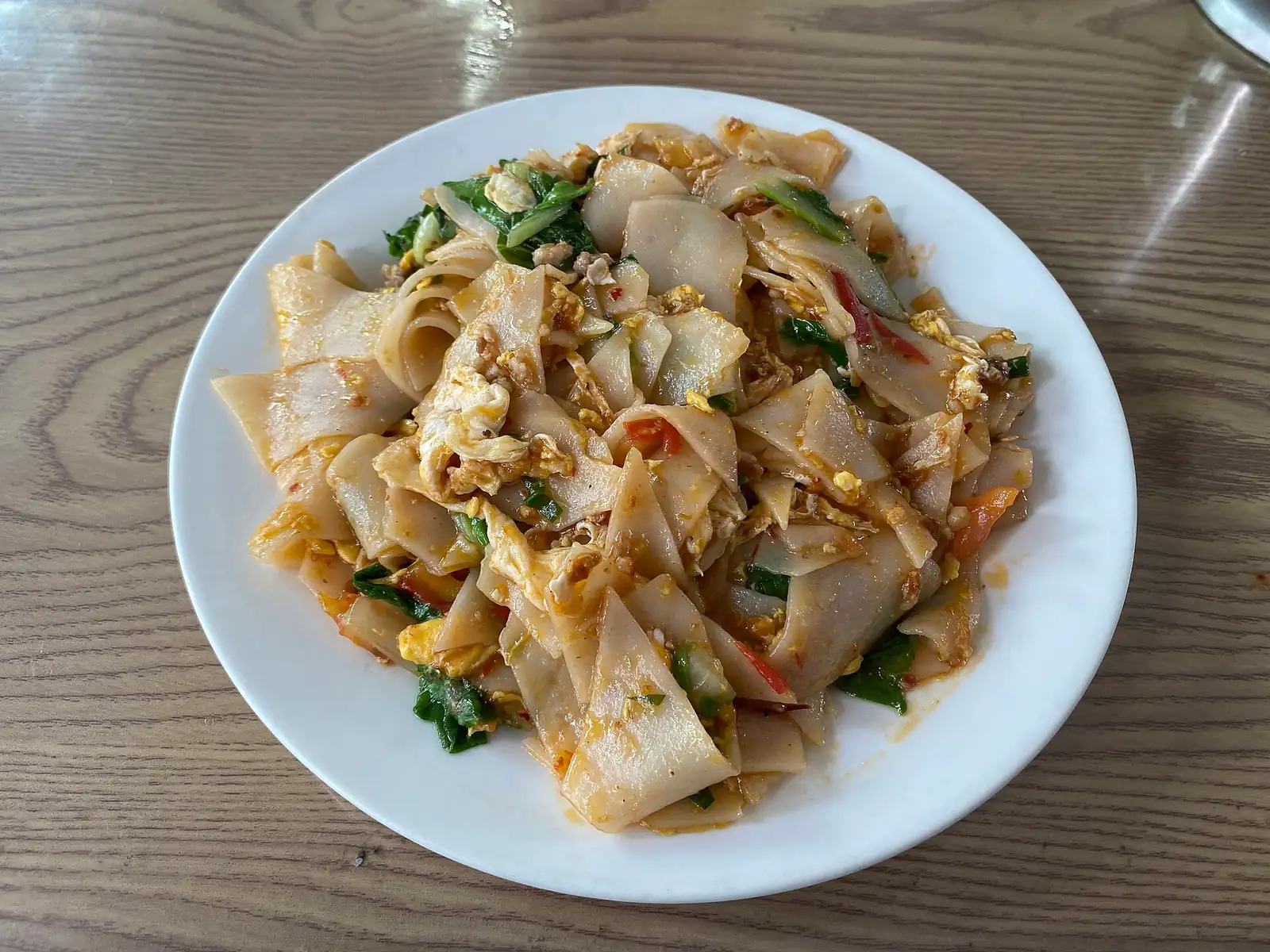
Da jiu jia 大救驾
Stir-fried slices of erkuai rice cake with ham, greens and tomato. The name means "came to the emperor's rescue," from a story about a fleeing Ming emperor being fed this dish here.
Heshun morning market 小菜街 稀豆粉
Villagers shop on Xiaocai Street early in the day. Have a bowl of thick, warm pea-flour porridge, over rice noodles or with fried dough for dipping, then climb to Zhongtian Temple.
Copper-ladle beef 铜瓢牛肉
Tengchong's beef hotpot: beef slow-cooked in a big copper pot over charcoal with pumpkin and potato, plus a spread of dipping sauces.
A Hua Weichu Old House 阿花味厨百年老宅
A local favorite: dinner in an old Heshun courtyard house, with a set menu chosen by the chef. An easy way to try many Tengchong dishes at once.
Zhang Family Courtyard 张家大院
An old-house kitchen beside the Zhang Clan Hall, cooking Tengchong dishes. Order its free-range chicken soup and pork steamed in lotus leaves.
Hidden corners and free viewpoints
Thousand-Hand Guanyin trees 千手观音古树群
Behind the Bolian hot-spring hotel on Heshun's west side, five giant camphor trees shade a stretch of the old caravan road. People who stay several days name it their favorite spot. Bring a book and sit.
Zhongtian Temple 中天寺
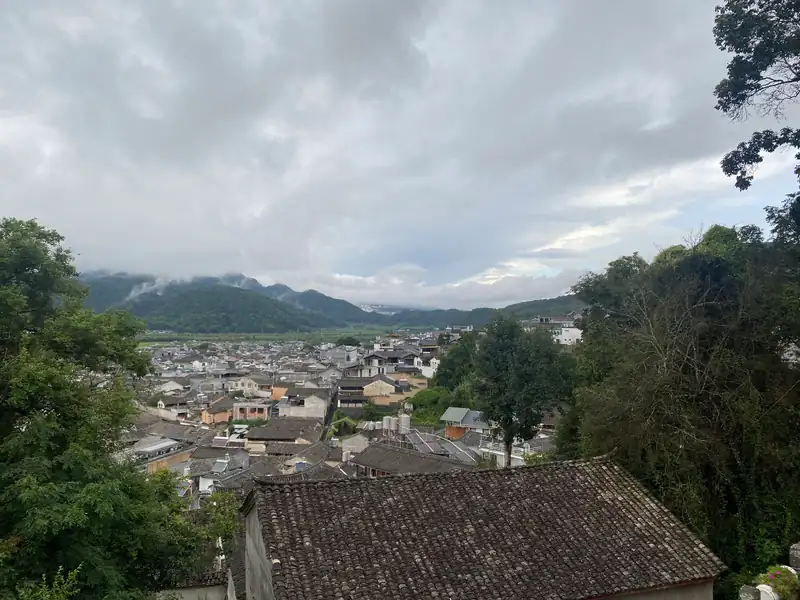
Walk up past the morning market to this hillside temple for a view down over Heshun's roofs and the fields beyond.
Xianhe Wetland 陷河湿地
The wetland in front of Heshun, named for soft ground that swallows your feet. Walk the edge for free, or pay extra for a boat or bamboo-raft ride.
Qiluo Old Town 绮罗古镇
A lived-in old town about 4 km southeast of Tengchong city, with clan halls, the Wenchang Temple complex and old courtyard houses. It's a more relaxed wander than the better-known old towns.
Sima La Wa Village 司莫拉佤族村
A Wa village of rammed-earth walls and thatched roofs outside Tengchong. It's a working village, so ask before you photograph people.
Honest verdicts
- Staying overnight in Heshun is worth it: the village is at its best at dawn and after dark, which day-trippers never see.
- The Western Yunnan Anti-Japanese War Museum is worth half a day for a sobering look at a WWII front most Western visitors have never heard of.
- A Volcano Geopark balloon ride depends on the weather: flights are early-morning only and often canceled, and without one the park is a short crater walk.
- Rehai depends on your mood: the boiling springs are striking, but it's a developed, paid park with busy boardwalks and slippery ground.
- Jiangdong Ginkgo Village depends on your dates: it's gold for a couple of weeks around late November, bare the rest of the year, and packed while it lasts.
- Jade and amber shop stops are overrated: Tengchong really is a jade-trading town, but tour-bus showrooms are sales pitches, not bargains.
Getting there and around
- By air: Tengchong Tuofeng Airport 腾冲驼峰机场 is about an hour's flight from Kunming. A taxi to the city or Heshun takes about 30 minutes and costs about ¥30–45.
- By train: No line reaches Tengchong yet. Bullet trains run to Baoshan, about 1.5 hours from Dali and 3.5 hours from Kunming; from there it's about 2.5 hours by bus or shared car. See trains.
- By road: About 4.5 hours' drive from Dali and 8 from Kunming.
- Getting around: Taxis between sights cost about ¥10–50. City bus 6 runs to Heshun and bus 2 to Rehai, but not often. For volcano, wetland and ginkgo days, a driver is far easier. Use metered taxis or ride-hailing, never unlicensed cars.
- Onward: Mangshi in Dehong is about 1.5 hours away by road, and our West Yunnan border loop links the two.


.jpg)


