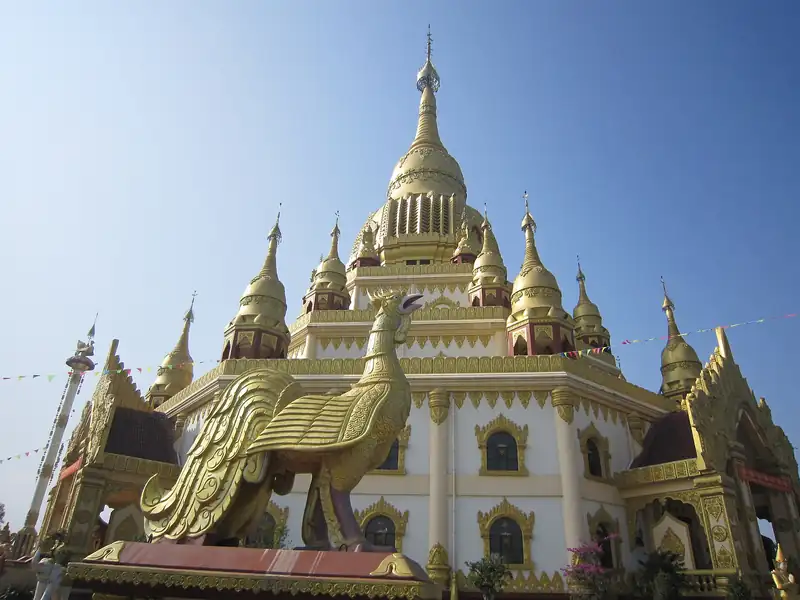
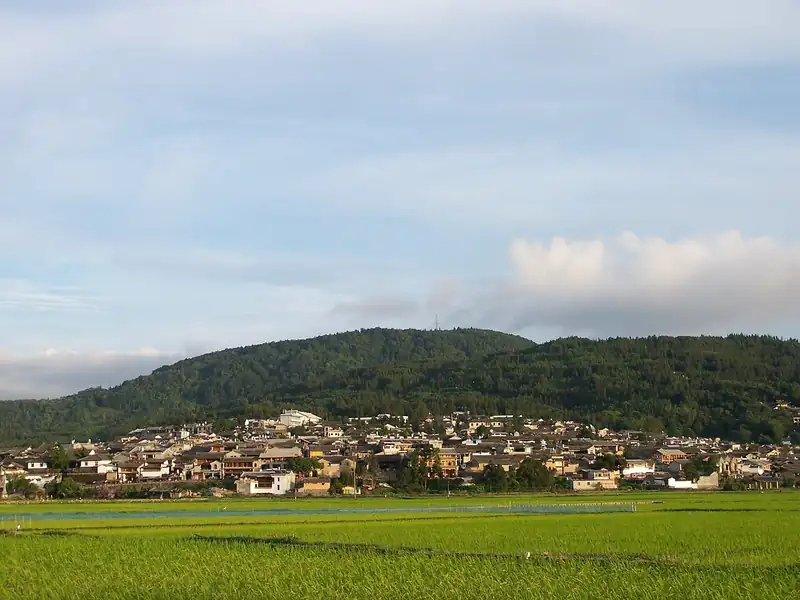
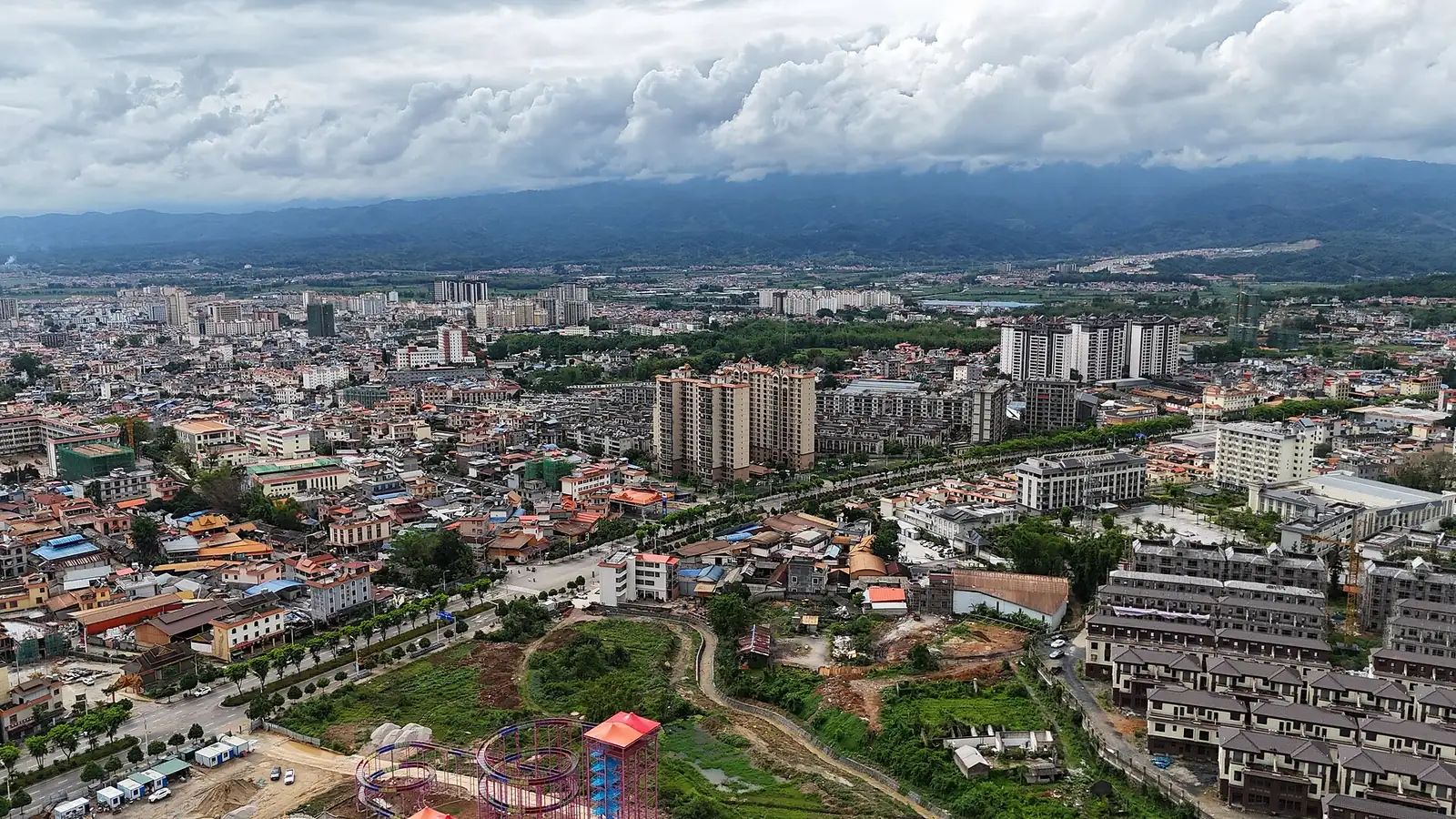
Dehong is the Dai and Jingpo autonomous prefecture on the Myanmar border, southwest of Baoshan and low enough to stay warm all winter. Its capital, Mangshi 芒市, is a small, unhurried town of palm-lined streets, gilded pagodas and Burmese milk-tea shops. Ruili 瑞丽, about 1.5 hours away, is the border-trade town.
It feels like Southeast Asia without leaving China; pair it with Tengchong for a slow west Yunnan loop. For foreign visitors it's properly off-grid: no trains yet, little English, and sights spread out enough that a driver makes the difference.
How locals do it
Mangshi is small enough to see in a day and a half on a rented e-scooter, and the point is to go slowly: breakfast noodles, a pagoda, a café, a nap, sunset, a night market.
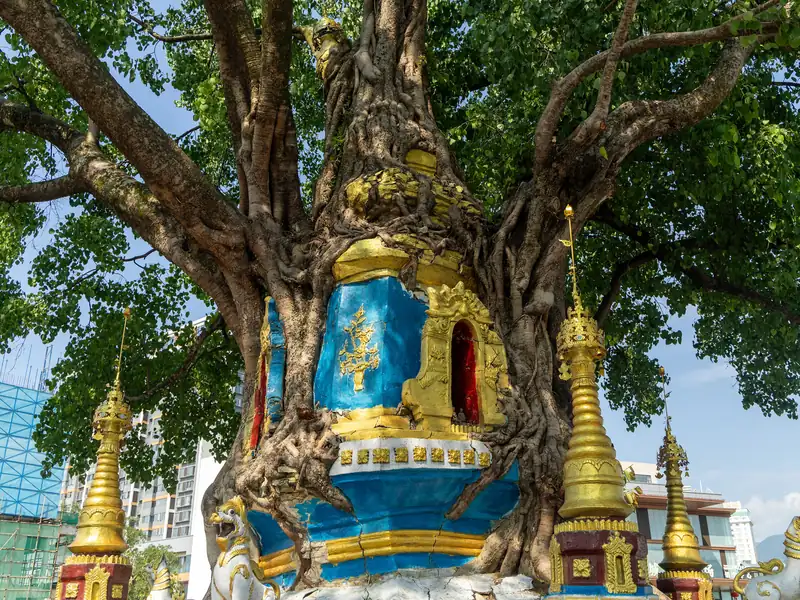
- Morning: Start at a breakfast shop with a self-serve condiment bar, then ride the palm-lined road outside Puti Temple 菩提寺 and stop at the Tree-Wrapped Pagoda 树包塔.
- Afternoon: Coffee by Peacock Lake 孔雀湖, or a Burmese-style hair wash, a long lie-back shampoo and scalp massage that has become a Mangshi ritual for visitors.
- From 4 p.m.: Head up to the Menghuan Silver Pagoda 勐焕大银塔 for sunset and reflections, then watch the last light on the Golden Pagoda from the viewpoint partway down the hill.
- Night: Eat your way through Xinwanchang 新玩厂, an old factory turned neon night market, or the stalls at the Dai Ancient Town 傣族古镇.
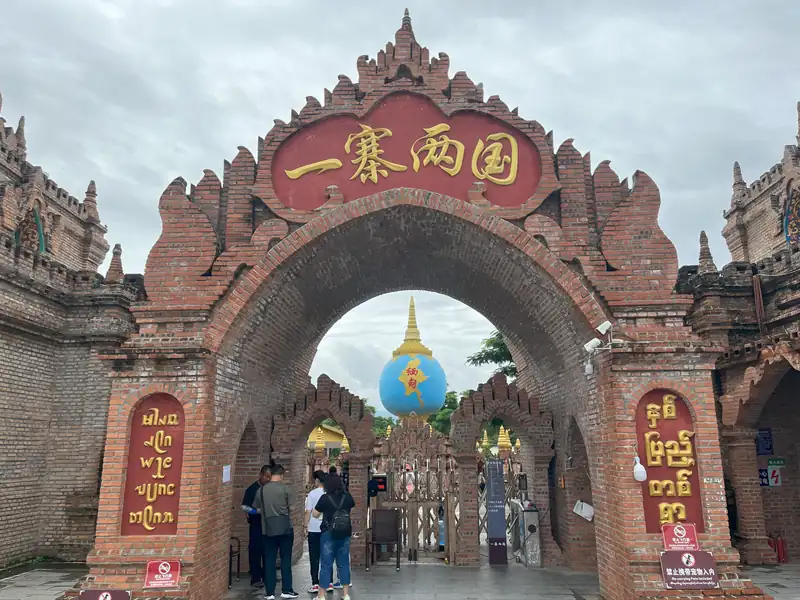
Ruili works as a day trip or a single night. See Yinjing, the "one village, two countries" 一寨两国 where the border runs between houses, the Jiegao border port 姐告口岸 where National Highway 320 from Shanghai ends, and the waterfall walk in the Moli Rainforest 莫里热带雨林. Then drive on to Tengchong. Our West Yunnan border loop links all three.
Two festivals are worth planning around: the Jingpo people's Munao Zongge 目瑙纵歌, a mass dance held around the Lantern Festival in February or early March (Mangshi's ran 2–4 March in 2026; the 2027 Lantern Festival falls on 20 February), and the Dai Water-Splashing Festival in mid-April. Check our festival calendar for dates.
Where locals eat
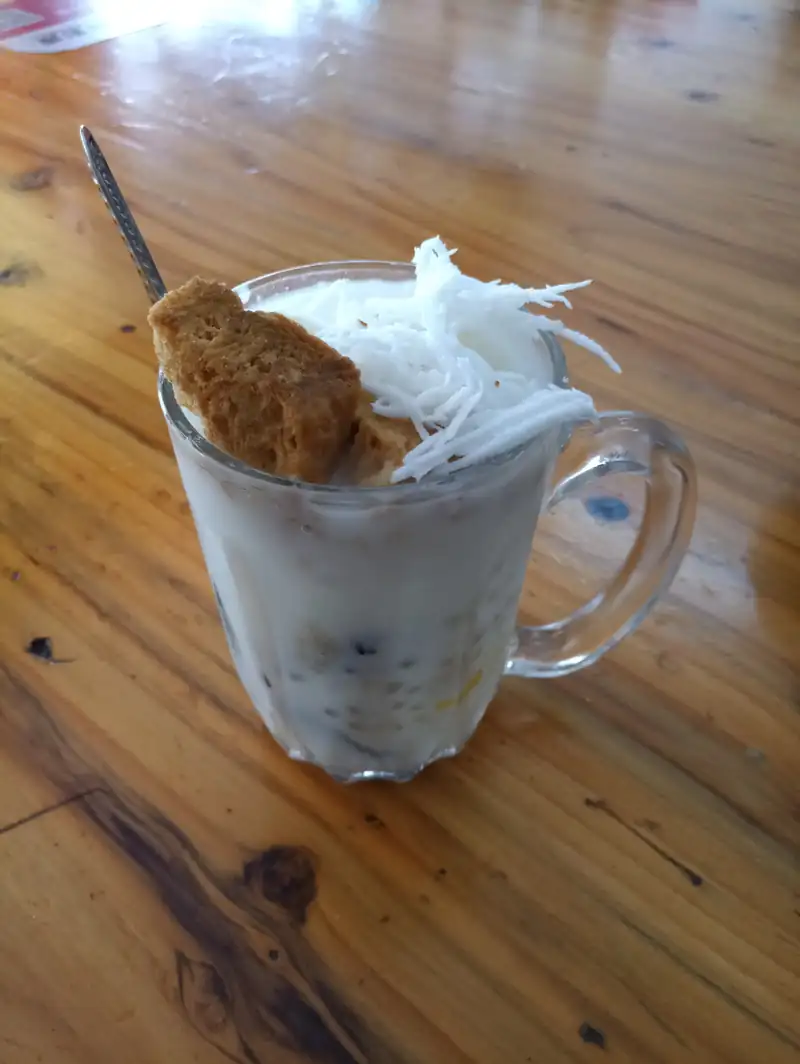
Pao lu da 泡鲁达
Dehong's favorite cold sweet: crunchy bread pieces and sago, sometimes with purple rice, soaked in coconut milk. The obvious order on a hot afternoon.
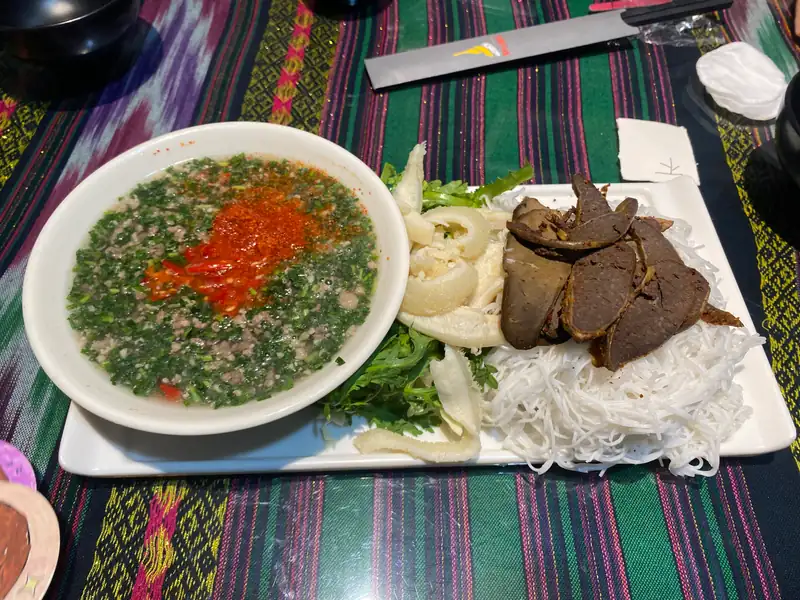
Sa pie 撒撇
The Dai dish locals order everywhere: rice noodles and grilled meat dipped in a sharp, herby sauce. The traditional bitter version 苦撒 gets its taste from cattle bile or intestinal juices; most first-timers start with the lemon one 柠檬撒.
Burmese milk tea and shuai baba 缅甸奶茶 甩粑粑
Strong, sweet milk tea with a flaky pan-fried flatbread, much like roti, often with egg or banana. A Burmese-style breakfast or afternoon break.
Yinjia Breakfast 银家早点
Rice noodles or erkuai noodles in clear or sour broth, with a self-serve bar of dozens of toppings, from fresh mint to chili. Build your own bowl.
Lanlu Breakfast 烂路早点
A breakfast shop running for more than a decade, known for clear-broth beef over erkuai noodles and a counter of about 20 condiments. Add a few drops of mujiangzi oil, a citrusy mountain pepper locals love.
A Miao Restaurant 阿妙餐厅
A no-menu local restaurant: you point at the day's ingredients in the fridge. Order mint pork ribs, stir-fried porcini and mango beef.
Pounded chicken feet 舂鸡脚
Cooked chicken feet pounded in a mortar with lime, chili and herbs, served cold. Sour and spicy; the small bones are usually left in, so eat slowly. Easy to find at the night markets.
Hidden corners and free viewpoints
Tree-Wrapped Pagoda 树包塔
A small Qing-dynasty pagoda that a bodhi tree has grown straight through over some 200 years, roots gripping the brickwork.
Palm road by Puti Temple 菩提寺
The street outside the temple is lined with tall palms. Come early for photos of the temple roofs without traffic.
Golden Pagoda from the hillside 勐焕大金塔
Partway up the hill below the two Menghuan pagodas, a viewing platform looks across at the Golden Pagoda as it catches the evening light.
Bingwu Street market 丙午街
A 2 km street in town that fills with villagers on market day, every five days: produce, wild vegetables, bamboo weaving and silver. It's also Dehong's biggest center for ethnic clothing, with tailors making Dai, Jingpo and De'ang outfits. Ask your hotel which day the market falls on.
Honest verdicts
- The Menghuan Silver Pagoda at sunset is worth it: the silver stupa and its reflections photograph better than the gold one and feel calmer.
- The Menghuan Golden Pagoda depends: it's huge and striking, but a look from a distance is enough.
- Mangshi's night markets are worth an evening each: cheap, varied, and where the town actually comes out.
- One Village, Two Countries depends: a swing over the border line and a boundary stone make a fun half hour on the way, not a reason to go to Ruili.
- Ruili's jade markets and roadside "duty-free" shops are overrated: look if you're curious, but touts are persistent and you can't judge quality or price.
- Ruili as a base depends: it has been much quieter since the pandemic, so it suits a day trip better than a long stay.
Getting there and around
Prices as of 2026; check before you go.
- By air: Dehong Mangshi International Airport 德宏芒市国际机场, about 6.5 km from town, has direct flights from Kunming and other Chinese cities. Or fly into Tengchong and drive about 1.5 hours.
- No trains yet: The new railway from Dali runs just past Baoshan but won't reach Mangshi or Ruili until the long Gaoligong tunnel is finished, so plan on the road.
- The loop: Mangshi to Ruili about 1.5 hours; Ruili to Tengchong about 2–2.5 hours via Longchuan (tolls about ¥130); Tengchong back to Mangshi about 1.5 hours (tolls about ¥63).
- Driving yourself: Renting a car needs a Chinese license, so most foreign visitors hire a driver. We can arrange one at a fixed price.
- In Mangshi: Rent an e-scooter or use taxis. Shared e-bikes aren't allowed up the pagoda hill; take the shuttle or a bus instead.
.jpg)
