Zhaotong 昭通 is Yunnan's far northeast, a high, cool corner squeezed between Sichuan and Guizhou. For two thousand years it was a main gateway from Sichuan into Yunnan, and its food, dialect and pace still feel closer to Sichuan than to Dali or Lijiang. Foreign visitors are rare.
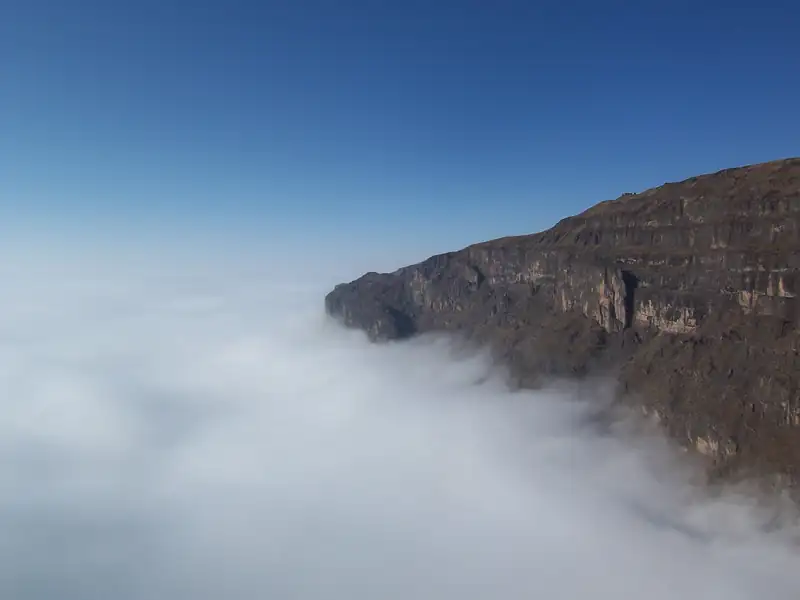
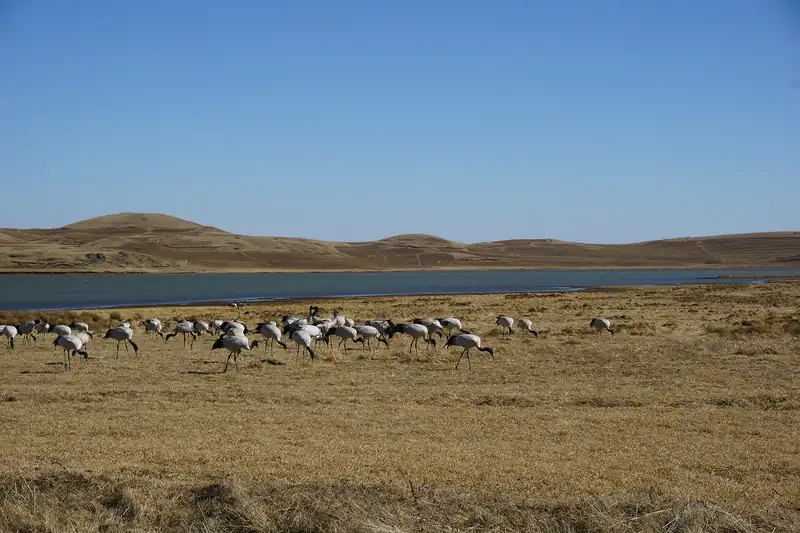
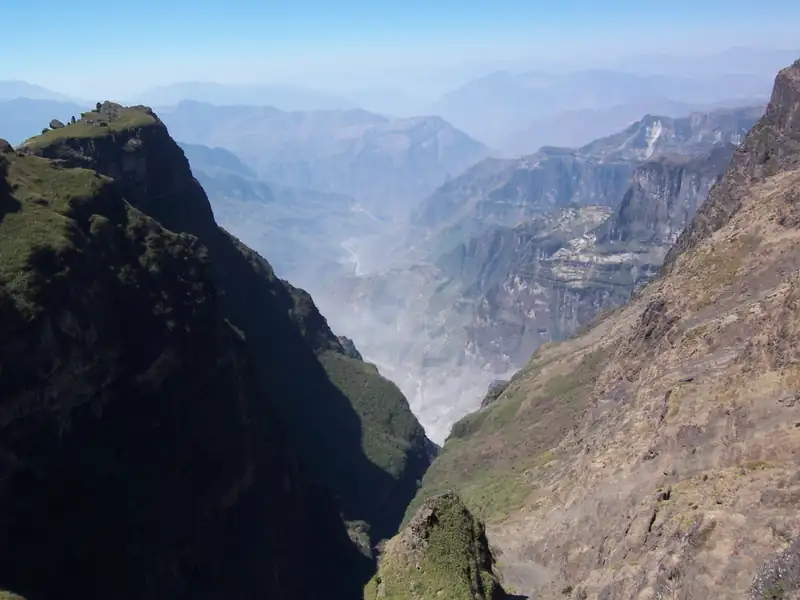
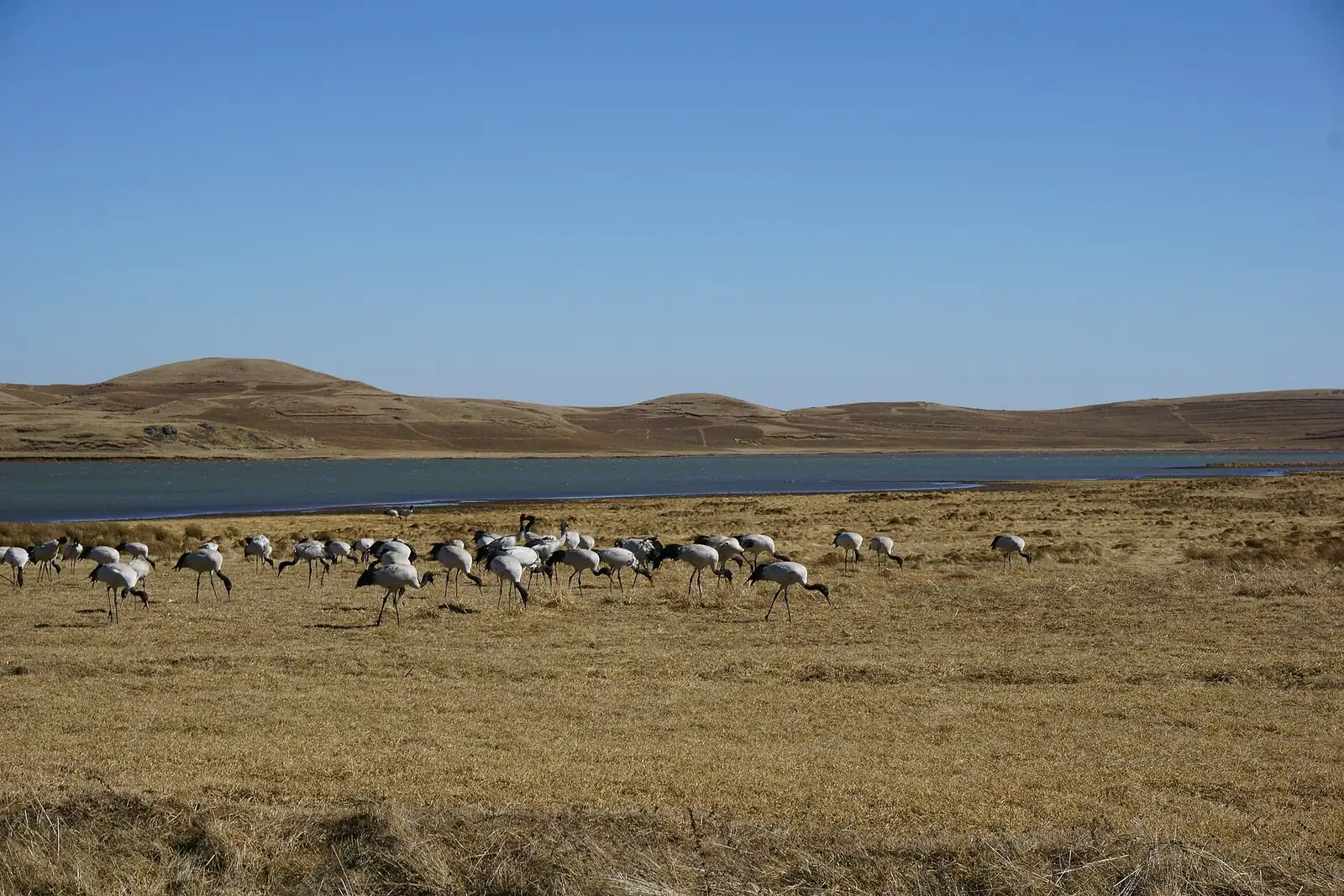
Visitors come for one place: Dashanbao 大山包, a windswept upland of grass and marsh at around 3,000 m where black-necked cranes spend the winter and clouds pour through the valleys below. Many stay on in the city for its charcoal-grilled street food.
How locals do it
Base in the city, two or three nights. Zhaotong city sits at about 1,900 m and has the hotels, the food and the transport. Dashanbao is roughly 65–80 km away depending on the route, about 1.5 hours each way by car, so most people do it as a long day trip.
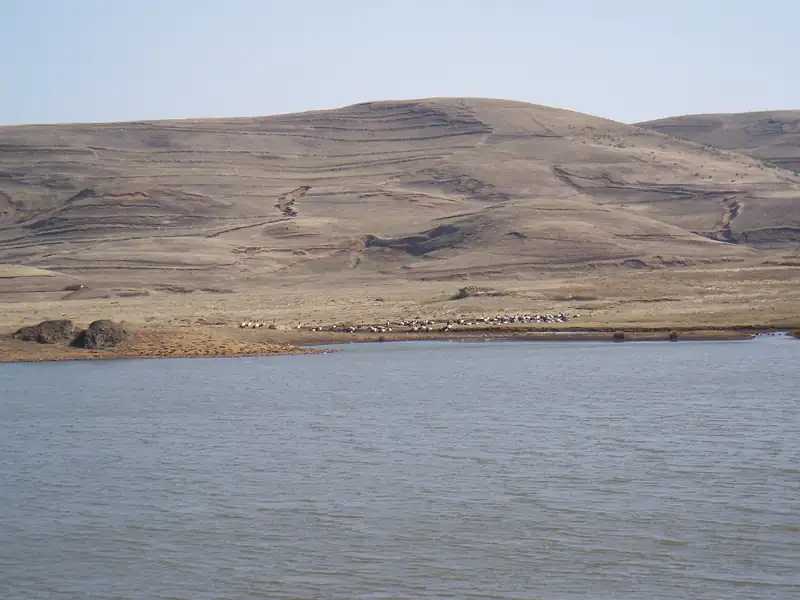
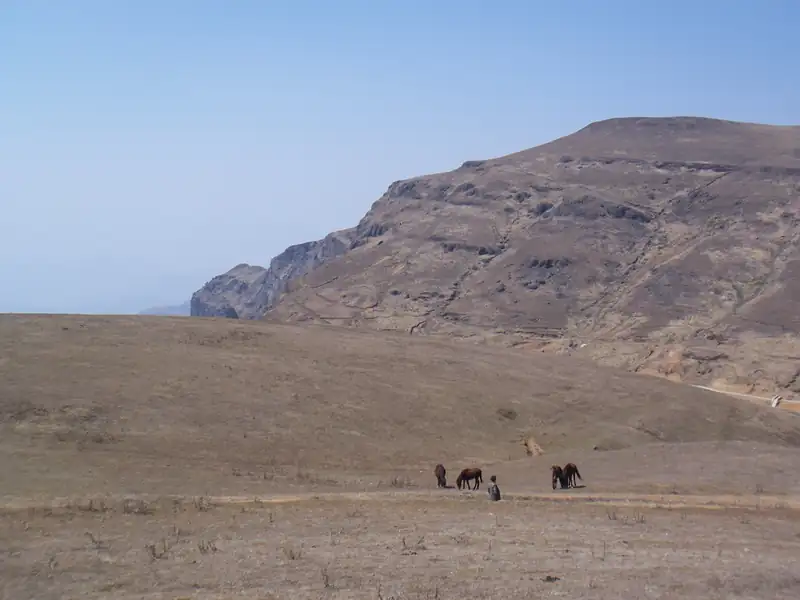
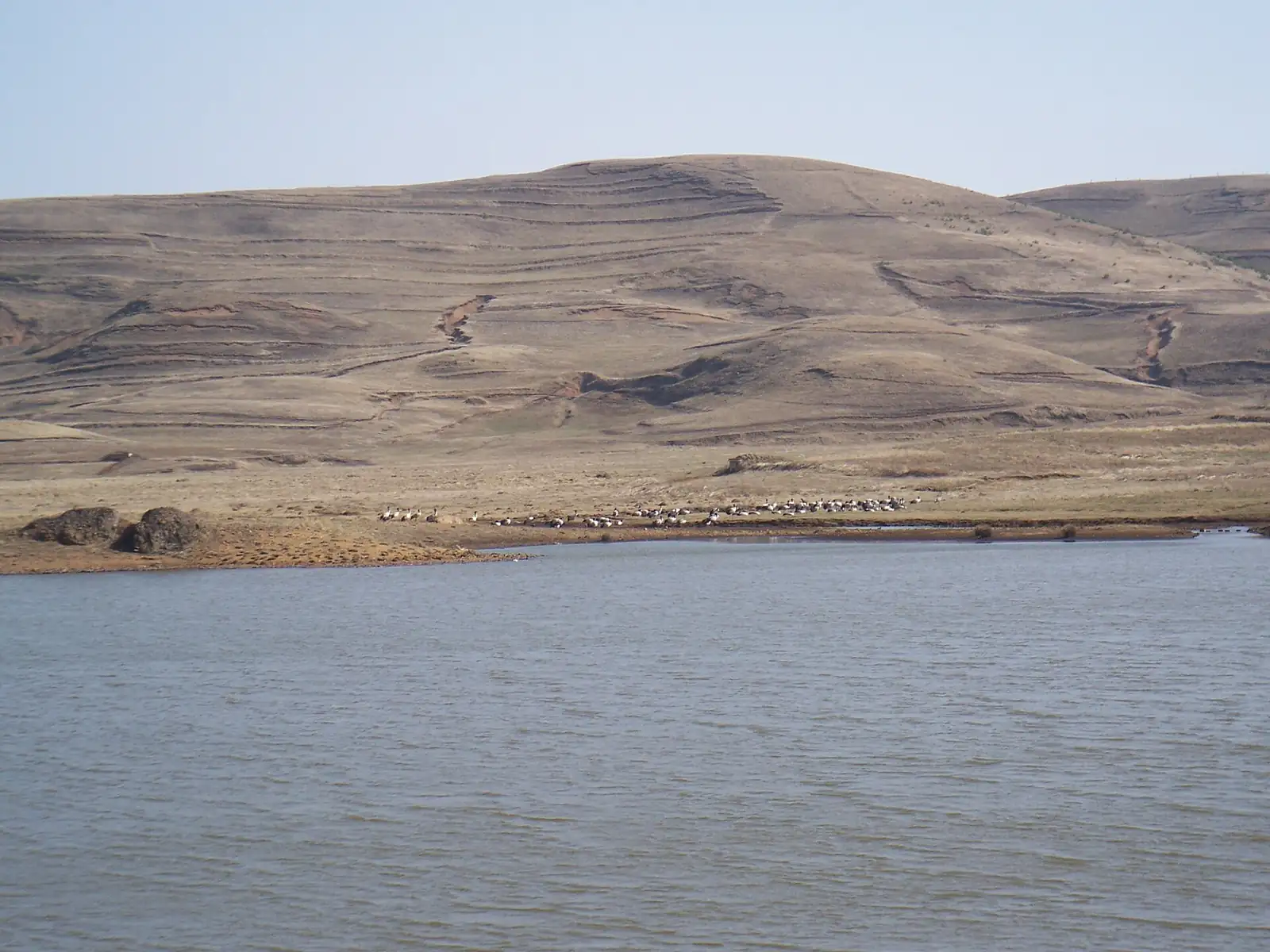
Know that Dashanbao is two separate sites. Dahaizi 大海子 is the wetland where the cranes gather. Jigong Mountain 鸡公山 is the cliff-edge viewpoint for cloud seas, with a reservoir on the way. They are ticketed separately, and most people do Jigong Mountain first and Dahaizi in the afternoon.
The Jigong Mountain loop. Prices as of 2026; check before you go. The entry ticket (about ¥55) and the site shuttle (about ¥45) are sold together; you can't buy one without the other. The shuttle drops you at a glass walkway, then continues to Tiaodunhe Reservoir 跳墩河, from where you walk one to two kilometers out to the Jigong Mountain summit before riding back. Horses are offered for the walk: agree the price and the drop-off point first, and know that the second stretch costs less than the first.
Cranes in the late afternoon. At Dahaizi the light is best from 3 to 6 p.m., and between about 4 and 5:30 p.m. the birds are fed and whole flocks lift off together. Arrive before the 4 p.m. rush to claim a window in the viewing corridor, and keep your voice down; noise flushes the birds.
Dress for 3,200 m in wind. Dahaizi sits at about 3,200 m and the plateau is exposed. Even when the city feels mild, bring a down jacket, hat and gloves. The Jigong trail is dusty and littered with horse dung, so wear shoes you can hose off and carry a mask.
Match the season to what you want. Cranes are here roughly November to March. In summer the grassland turns green and flowering, and cloud seas often fill the valleys below Jigong Mountain.
Where locals eat
Zhaotong small meat skewers 昭通小肉串
The city's signature: thumbnail-sized pieces of pork on thin bamboo sticks, grilled fast over charcoal and ordered by the dozen, since each stick is a bite or two. Eat them hot from the grill at a street-side stall in the evening.
Charcoal-roasted potatoes 烧洋芋
Potatoes from the cold highlands, roasted in the embers until the skin blisters, then split and dipped in dry chili powder. Locals are proud of their potatoes, with reason.
Steamed ersi 蒸饵丝
The local breakfast: strands of rice cake steamed rather than boiled, piled into a bowl with savory toppings and chili. Firmer and chewier than the soup noodles you get in Kunming.
Gastrodia chicken stew 天麻炖鸡
Zhaotong's Yiliang County is famous for tianma, the gastrodia tuber used in Chinese medicine. Here it goes into a slow chicken stew that locals serve as a warming, restorative dinner.
Fried potato chunks and ice jelly 炸洋芋 冰粉
The street-snack pair: crisp fried potatoes tossed with chili, herbs and pickles, then a bowl of wobbly ice jelly in brown-sugar syrup to cool your mouth.
Zhaotong apples 昭通苹果
The cool, sunny uplands are known across Yunnan for their apples. In autumn, orchards and roadside stalls around the city sell them by the bag.
Hidden corners and free viewpoints
Doushaguan 豆沙关
An ancient pass in Yanjin County on the old route to Sichuan. Worn steps of the Five-Foot Road 五尺道, built in the Qin dynasty more than 2,000 years ago, still carry hoof marks, and across the river the wooden hanging coffins of the vanished Bo people 僰人悬棺 are wedged into the cliff.
Huanglianhe waterfalls 黄连河
A chain of waterfalls in Daguan County that locals head to in summer to escape the heat. Go after the rains start, when the falls are full.
Zhaotong old town at dusk 昭通古城
The old center of the city, where locals stroll and snack in the evening. Come hungry and graze your way through skewers, potatoes and ice jelly.
Wanghai Park 望海公园
A lake park in the city where residents take their evening walks. An easy way to spend your arrival afternoon.
Honest verdicts
- Dahaizi in crane season is worth it: watching flocks of black-necked cranes lift off in the late-afternoon light is the reason to come this far.
- Jigong Mountain depends on the sky: a huge drop and rolling clouds when it's clear, a gray wall when fog settles in.
- The glass walkway is overrated in fog, when you can't see through it; walk in the pine woods beside it instead.
- Dashanbao as a whole depends on your expectations: most visitors call it moving but say once is enough, with basic facilities and chaotic holidays.
- Zhaotong's evening street food is worth an extra night for the skewers and roast potatoes alone.
Getting there and around
- By air: Zhaotong Airport, just east of the city, has flights from Kunming (about an hour) and several other Chinese cities. It is the simplest way in. A new airport north of the city is due to replace it, so check which one your ticket names.
- By road: About 4–5 hours from Kunming by expressway.
- By train: Existing train services are slow. The new Chongqing–Kunming high-speed line, with a Zhaotong East station, is officially planned to open in June 2027, possibly sooner; check trains before you book.
- To Dashanbao: There's no useful public transport, and the two sites are ticketed separately. Hire a car with a driver for the day, and don't try to drive into the bird-viewing area yourself; private cars are turned back and the tracks are rough. We can arrange a driver.
.jpg)

.jpg)