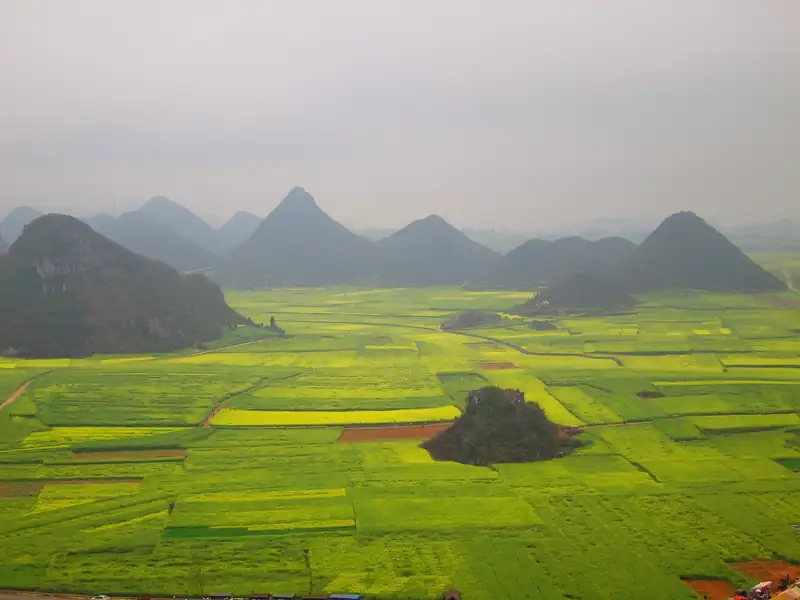
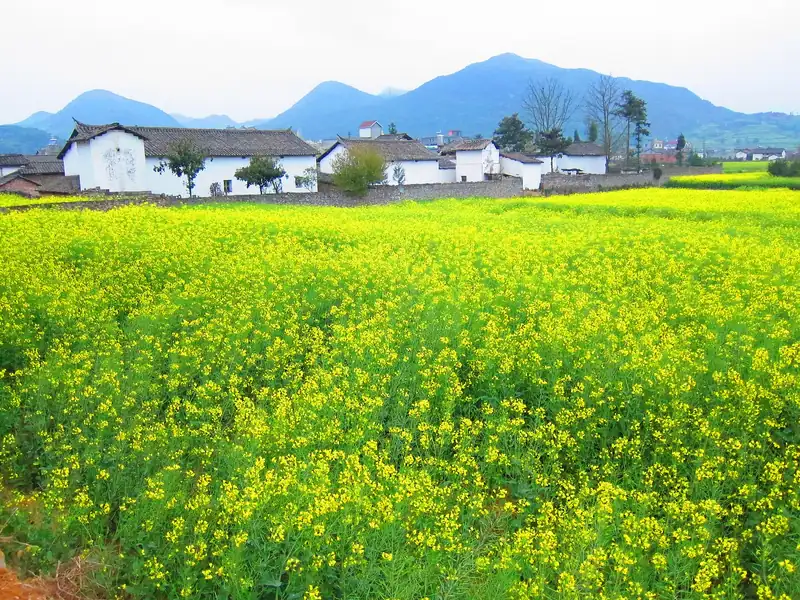
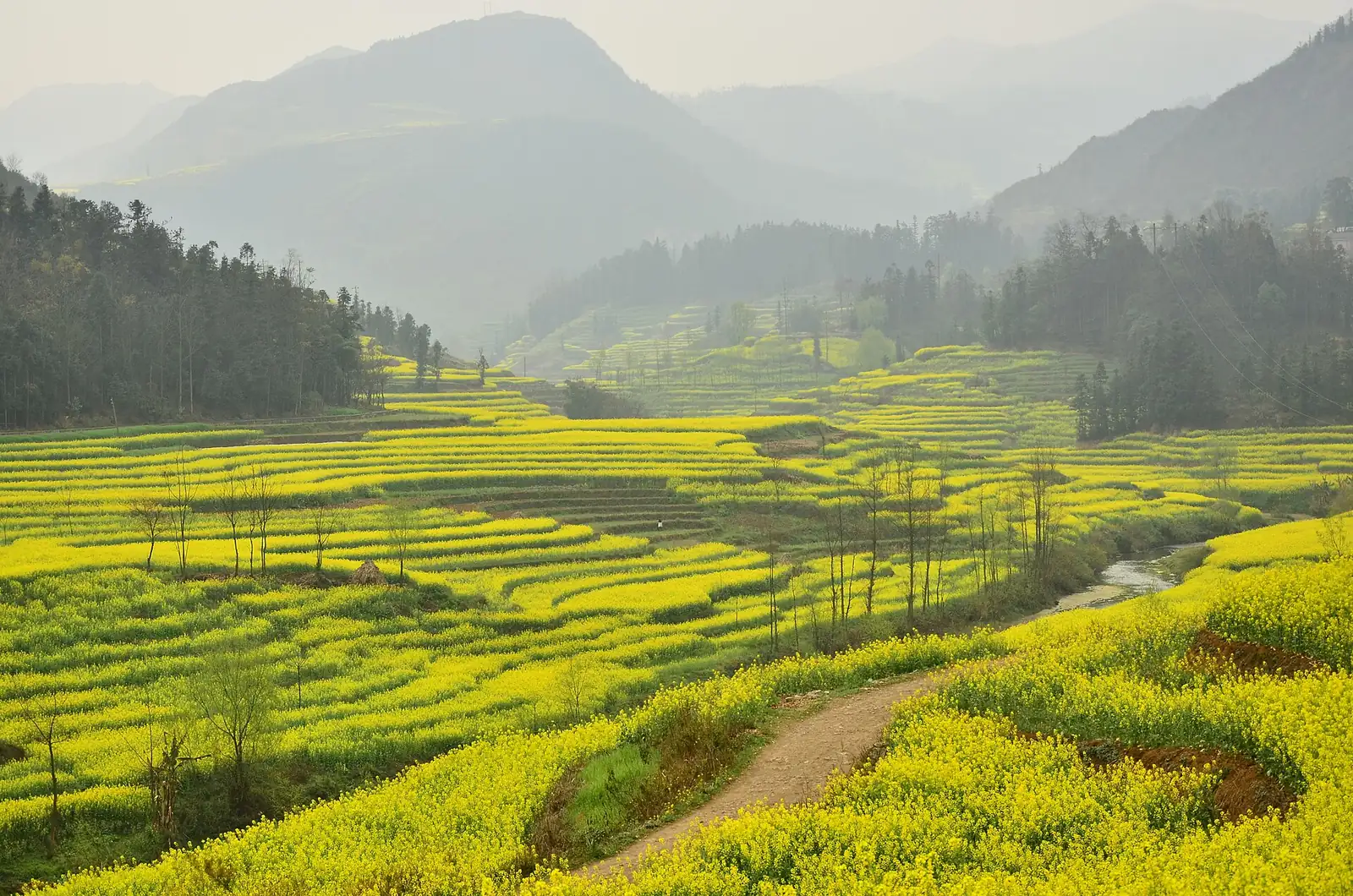
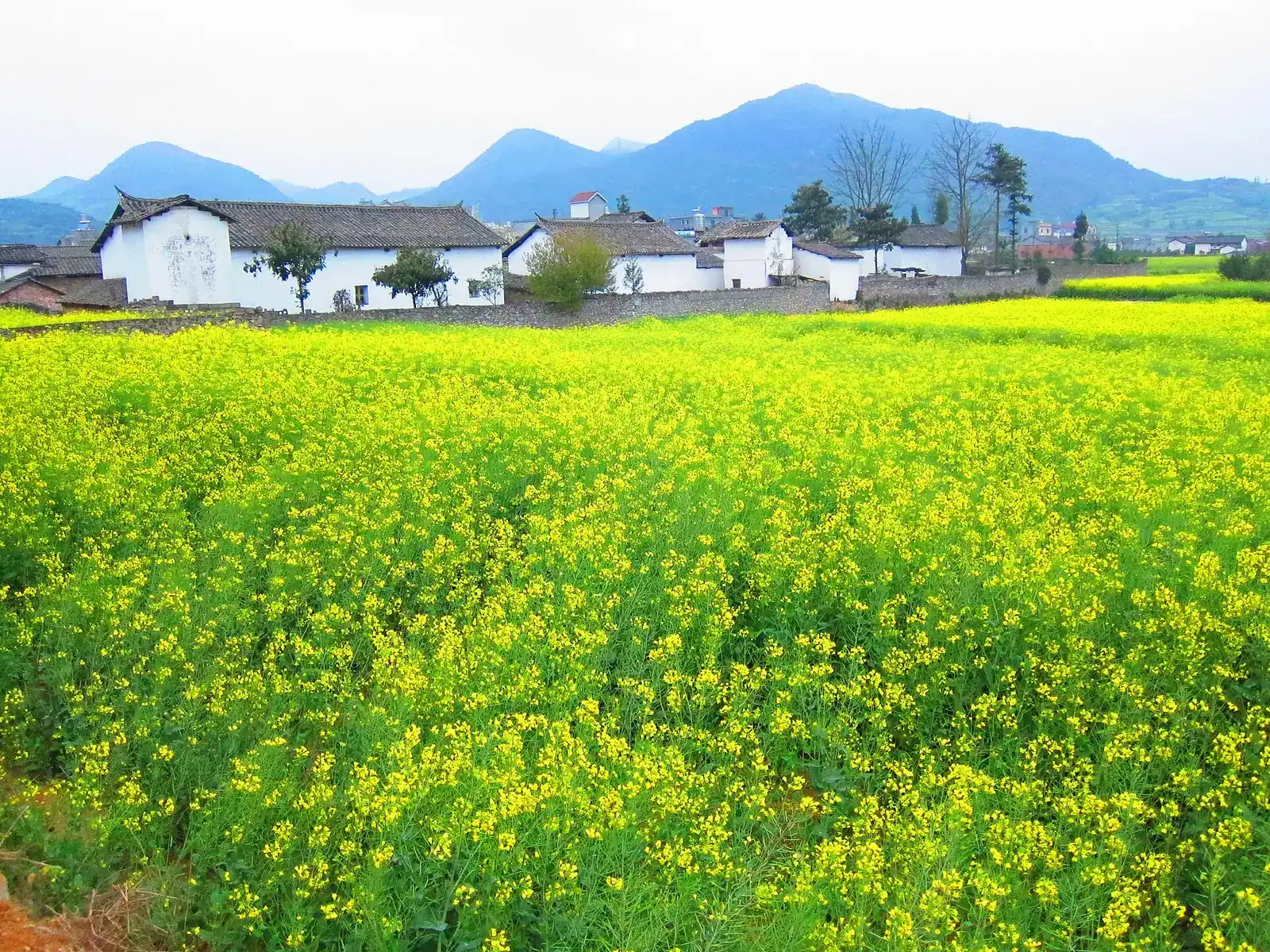
Qujing is the prefecture directly east of Kunming, running out to the borders of Guizhou and Guangxi. For most of the year it is a region of coal towns and farmland that few visitors think about. Then, from about mid-February to mid-March, the valleys around Luoping 罗平 turn yellow with canola, and it becomes one of the most photographed places in China.
What people come for is a combination found in few other places: cone-shaped karst hills standing in a sea of flowers, often wrapped in morning mist. They base in Luoping, treat Qujing city as a breakfast stop, and leave Huize in the far north to history lovers.
How locals do it
Timing comes first. The bloom shifts with the weather each year; in 2026 the peak ran from about February 22 to March 15, and higher fields such as Majie still had flowers into early April. Check the local bloom reports a week before you commit, and see seasons for the rest of Yunnan's calendar.
Stay in Luoping town, which has the most hotels and sits about 1.5 km from the railway station, or in a farmstay in Jinji village 金鸡村, right under the peaks. Rooms fill up in peak season, especially on weekends, so book ahead.
The classic two days look like this:
- Day one, dawn: Jinji Peaks 金鸡峰丛. Climb to the Laojianshan viewpoint 老尖山 before sunrise, a walk of about 20 minutes. Sunrise in bloom season is around 7:15–7:30 a.m., and the mist usually lifts off the hills within the next hour or two. Bikes and a small sightseeing train are for hire at the bottom.
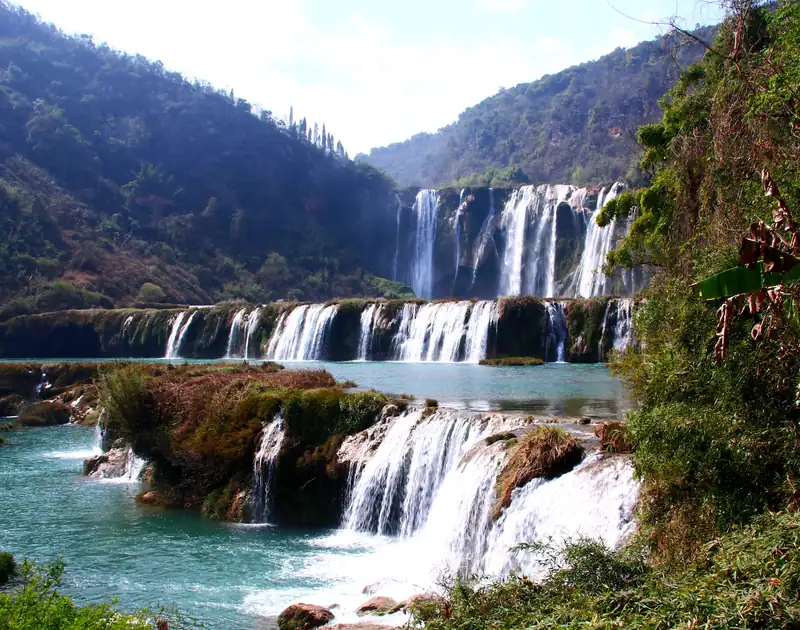
- Day one, late morning: Jiulong Waterfalls 九龙瀑布群, about 22 km east of town, a staircase of ten falls along one river. Enter at the west gate, walk the path past the falls, and ride the shuttle back from the east gate.
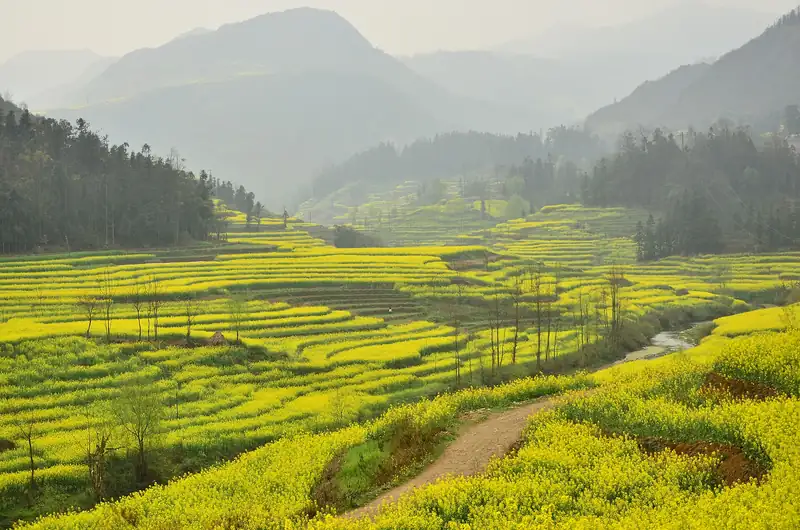
- Day one, afternoon: Niujie spiral fields 牛街螺丝田, round terraced hills that look like a golden fingerprint when the sun is behind you.
- Day two: Leave the famous spots to the tour buses and look for quieter terraces at Gegang, Majie or Pinde (see below).
Sights are spread out and buses around the county run on no fixed schedule, so most people hire a car and driver for a day. Outside flower season, the waterfalls are at their fullest in the summer rains, and Buyi villages along the Duoyi River 多依河 make a gentle half day. To carry on east to the lakes of Puzhehei, see our karst valleys route.
Where locals eat
Prices as of 2026; check before you go.
Qujing steamed ersi 曲靖蒸饵丝
The city's signature breakfast: rice-cake noodles steamed rather than boiled so they stay springy, then topped with pork sauce, chives, bean sprouts, sweet soy sauce and pickled greens. Add chili oil yourself if you like. Any breakfast shop in central Qujing makes it.
Zhanyi chili chicken 沾益辣子鸡
Qujing's best-known dish, named after the Zhanyi district just north of the city, where the modern version took off in the late 1980s at roadside restaurants on the old national highway: chicken cooked in a big pot with a heap of dried chilies and served bubbling at the table. Ask for mild 微辣 and share one pot among three or four.
Xuanwei ham and ham mooncakes 宣威火腿 · 云腿月饼
Xuanwei, in the northeast of the prefecture, cures one of China's three famous hams. You'll meet it sliced and steamed, in stir-fries, and in Yunnan's sweet-and-salty ham mooncakes, a popular gift to take home.
Luoping canola honey 罗平蜂蜜
Beekeepers move their hives into the fields during the bloom, and the honey is Luoping's classic souvenir. Buy from a stall where you can see the hives, and taste first.
Buyi five-color rice 五色花米饭
Sticky rice dyed with plant colors (yellow, red, purple, black and white) and made for Buyi festivals. Look for it in Buyi villages around Luoping, especially along the Duoyi River.
Fule crispy pork 富乐酥肉
Pork leg in an egg batter with ginger, pepper and a little honey, deep-fried. Fule town traditionally makes it when the New Year pig is killed and keeps it sealed in lard for months.
Hidden corners and free viewpoints
Any hill near Jinji 金鸡村
The paid viewpoints charge about ¥30, but climbing almost any small hill around the village gives you a similar view for free, with no crowd.
Gegang village terraces 革岗村
Dense flowers on terraced slopes and a fraction of the crowds at Jinji. Signs are few; drivers find it by setting the map to the junction of village roads Y074 and Y045.
Majie terraces 马街 松毛村
A drive of about 40 km for curving flower terraces with hardly anyone around. Navigate to Songmao village.
Pinde village 品德村
Canola fields around a working village, free to walk and quiet even at peak season. It's a good place to see the bloom as farmland rather than a photo set.
Huize old town 会泽古城
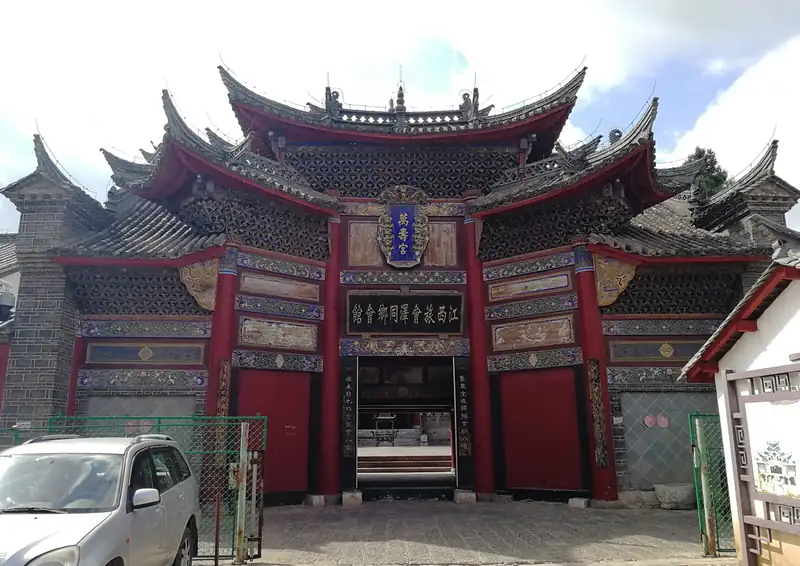
In the Qing dynasty, Huize's copper mines fed the imperial mints, and merchants from other provinces built guildhalls here. Several survive; the Jiangxi Guildhall 江西会馆, first built in 1711 and rebuilt in 1762 around a grand theater stage, is the best known. A worthwhile trip outside flower season.
Honest verdicts
- Jinji Peaks at dawn are worth the alarm clock: mist, karst and flowers together are the image that defines Luoping, and by midday the mist has burned off and the light is flat.
- Niujie spiral fields are worth the detour because they are free and look nothing like the peak views; come in the afternoon for light behind you.
- Jiulong Waterfalls depend on the season: pretty but thin during the dry flower season (about ¥65–80 entry; listings vary), and at their loudest in the summer rains.
- Luoping outside February and March is overrated as a special trip: the peaks remain, but the fields are ordinary farmland, and most visitors wouldn't make the journey.
Getting there and around
- To Luoping: Only regular (not high-speed) trains stop at Luoping, with three or four departures a day from Kunming station. The faster ones take about 3.5–4 hours; the slow train takes about 6. By road it is about 3 hours. Book trains with your passport; see trains.
- To Qujing city: Bullet trains from Kunming to Qujing North take under an hour, so a steamed-ersi breakfast works as a half-day trip.
- Around Luoping: Hire a car with a driver for the day. The viewpoints, waterfalls and terraces are tens of kilometers apart, and local buses are irregular. We can arrange a driver at a fixed price.
- To Huize: By road only, over 200 km from Kunming and in the opposite direction from Luoping. Give it its own day or two, or combine it with Zhaotong to the north.



.jpg)