
Diqing is Yunnan's Tibetan north, officially the Diqing Tibetan Autonomous Prefecture 迪庆藏族自治州. The upper Yangtze (the Jinsha) and upper Mekong (the Lancang) cut parallel gorges here between snow ranges that climb well above 5,000 m. Most visitors know only one town, Shangri-La, a short train ride from Lijiang.
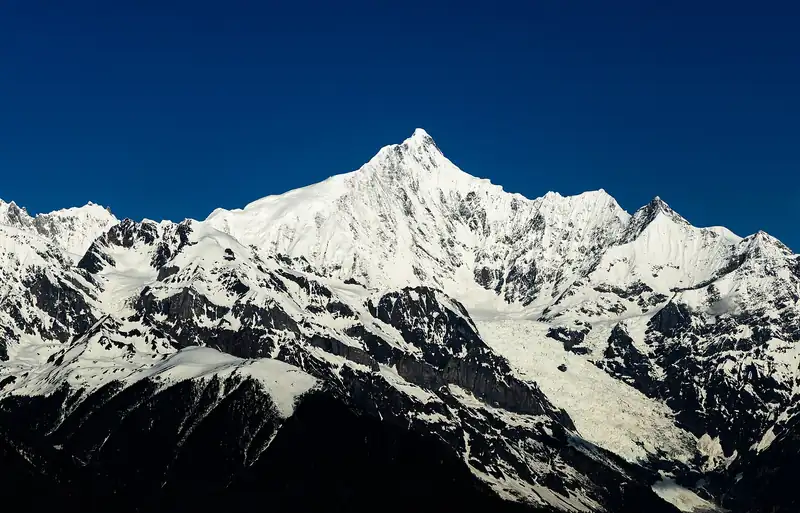
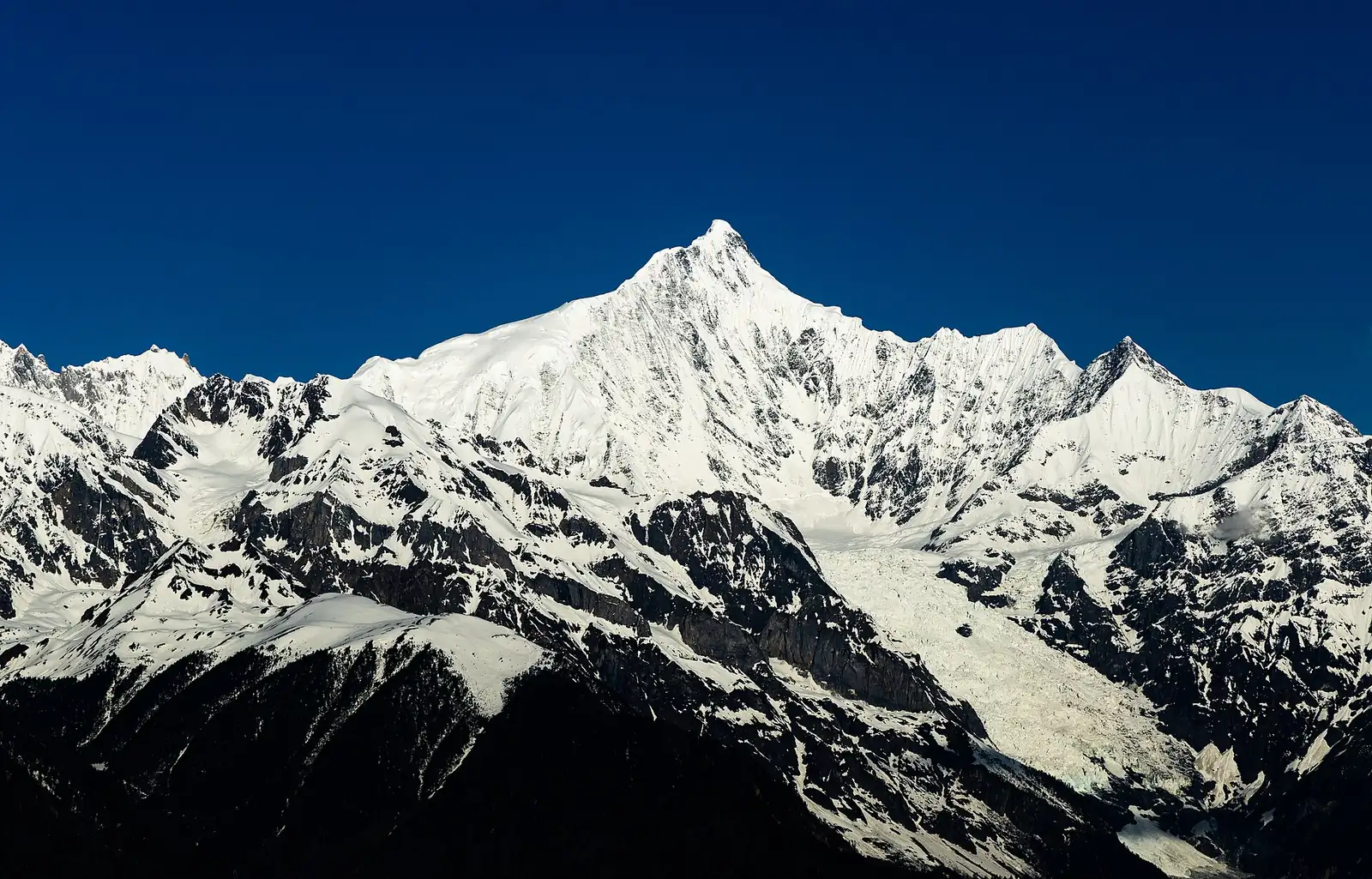
Treat Diqing as two trips. Shangri-La is for the monastery, the grassland and yak hotpot while your body adjusts to 3,200 m. Deqin 德钦, about four hours farther north by road (a full day with stops), is for Meili Snow Mountain 梅里雪山 and its sacred summit, Kawagebo 卡瓦格博 (6,740 m), which has never been climbed.
How locals do it
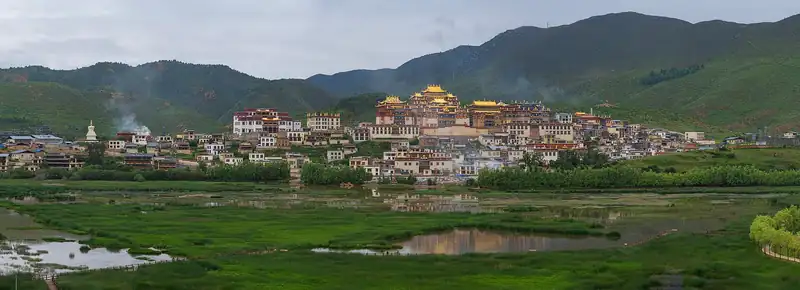
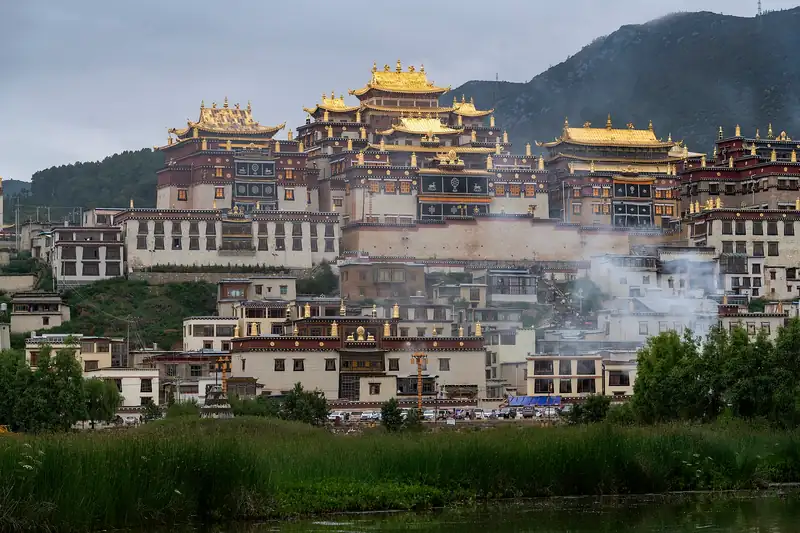
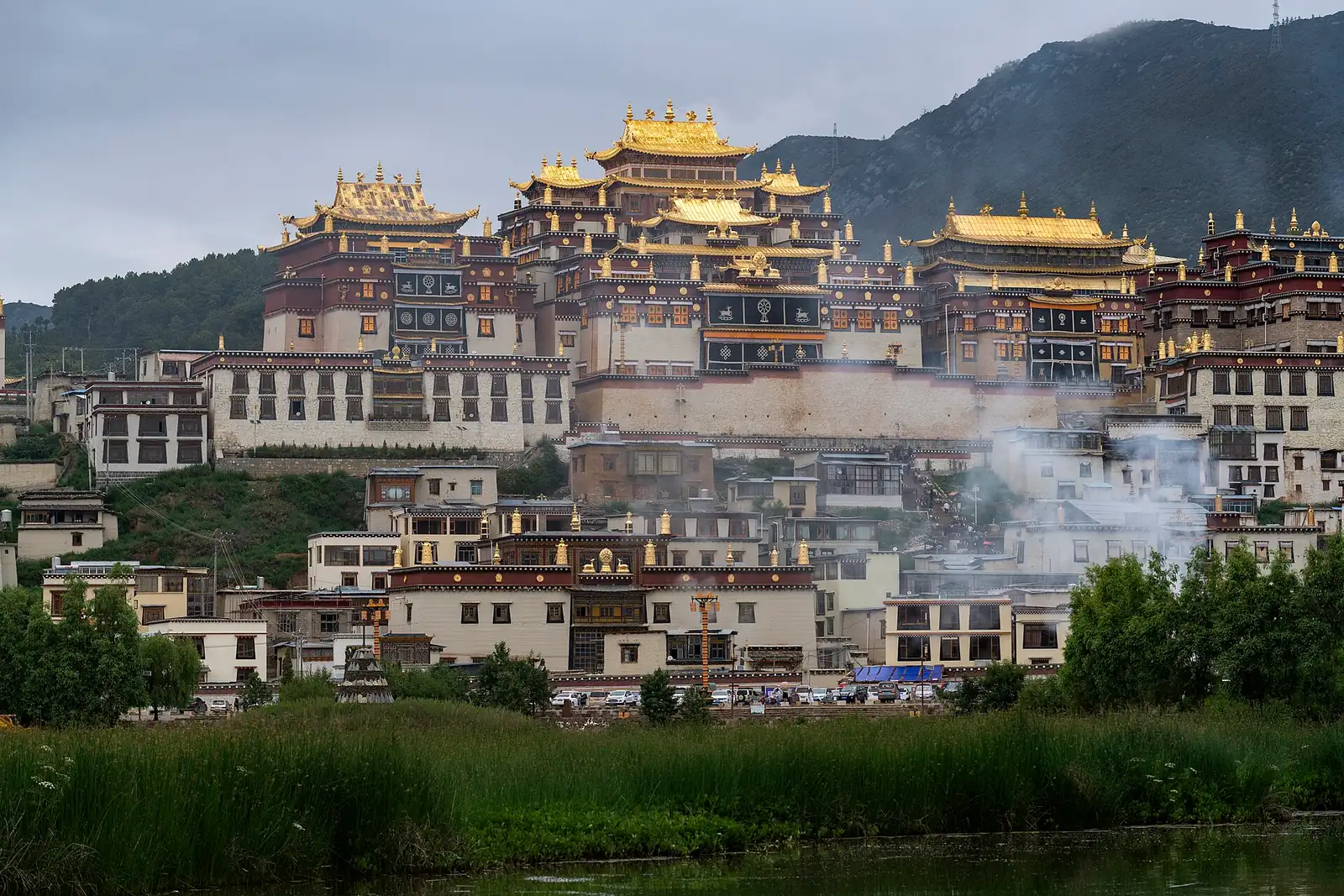
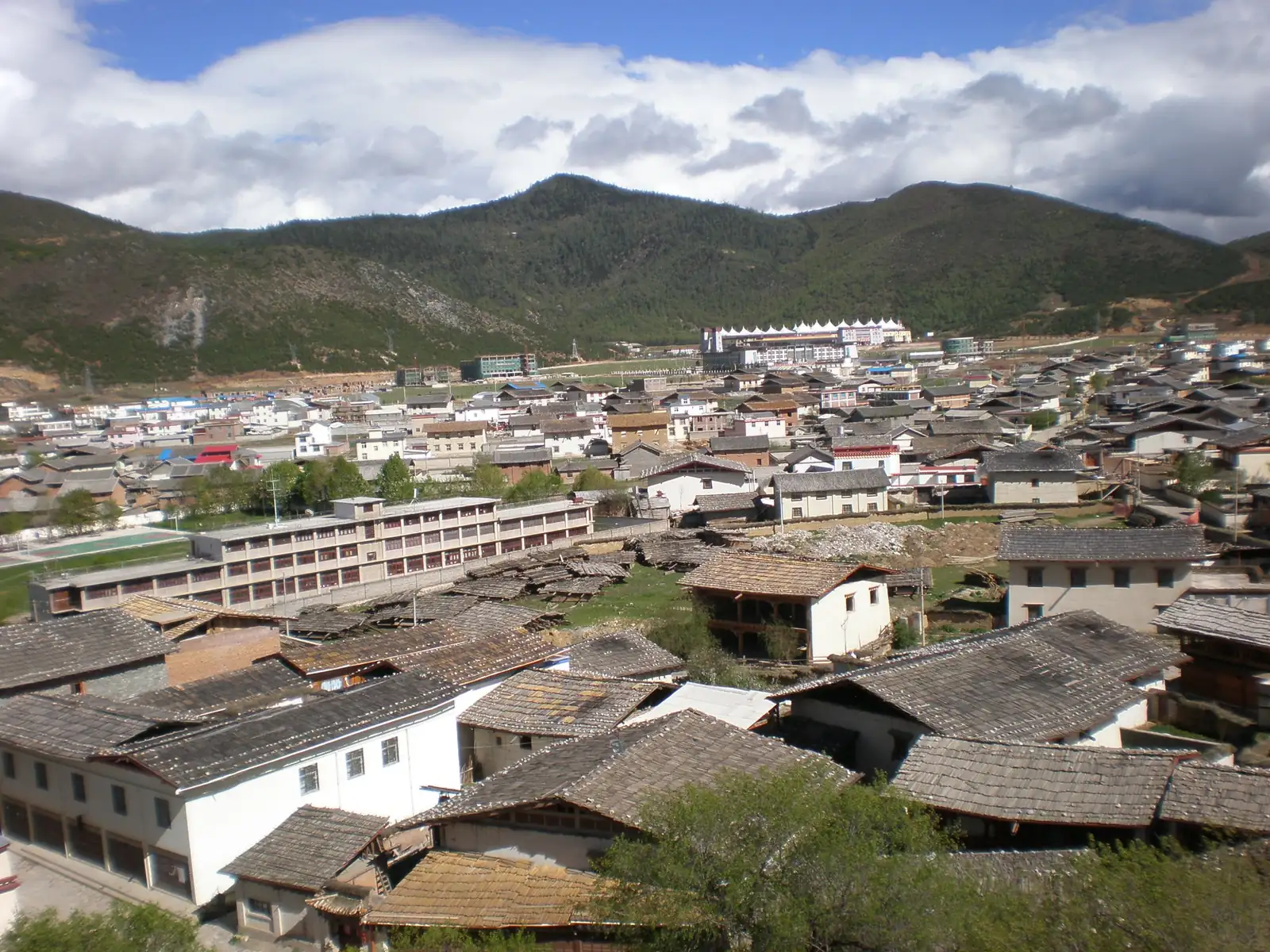
Start slow in Shangri-La. Come up by train from Lijiang and give the town two nights. Visit Songzanlin Monastery in the morning, ride the flat loop around Napa Lake, and save Dukezong old town for dusk. Our Shangri-La guide covers the town in depth, and the altitude guide explains how to arrive without losing a day to headaches.
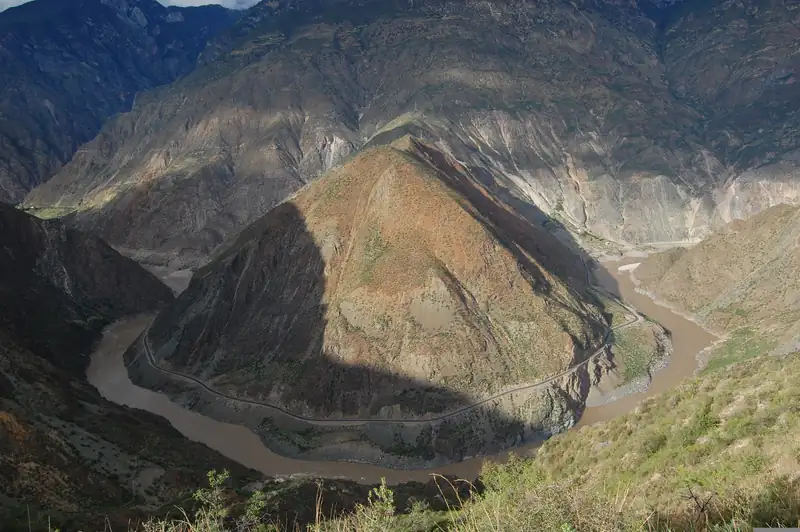
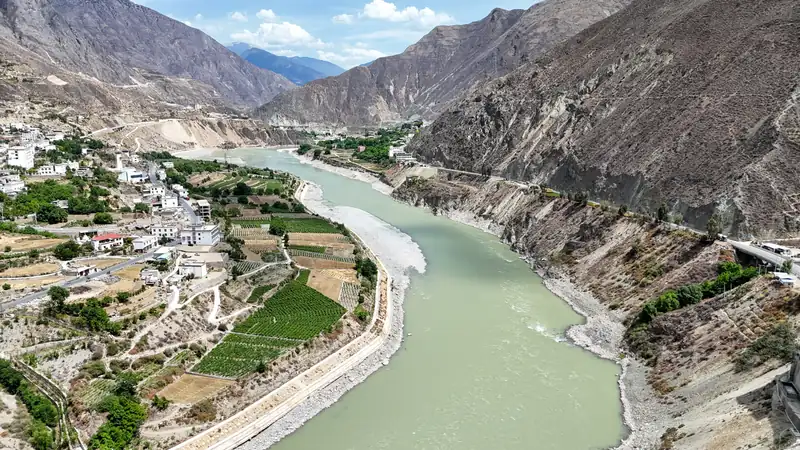
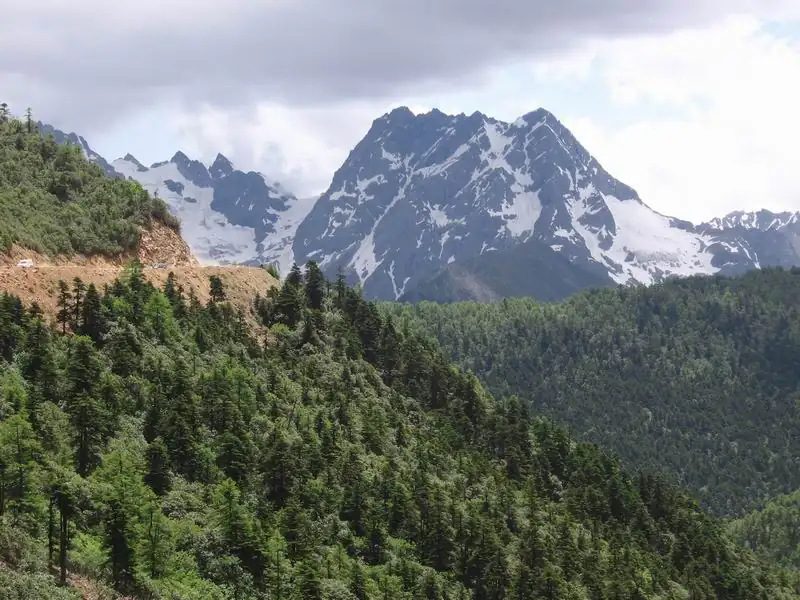
Then take the road north, with stops. The drive to Deqin follows the Jinsha River before climbing over the Baima Snow Mountain range. The usual stops: Benzilan for lunch (or an overnight) and the Jinsha River Great Bend close by, then Wunongding 雾浓顶, a roadside viewpoint near Deqin town where the whole row of Meili peaks fits in one view, and finally Feilaisi 飞来寺, the hamlet where most people stay.
At Meili, you wait for the mountain. As regulars put it: you don't come to see the peaks, you wait for them to show themselves. Book two or three nights at Feilaisi, check a cloud forecast the evening before, and be out before dawn. China runs on Beijing time, so sunrise here comes late, around 8 a.m. in midwinter. On cloudy days, the prayer flags, stupas and the drop into the Lancang gorge are the view.
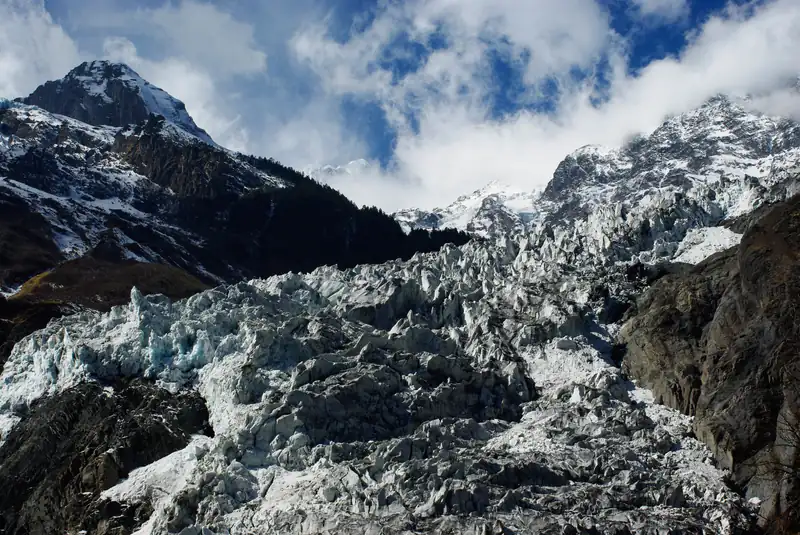
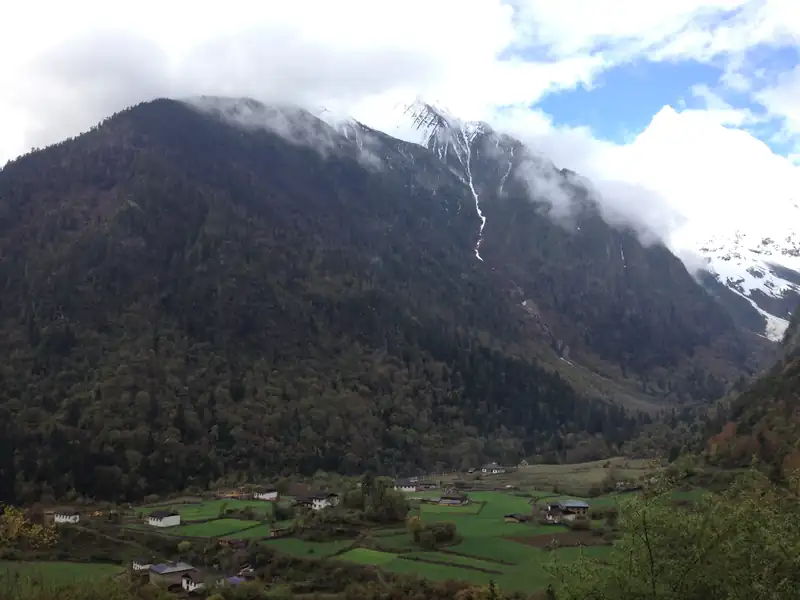
Side trips from Feilaisi. Mingyong Glacier 明永冰川, across the Lancang valley from Feilaisi, is a walk up through forest on trails and boardwalks to a tongue of ice that reaches far lower than you'd expect. Cizhong Church is a long drive south along the Lancang, so plan it as an overnight rather than a quick return trip. Yubeng 雨崩, the famous trekking village, is a separate trip of at least three days; don't bolt it onto a two-night visit. A shuttle from Xidang began trial runs to the village in September 2026, but private cars can't drive in. Mingyong closed after heavy rain in 2024 and Yubeng for months after avalanches in 2025, so check both are open before you go. Our Meili slow circuit puts all of this in order.
Where to sleep. Feilaisi for the view, Deqin county town for meals and onward transport. Before booking a "snow-mountain room," ask for a real photo from the window and check the heating and hot water.
Pack and behave. Even in July, bring a windproof shell, a fleece, shoes with grip, sunglasses, a hat and a rain poncho. If the altitude hits you, cut the plan. Don't photograph monks, pilgrims or villagers up close without asking.
Where locals eat
Yak hotpot in Dukezong 牦牛肉火锅
Most visitors rank this the best meal in Shangri-La. Restaurants around the old town simmer yak meat and bones into a deep broth. Drink a bowl of the broth first, then fish out the meat and dip it in dry chili powder.
Butter tea and barley cake 酥油茶 青稞饼
The Tibetan breakfast: salty tea churned with yak butter, with a dense highland-barley flatbread. Warming and cheap in Tibetan cafés around the old town.
Snow Mountain Yak Skewers, Feilaisi 雪山牦牛肉烤串
A local favorite on the food street below the Feilaisi viewing platform. Order and pay first, then join the line; waits of around half an hour are normal in the evening.
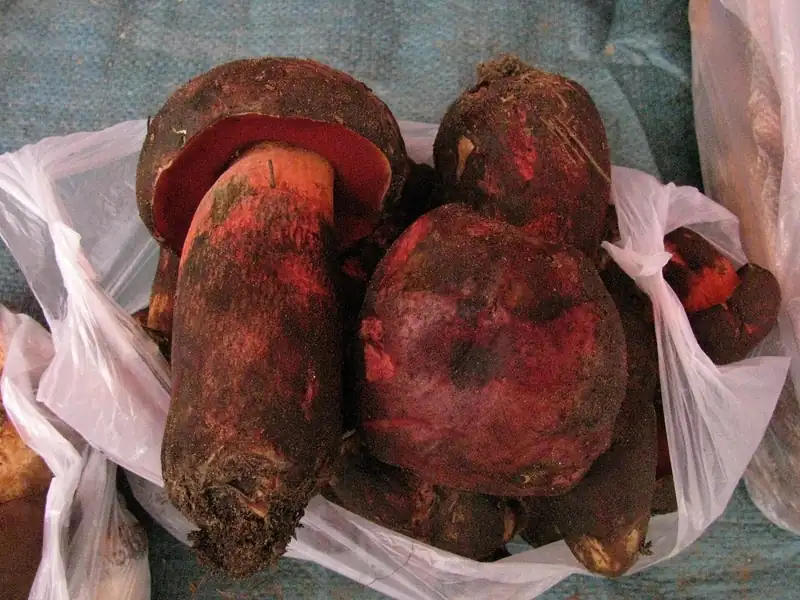
Matsutake in season 松茸
Diqing's forests are a major source of matsutake. In the rainy season, roughly July to September, Shangri-La restaurants serve them seared or stewed in chicken broth.
Cizhong village wine 茨中 葡萄酒
French missionaries planted vines at Cizhong more than a century ago, and villagers still make a sweet-leaning red from them. Families in the village sell their own bottles.
Hidden corners and free viewpoints
The hillside platform behind Mingzhu Laka 明珠拉卡 后山观景台
A quieter alternative to the main Feilaisi platform. Walk the small path up the hill behind the Mingzhu Laka hotel for 10–15 minutes to a wooden hut that collects a small fee, keep left at the fork, and in five more minutes you reach a steel platform with a clear view.
Dashuiguan viewpoint 大水罐观景台
A roadside stop on National Highway 214, about 4 km from Mingzhu Laka, where large boulders give photographers a foreground for the peaks. Go in the morning; the wind picks up hard in the afternoon.
Jinsha River Great Bend 金沙江大湾
Near Benzilan the river swings through a near-perfect horseshoe far below the road. Stand off to the side of the guardrail rather than at its center and the whole curve fits in the frame.
Benzilan 奔子栏
A Tibetan town on the Jinsha, well below Shangri-La's altitude and known for its wooden bowls. Stop for lunch, or sleep here to split the drive into two easier days.
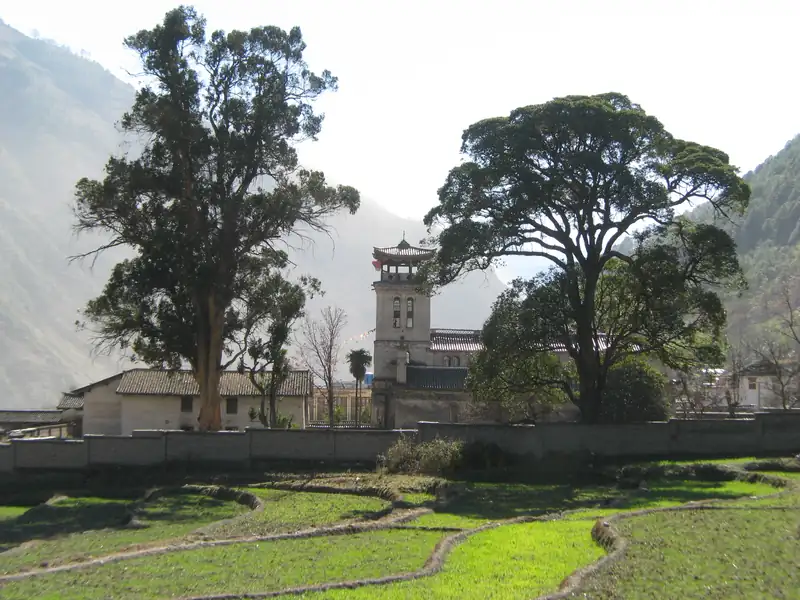
Cizhong Church 茨中教堂
A Catholic church built by French missionaries in the early 1900s in a Lancang valley village, blending Chinese, Tibetan and European styles, with its vineyard alongside. It's still a place of worship, so go quietly.
Honest verdicts
- Feilaisi with two or three nights is worth it: one night is a coin flip against the clouds, three give you real odds of a clear sunrise.
- Songzanlin Monastery is worth it in the morning, before the tour groups arrive.
- Mingyong Glacier depends on the weather: a fine forest walk to the ice when dry, but the boardwalks get slippery and the site has closed after heavy rain.
- Yubeng depends on your time: one of China's best treks with three or more days, a rushed disappointment as a side trip.
- Dukezong old town depends on the hour: rebuilt and commercial by day, pleasant at dusk when locals gather for circle dancing.
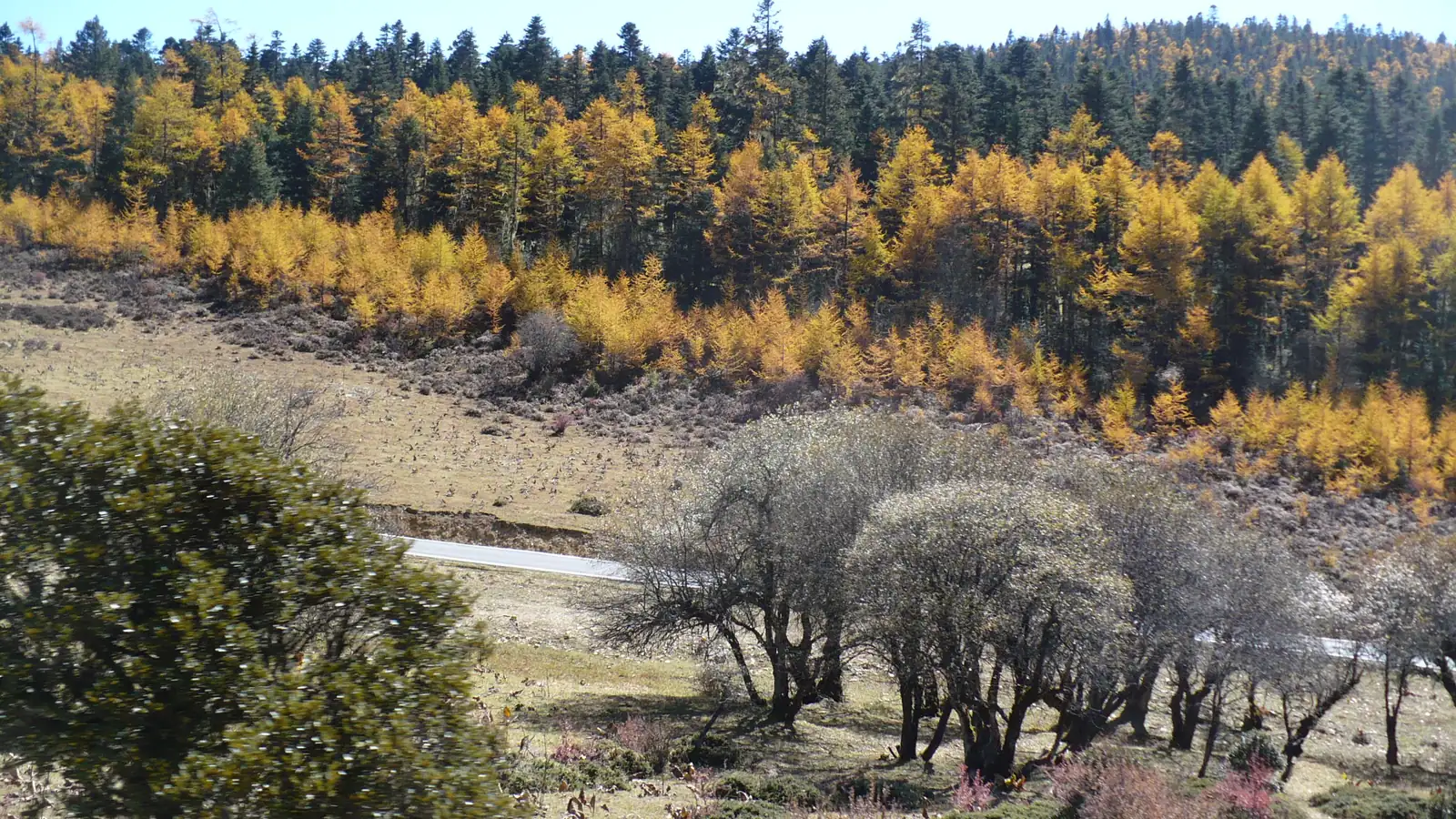
- Pudacuo National Park in winter is overrated: about ¥138 with the compulsory park bus, for too little to see in the frozen months.
Prices as of 2026; check before you go.
Getting there and around
- To Shangri-La: About 1.5 hours by train from Lijiang, with frequent departures; book with your passport (see trains). Flying into Diqing Shangri-La Airport skips the acclimatization Lijiang gives you.
- To Deqin and Meili: No train. It's about 180 km; expect roughly 4 hours by car on a winding mountain road, more with stops. Buses and shared cars leave from Shangri-La; a hired driver lets you stop at the viewpoints.
- Driving yourself: Foreign licenses aren't valid in China without a local permit, so hire a driver who knows the road; we can arrange one at a fixed price.
- Permits: Shangri-La, Deqin and Meili need no special permit. North of Deqin, Highway 214 enters the Tibet Autonomous Region, which requires a Tibet permit and an organized tour, so don't plan to carry on alone.
.jpg)


_National_Park,_Diqing_-_panoramio.jpg)
