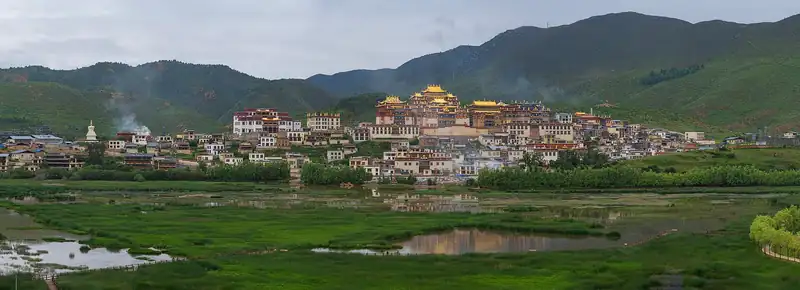
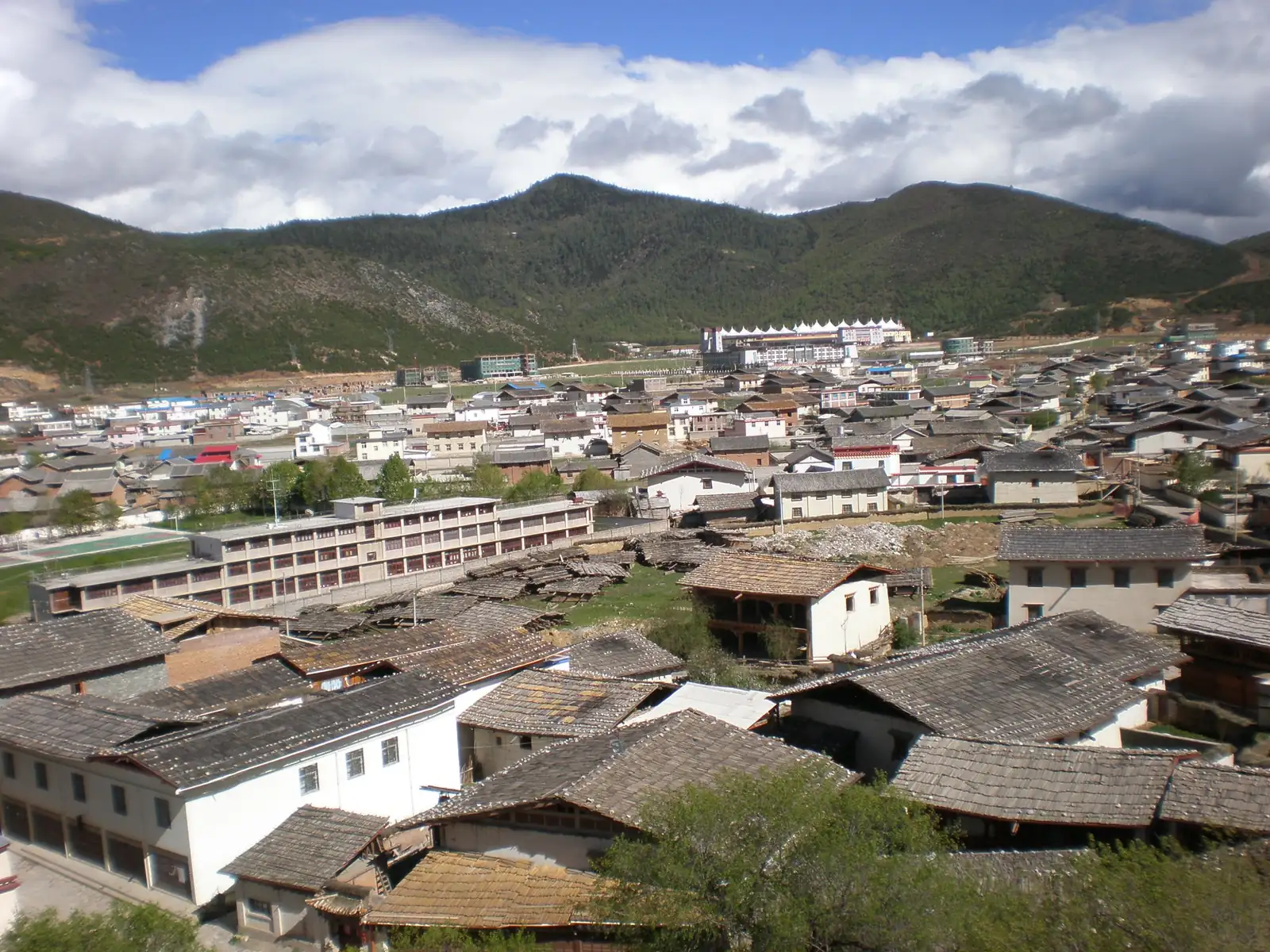
Shangri-La is Yunnan's doorway to the Tibetan world. The town, known as Zhongdian until it borrowed the name from James Hilton's novel in 2001, sits on a high plateau at about 3,200 m, with a hilltop monastery, an old Tibetan quarter and open grassland all within a short ride.
Altitude is the number-one issue here, ahead of weather or crowds. Come up gradually via Lijiang, keep your first day slow, and read our altitude guide before you go.
Top things to do
Prices as of 2026; check before you go.
Songzanlin Monastery 松赞林寺
Yunnan's largest Tibetan Buddhist monastery, founded in the late 1600s, climbs a hillside a few kilometers north of town, above a small lake. Reaching the main hall means climbing 146 steep stone steps, so take them slowly and rest often. Walk clockwise, dress modestly and don't take photos inside the prayer halls.
Dukezong Old Town 独克宗古城
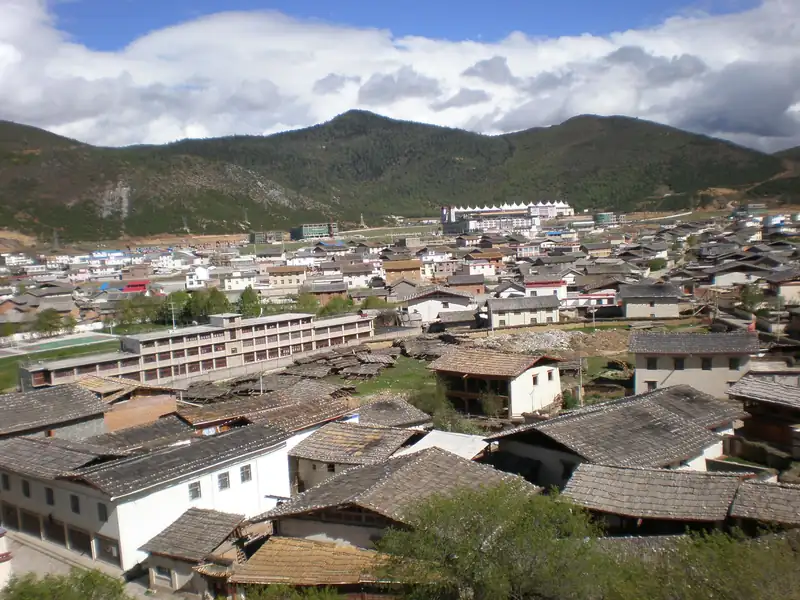
The old Tibetan quarter, largely rebuilt after a fire in 2014, is a maze of stone lanes, timber houses, cafés and shops. It's commercial, but pleasant at dusk, when locals often gather for circle dancing in the main square and visitors are welcome to join.
Giant Prayer Wheel, Guishan Park 龟山公园大转经筒
On a small hill at the edge of the old town stands one of the world's largest prayer wheels, a gilded drum that takes a group of people to turn. Push it clockwise, then take in the view over the rooftops. You may need to reserve by scanning a QR code at the entrance; if the system won't take your passport, ask the staff at the gate.
Napa Lake 纳帕海
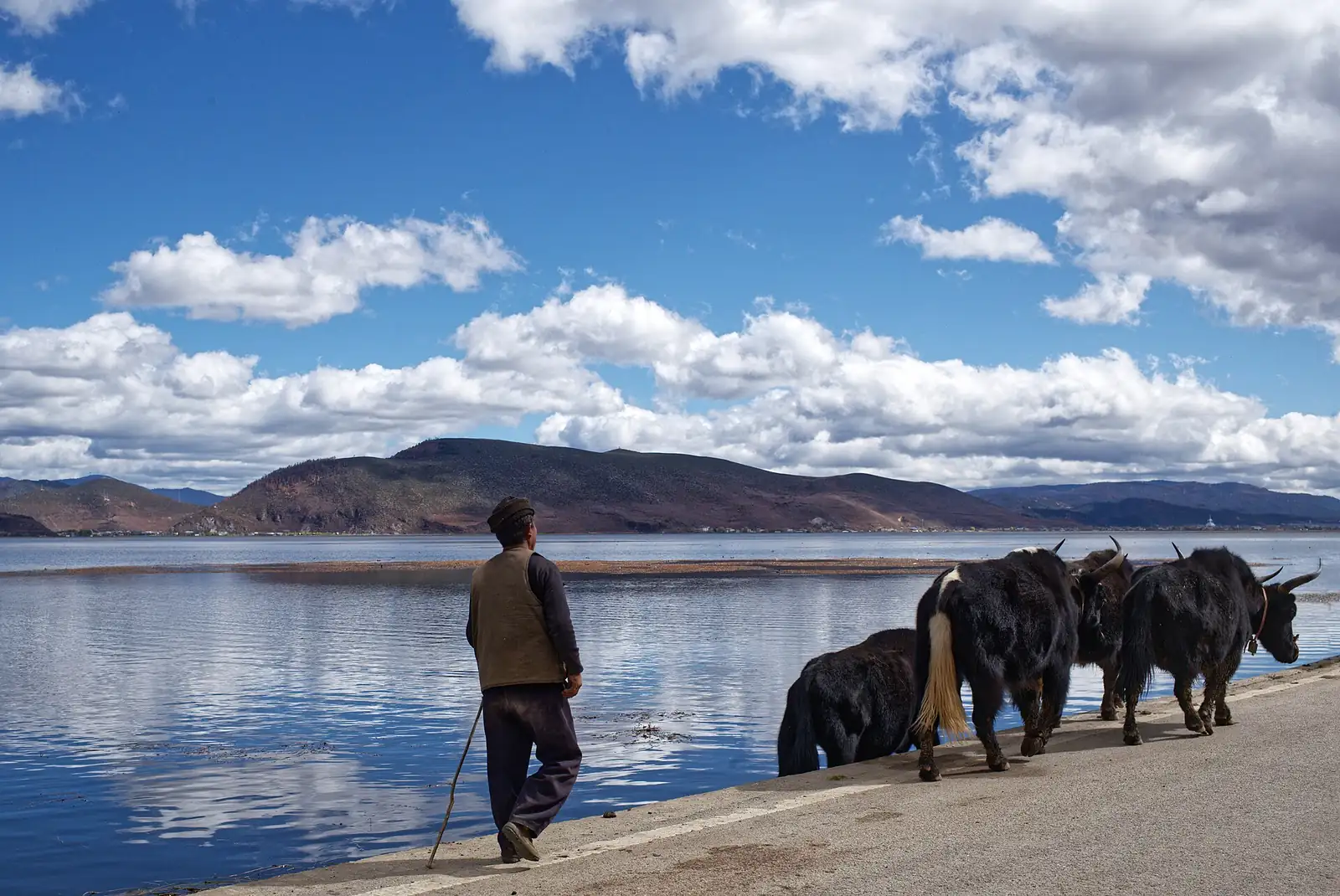
A seasonal highland lake and grassland just northwest of town, with yaks, horses and wide skies. The loop road is flat and easy by e-bike or with a driver. It fills with water after the summer rains and shrinks to meadow in the dry months.
Pudacuo National Park 普达措国家公园
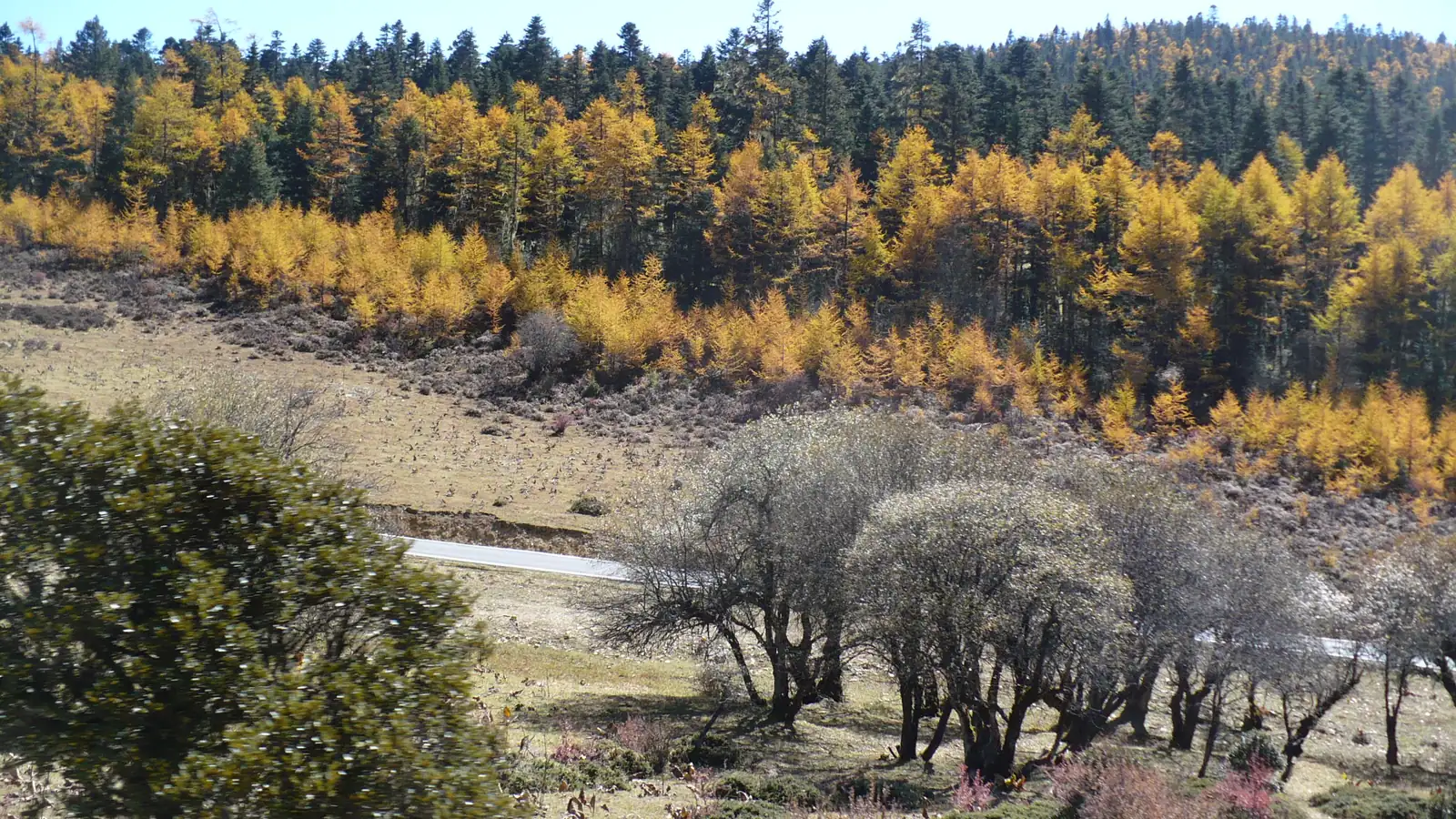
Forest boardwalks, alpine lakes and meadows east of town, reached on a compulsory park bus. It's pleasant in summer and autumn, but pricey for what you see, and a winter visit isn't worth it.
Meili Snow Mountain 梅里雪山
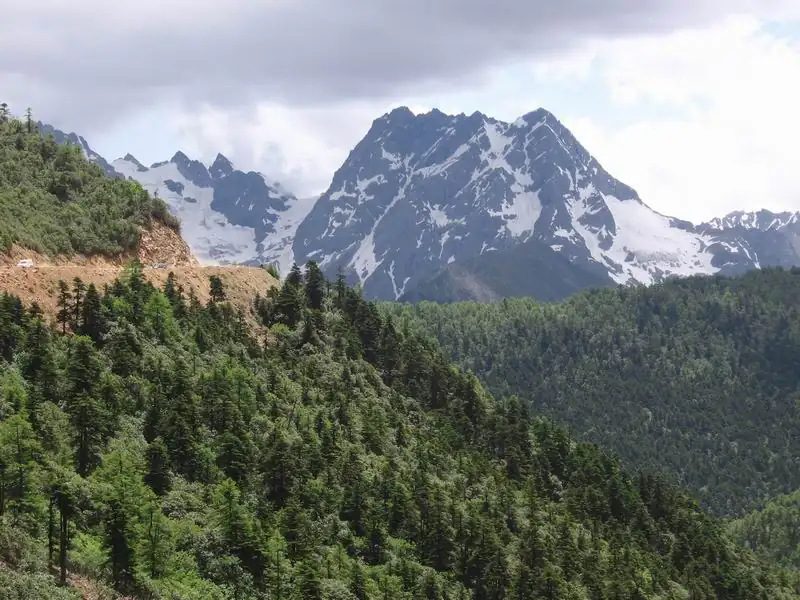
If you have two more days, drive north to Deqin 德钦 for sunrise over Kawagebo, a sacred 6,740 m peak that has never been climbed. It's several hours each way on mountain roads, and clouds often hide the summit, so treat it as a bonus rather than a sure thing.
Where to stay
- Dukezong Old Town: Guesthouses in Tibetan-style houses, a short walk from cafés, restaurants and the prayer wheel. The best base for most first-timers.
- The newer town: Larger hotels with more reliable heating and less charm. A practical choice in winter.
- Outside town: Quiet lodges near Songzanlin or in the surrounding valleys, with mountain views. You'll need a driver.
Nights are cold year-round. Ask whether your room has proper heating, and whether the hotel supplies oxygen if you're worried about the altitude.
What to eat
Yak hotpot 牦牛肉火锅
Most visitors rank this as the top meal in Shangri-La: lean yak meat and bones simmered in a rich broth, with vegetables to follow. Exactly what you want on a cold night.
Butter tea 酥油茶
Brick tea churned with yak butter and salt. It's savory, not sweet, and surprisingly warming once you get used to it.
Tsampa 糌粑
Roasted highland barley flour, mixed by hand with butter tea into a dense dough. It's the Tibetan staple and a filling breakfast.
Yak yogurt 牦牛酸奶
Thick, tart and usually served plain, with sugar or honey on the side. A good light snack while you're adjusting to the altitude.
Highland barley wine 青稞酒
The local barley brew, from mild homemade versions to strong spirits, poured at dinners and toasts. Save it until you've acclimatized; alcohol makes altitude symptoms worse.
The honest take
Songzanlin, the Napa Lake loop and yak hotpot win consistent praise. Many are also pleasantly surprised that souvenirs here cost less than the same items in Dali.
The biggest complaint is altitude, usually from people who rushed up from lower cities in a single day and lost their first day to headaches. The second is Pudacuo: a steep ticket, a compulsory bus and, in winter, too little to show for either.
Weather can turn in an hour, even in summer, so pack warm layers and a rain jacket. And if a tour steers you into a shop selling Tibetan medicine or silver, that's a shopping stop; you're free to leave.
Getting there and around
- By train: About 1.5 hours from Lijiang, with frequent departures and inexpensive tickets. Book with your passport on the 12306 app or Trip.com; see trains. The station is outside the center, so take a taxi into town.
- By air: Diqing Shangri-La Airport 迪庆香格里拉机场 has flights from Kunming and other cities, but flying straight in skips the acclimatization Lijiang gives you.
- In town: Taxis and ride-hailing cover the old town, Songzanlin and the station.
- Farther out: Foreign driving licenses aren't valid in China without a local permit, so rent an e-bike for Napa Lake or hire a car with a driver for Pudacuo and Meili.



_National_Park,_Diqing_-_panoramio.jpg)

