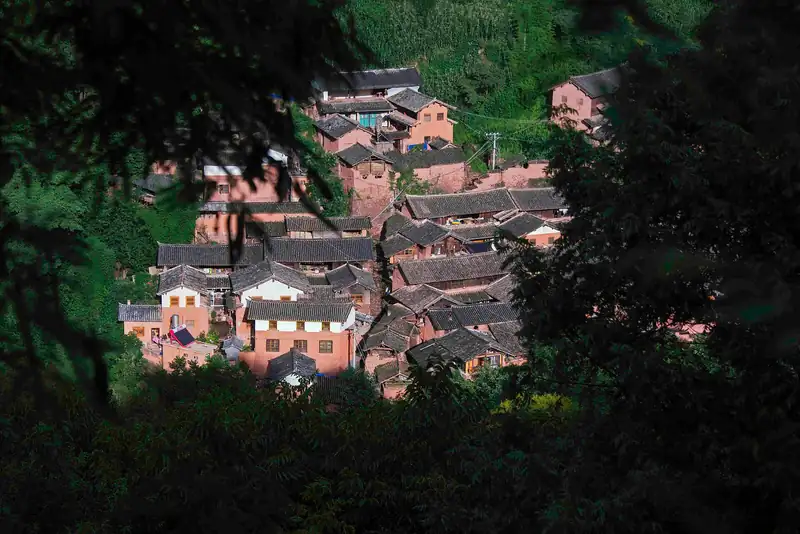
Long before tourism, Yunnan's money moved on mule-back. Salt came up from brine wells in deep valleys, tea came north from the south, and caravans carried both toward Tibet. This route links the towns that trade built: Heijing, a salt town at the bottom of a gorge; Weishan, a walled Ming town where the Nanzhao kingdom began; Nuodeng, a Bai village of hams and a thousand-year-old brine well; the market square at Shaxi; and the carved wooden lanes of Jianchuan.
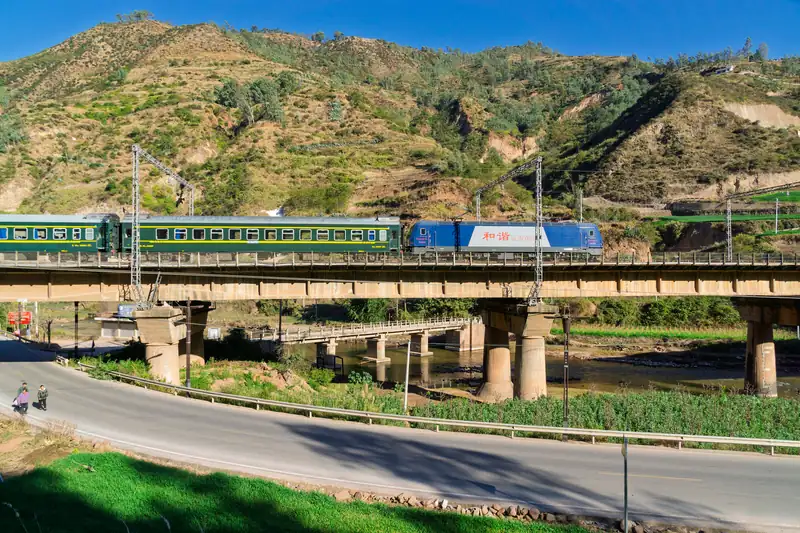
You start on a dawn slow train out of Kunming that still stops at village halts. After that the roads are long and buses are thin, so from Weishan onward a private driver makes the trip work. In return you get five towns where people still live ordinary lives, and a fraction of the tour groups you'd meet in Dali or Lijiang.
Who it's for
- Second-time visitors who have seen Dali and Lijiang, or first-timers who would rather skip their crowds.
- Travelers who like old buildings, markets and local food more than cable cars and big-ticket sights.
- People comfortable with simple guesthouses, stone steps and a few 3–4 hour drives. Nothing on the route is much higher than Lijiang's 2,400 m, so altitude isn't a concern.
If snow peaks are the point of your trip, take the classic 8-day route instead.
The route at a glance
- Day 1: Slow train from Kunming to Heijing, the old salt town
- Day 2: A slow morning in Heijing, then trains west to Dali city
- Day 3: Weishan, the walled town where the Nanzhao kingdom began
- Day 4: A Hui caravan village, then over the hills to Nuodeng
- Day 5: Nuodeng's brine well and river bend, then north to Shaxi
- Day 6: Shaxi at dawn, at market and after dark
- Day 7: Jianchuan old town, then on to Lijiang or Dali
The first two days run on trains. From Day 3 you move by road, and from Day 4 a private driver is close to essential: buses to Nuodeng and between Nuodeng and Shaxi are infrequent and slow, and the best moments (a dawn viewpoint, a village caravan families built) are off any bus line.
Prices as of 2026; check before you go.
Before you go
- Train tickets: Book the slow train (Day 1) and the Day 2 connection on the 12306 app or Trip.com with your passport as soon as sales open, usually about two weeks ahead. The slow train is cheap and popular with Kunming day-trippers at weekends. See trains.
- Driver: Book one driver for Days 4–7, from Weishan to Lijiang or Dali. Agree the total in writing first, including fuel, tolls, the driver's meals and rooms, and the empty drive home. A driver for Day 3 as well is a comfort, not a must. We can arrange one at a fixed price.
- Pick your start day: Start on a Sunday to be in Shaxi for its Friday market on Day 6. Start on a Monday to reach Jianchuan on Day 7, a Sunday, when the weekly market fills the square below its gate tower. You can't have both.
- Cash and payments: Alipay and WeChat Pay work almost everywhere, including horse carts and village guesthouses, but carry ¥300–500 in cash for the smallest places. See payments.
- Luggage: Every town here means stone lanes and steps. Travel with a soft bag or a small case you can carry.
Day by day
Day 1 Kunming to Heijing by slow train
An early start on one of Yunnan's last slow trains, then a full day in a salt town that still moves at its own speed.
- Dawn Train 7466 leaves Kunming Station 昆明站, the old station at the south end of Beijing Road, at 6:18 a.m. at last check; timetables shift by a few minutes, so go by the time on your ticket. It runs on to Yuanmou West 元谋西, so check you're on the train marked for there. It is not Kunming South 昆明南站. Taxis are easy at that hour; allow 30 minutes for security and ID checks. The fare to Heijing is about ¥22.5, and you arrive around 8:50 a.m.
- Morning Horse carts and minivans wait outside Heijing station 黑井站 and take 10 minutes into town for ¥5–10. Leave your bags and buy the combined ticket (about ¥25; some travelers report a higher price, so check at the gate). Start at the salt workshop 古盐坊 while the pans are working: brine is boiled in small iron pans until only the salt is left, the method that made the town rich. Then Dalong Temple 大龙祠 with its old stage.
- Lunch Salt-baked chicken 盐焗鸡 is the dish to order: the whole bird is wrapped and cooked buried in hot salt, so it comes out moist and gently seasoned. Huiyoutang 会友堂 is the place for it. Add ash tofu 灰豆腐, pressed tofu set with pine-needle ash, springy and good grilled.
- Afternoon The Wu Family Compound 武家大院, a Qing salt merchant's house of nearly a hundred rooms, said to be laid out in the shape of the character 王, "king." Then walk the river: the Jiexiao memorial arch 节孝总坊, the Five Horse Bridge 五马桥, and the Black Cow Salt Well 黑牛盐井, named for the legendary cow that found the brine. The small salt-well museum 盐井历史博物馆 is worth 30 minutes if it's open.
- Evening Climb to Feilai Temple 飞来寺 for sunset over the rooftops; it's a steep walk up from the river, so start 45 minutes before sunset. Dinner at Yanxingyuan 盐兴园, worth it for stir-fried pomegranate flowers 炒石榴花 in late spring, or back at your guesthouse.
Overnight: Heijing, a guesthouse in a century-old courtyard house on the main street (about ¥150–300). Rooms are simple and some have shared bathrooms; ask before you book.
Day 2 A slow morning in Heijing, then west to Dali city
Heijing at breakfast time is the town at its most ordinary and best. The afternoon is a two-train transfer to Xiaguan, Dali's working city.
- Morning Walk the main street as the shops open. Wander the back lanes above the Longchuan River 龙川江, where the courtyards are still lived in. Buy a bag of Heijing salt; it's cheap and packs small.
- Afternoon Early lunch, then rest through the midday heat; the valley is low and warm. Take a cart back to the station by about 3:50 p.m. for train 7465, which leaves Heijing at about 4:20 p.m. (4:23 at last check). Get off after about 55 minutes at Guangtong North 广通北站, a bullet-train station on the Kunming–Dali line, and change to a D or G train to Dali 大理站. About 28 trains a day make that run, in roughly 1 hour 15 minutes; at last check the first connection left about 40 minutes after the slow train arrives, with more every 30–40 minutes into the evening. Book both tickets at the same time, and pick the second connection if you want a buffer for a late slow train.
- Evening Stay in Xiaguan 下关, the modern city where Dali Station is, not the old town. Skip the old-town restaurants and eat in Xiaguan's home-style places. Good choices: a wild mushroom feast at Hehua Tingyuan 荷花庭院 in season; Yangji's herb and sour-soup chicken 杨记香草酸汤鸡, a halal kitchen; Zhaojie Yuzhuang 赵姐鱼庄 for Shaba-style fish 沙坝鱼; or pickled-greens beef 酸菜牛肉 at Laoshouyi 老手艺.
Overnight: Xiaguan, a hotel near Dali Station 大理站
Day 3 Weishan, where the Nanzhao kingdom began
Weishan 巍山 is a walled grid town laid out at the start of the Ming dynasty, more than 600 years ago, in the valley where the Nanzhao kingdom began in the 7th and 8th centuries. It is a national historic city, lived in rather than staged, and still gets far fewer visitors than Dali.
- Morning Take a train from Dali Station to Weishan Station 巍山站 on the Dali–Lincang line: about 20 minutes, with six trains a day at last check (around 7:10 and 10:15 a.m. are the useful ones). The station is a few kilometers outside the old town, a short taxi ride. Or take a taxi or bus by road from Xiaguan, about an hour.
- Breakfast Weishan's signature is pa rou er si 耙肉饵丝: pork braised until it falls apart, piled on soft rice-flour threads in broth. Every breakfast stall in the old town sells it. At lunch try yigen mian 一根面, a noodle pulled as a single long strand, then coiled into the bowl.
- Late morning Walk the grid. Start at Gongchen Tower 拱辰楼, the massive north gate tower, rebuilt after a fire in 2015, then walk south down North Street 北街 to Xinggong Tower 星拱楼 at the center. North Street is a protected historic street of wooden shopfronts: herbalists, tailors, noodle makers and tea stalls.
- Afternoon Drive about 10 km to Weibao Mountain 巍宝山, a Taoist mountain with small Ming and Qing temples in the forest and a legend that ties it to Nanzhao's founder. Walk up past two or three temples and turn back when you've had enough; it's quiet and cool. Or stay in town and explore the side lanes.
- Evening After dinner the whole town strolls around Gongchen Tower. Join them, then stop at a snack stall on the way home.
Overnight: Weishan, a courtyard guesthouse inside the old walls, near North Street
Day 4 A caravan village, then over the hills to Nuodeng
Your driver collects you after breakfast. The day's drive is about 3–3.5 hours, via Xiaguan and the Dali–Yangbi–Yunlong expressway that opened at the end of 2022.
- Morning Stop at Donglianhua 东莲花村, about 20 minutes' drive from the old town, before heading north. This Hui Muslim village was home to caravan families who ran mule trains to Burma and Tibet and spent their profits on fortified courtyard mansions. Some are still family homes and some are open to visitors, sometimes for a small fee; ask before you walk in. Allow an hour; dress modestly near the mosque.
- Midday Drive via Xiaguan to Yunlong county 云龙县. Eat lunch on the way: your driver will know a roadside place.
- Afternoon Nuodeng 诺邓古村 sits a few kilometers above the county town in a steep, narrow valley. It is a Bai village on record for more than a thousand years, and it lived on salt. Start at the bottom, at the brine well 盐井 by the stream, where the village began. Then climb. Houses step up both sides of the valley, and in winter and spring you'll see hams curing under the eaves.
- Late afternoon Keep climbing to the Jade Emperor Pavilion 玉皇阁, a Taoist temple complex near the top of the village, known for its painted ceiling, with the best view back down over the roofs. The light is warmest in the last hour before sunset.
- Evening Dinner at your guesthouse. Nuodeng ham 诺邓火腿, cured with the village's own salt and made famous by the documentary A Bite of China, is the thing to eat, as pan-fried or steamed slices. Ask your host to cut some for you to taste.
Overnight: Nuodeng, a family guesthouse in an old courtyard house inside the village (confirm your driver can get close with luggage)
Day 5 The river bend at dawn, then north to Shaxi
One short, early viewpoint and one long drive. Plan to reach Shaxi by late afternoon.
- Early morning Drive out to the viewpoint over the natural "tai chi" bend 天然太极图, where the Bi River 沘江 swings through an S-shaped bend so that, from above, the valley looks like a yin-yang symbol. It's close to the county town. Early mist makes the view; by midday the light is flat.
- Morning Back to Nuodeng for a late breakfast and one more walk through the lower village, then set off for Shaxi. The drive is about 4 hours; your driver will choose between going back through Dali and heading north on the Yunlong–Lanping expressway that opened in early 2025.
- Afternoon Arrive in Shaxi 沙溪, check in and rest. Cars stop outside the old town, so expect a short walk with your bag.
- Evening Walk Sideng Street 寺登街 and the market square after the day-trippers have gone. Dinner: fried goat's-milk cheese 乳饼, cured pork 腊肉 stir-fried with greens, and, June to September, whatever wild mushrooms are fresh.
Overnight: Shaxi, a guesthouse on the edge of the old town, facing the fields (2 nights)
Day 6 Shaxi at dawn, at market and after dark
No driving today unless you want the grottoes. See our Shaxi guide for more on each sight.
- Dawn Be on the square by 7 a.m., when the old theater stage 古戏台 faces an empty square. Then walk out through the east gate to Yujin Bridge 玉津桥 over the Heihui River 黑惠江 for sunrise over the valley.
- Morning Xingjiao Temple 兴教寺, an early Ming temple with faded murals, and the Ouyang Courtyard 欧阳大院, a caravan merchant's house. On a Friday, spend the morning at the weekly market instead, where Bai and Yi villagers trade produce and livestock; confirm the day locally.
- Midday Lunch, then a long rest. Day-trippers from Dali and Lijiang fill the lanes from late morning to mid-afternoon.
- Afternoon Either the Shibaoshan Grottoes 石宝山石窟, Buddhist figures carved into red sandstone under the Nanzhao and Dali kingdoms, a short drive into the hills (half a day with a car), or a walk along the paddy paths toward the river.
- Evening Farmhouse chicken hotpot 土鸡火锅 for dinner (order ahead if you can), then a last walk around the square after dark.
Overnight: Shaxi
Day 7 Jianchuan old town, then Lijiang or Dali
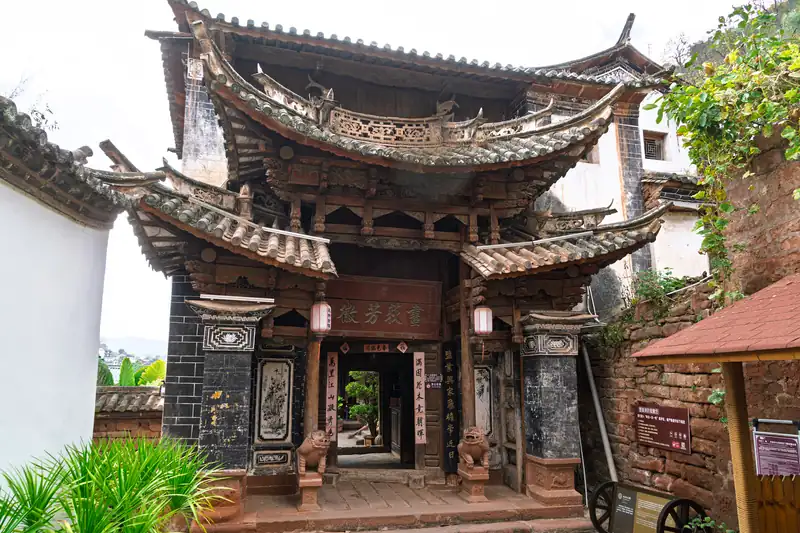
Jianchuan 剑川古城, the county town 40 minutes from Shaxi, keeps one of the most complete old-town layouts on the Tea Horse Road, with streets laid out more than 600 years ago. It's a working Bai town famous for woodcarving, and most visitors drive straight past it.
- Morning Have your driver drop you at the South Gate and walk this loop, about 2–3 hours on flagstones: the former home of Zhou Zhongyue 周钟岳故居, a Republican-era statesman → Jianchuan Museum 剑川博物馆 → Jianyang Tower 剑阳楼 → Baoguo Temple 报国寺 → the Ximen Street old houses 西门街古建筑群, a national heritage site → the Chen family courtyard 陈家大院 → Jiama Inn 甲马驿站, a Qing house now an inn → Jingfeng Park 景风公园, where a Guan Yu temple and a Confucian temple share one compound → Lingbao Pagoda 灵宝塔. Look at the doors as you go: families still write and paint their own couplets.
- Market day On Sundays the square below Jianyang Tower fills with vegetables, tools and hand-carved wood. If you want a carving, buy it here or from a workshop where you can see the carvers at work.
- Lunch Goat's-milk cheese 羊乳饼, cold pea jelly 豌豆凉粉 and a bowl of rice-flour threads 饵丝 in any busy local place near the old town.
- Afternoon Drive on to Lijiang, about 1.5 hours, or back to Dali, about 2–2.5 hours. Both have trains to Kunming: 3.5–4 hours from Lijiang (most arrive at Kunming Station), 2 hours from Dali.
Overnight: Lijiang or Dali, or a late train back to Kunming. See our Lijiang guide.
Driver cards
Show these to drivers, station staff and guesthouse owners. Each card says where you want to go in plain Chinese.
师傅,请送我去昆明站(北京路的老火车站),不是昆明南站。我要坐早上的7466次去黑井。
Kunming Station on Beijing Road, not Kunming South. I'm taking the morning 7466 to Heijing.
请送我到黑井古镇。
Please take me into Heijing old town.
请送我去黑井火车站,我要坐下午的7465次。
To Heijing station, for the afternoon 7465 train.
我在广通北站下车,换乘去大理的动车。
I'm getting off at Guangtong North to change to a bullet train to Dali.
请送我去巍山古城拱辰楼。
To Gongchen Tower in Weishan old town.
请送我去巍宝山,下午回古城。
To Weibao Mountain, back to the old town this afternoon.
我们先去东莲花村看一个小时,再去云龙县诺邓古村。
First Donglianhua village for an hour, then Nuodeng village in Yunlong county.
明天早上想去天然太极图观景台看晨雾,然后去沙溪。
Tomorrow morning: the tai chi river-bend viewpoint for the mist, then on to Shaxi.
请送我去剑川县沙溪古镇寺登街。
To Sideng Street, Shaxi old town, Jianchuan county.
请在剑川古城南门放我下车,两三个小时后在景风公园接我。
Drop me at the South Gate of Jianchuan old town, and pick me up at Jingfeng Park in two or three hours.
请送我去丽江站(火车站)。
To Lijiang railway station.
包车前请先说好总价,包括油费、过路费和您的吃住。我们不去购物店。
Before we hire the car, please agree the total price, including fuel, tolls and your meals and room. No shopping stops.
请少放辣椒,谢谢。
Less chili, please.
Costs
- Slow train, Kunming–Heijing: about ¥22.5. Add a bullet-train ticket from Guangtong North to Dali on Day 2 and a train from Lijiang or Dali at the end.
- Heijing: station cart ¥5–10; combined ticket about ¥25; courtyard guesthouse about ¥150–300 a night.
- Weishan, Nuodeng, Jianchuan: the old towns are free to walk. Some temples and courtyards charge small fees.
- Driver, Days 4–7: the biggest cost of the trip. Prices depend on the car and season and should include the driver's return. Get a written quote before you go.
- Food: cheap throughout. Breakfast noodles cost a few yuan, and a guesthouse dinner for two with ham or chicken is rarely a splurge.
Seasons
- October–May is best: dry, clear and mild. Heijing sits low in its valley and stays milder, while Shaxi and Jianchuan drop below freezing on some winter nights, and guesthouse heating can be basic. Pack layers.
- June–September is the rainy season. Mountain roads to Nuodeng and Shaxi can be hit by landslides, and Heijing is hot at midday. The upside is wild mushroom season.
- Festivals: The Torch Festival, in late July or early August depending on the lunar calendar, is celebrated across Chuxiong and in many Yi and Bai villages on this route. Near Shaxi, Bai singers gather at Shibaoshan for a song festival at the end of the seventh lunar month, usually late August or early September (about 28 August to 1 September in 2027). Dates change each year; see festivals.
- Avoid the first week of October and the Spring Festival holiday, when holiday crowds fill even the small towns and guesthouse prices jump.
What to skip
- A day trip to Nuodeng from Dali: it's 6–7 hours on the road for two hours in the village; sleep there or don't go.
- Qianshi Mountain 千狮山 in Jianchuan: a paid hillside of carved lions, not worth the ticket; spend the time in the old town.
- Yiren Old Town 彝人古镇 in Chuxiong: a modern tourist town with nightly dancing, not an old town; skip it on this route.
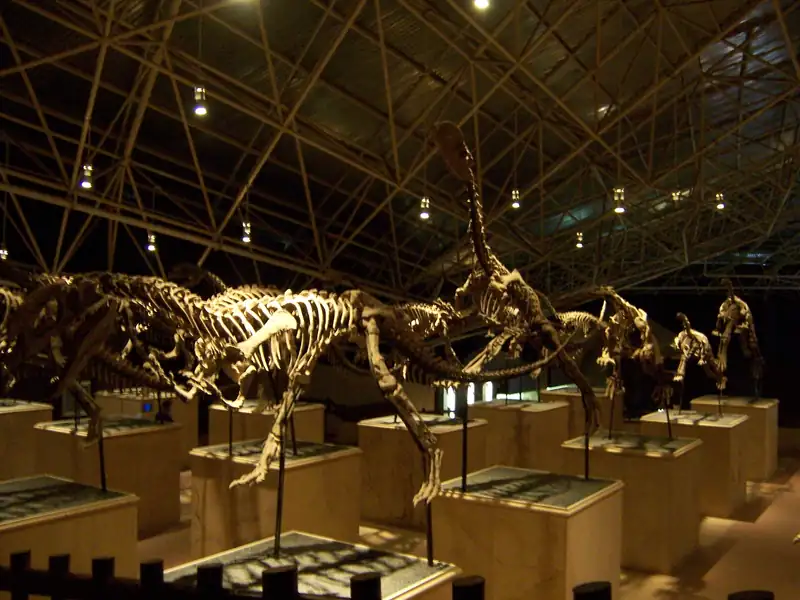
- Dinosaur Valley 世界恐龙谷 near Lufeng: a real fossil site, but about ¥120 and a detour off the rail line; only if you're traveling with dinosaur-mad kids.
- The second night in Shaxi: the one extra night on this route that we'd never cut.
Make it your own
- Skip the Day 2 trains: have a driver collect you in Heijing around 9 a.m. and drive straight to Weishan, about 4–5 hours. You lose Xiaguan's restaurants but gain an extra evening in Weishan.
- Add a day: a second night in Weishan for Weibao Mountain and the Yi village of Zhuomulang 啄木郎村, or a night in Fengyu 凤羽, a quiet old town in Eryuan county known for its morning mist, on the way from Shaxi toward Dali.
- Only 5 days? Drop Heijing: start with the bullet train from Kunming to Dali, then Weishan, Nuodeng, Shaxi and Jianchuan.
- Finish north: from Lijiang, carry on to Shangri-La on the classic route, or add Lugu Lake.

.jpg)