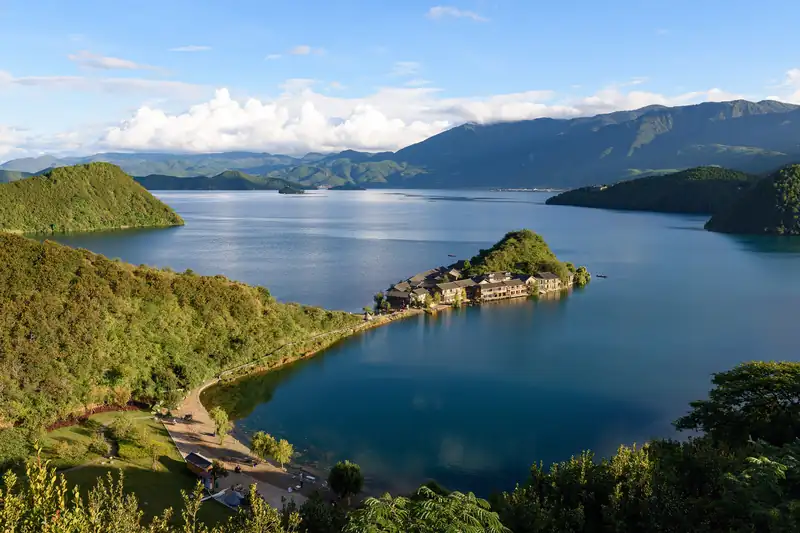
Lugu Lake is a deep, startlingly clear alpine lake straddling the Yunnan–Sichuan border at about 2,700 m. Its shores are home to the Mosuo, a small ethnic group whose families have traditionally been organized around the mother's line.
Getting here takes 4–5 hours by road from Lijiang, and the distance is part of the appeal. Few places in northwest Yunnan are recommended as insistently. Give it two nights at the very least.
Top things to do
Prices as of 2026; check before you go. Entry to the scenic area costs about ¥70.
The lake loop 泸沽湖环湖
The best way to see the whole lake is a chartered car with a driver, stopping at viewpoints, villages and beaches on both the Yunnan and Sichuan sides. Plan the route so you finish at Goddess Bay for sunset.
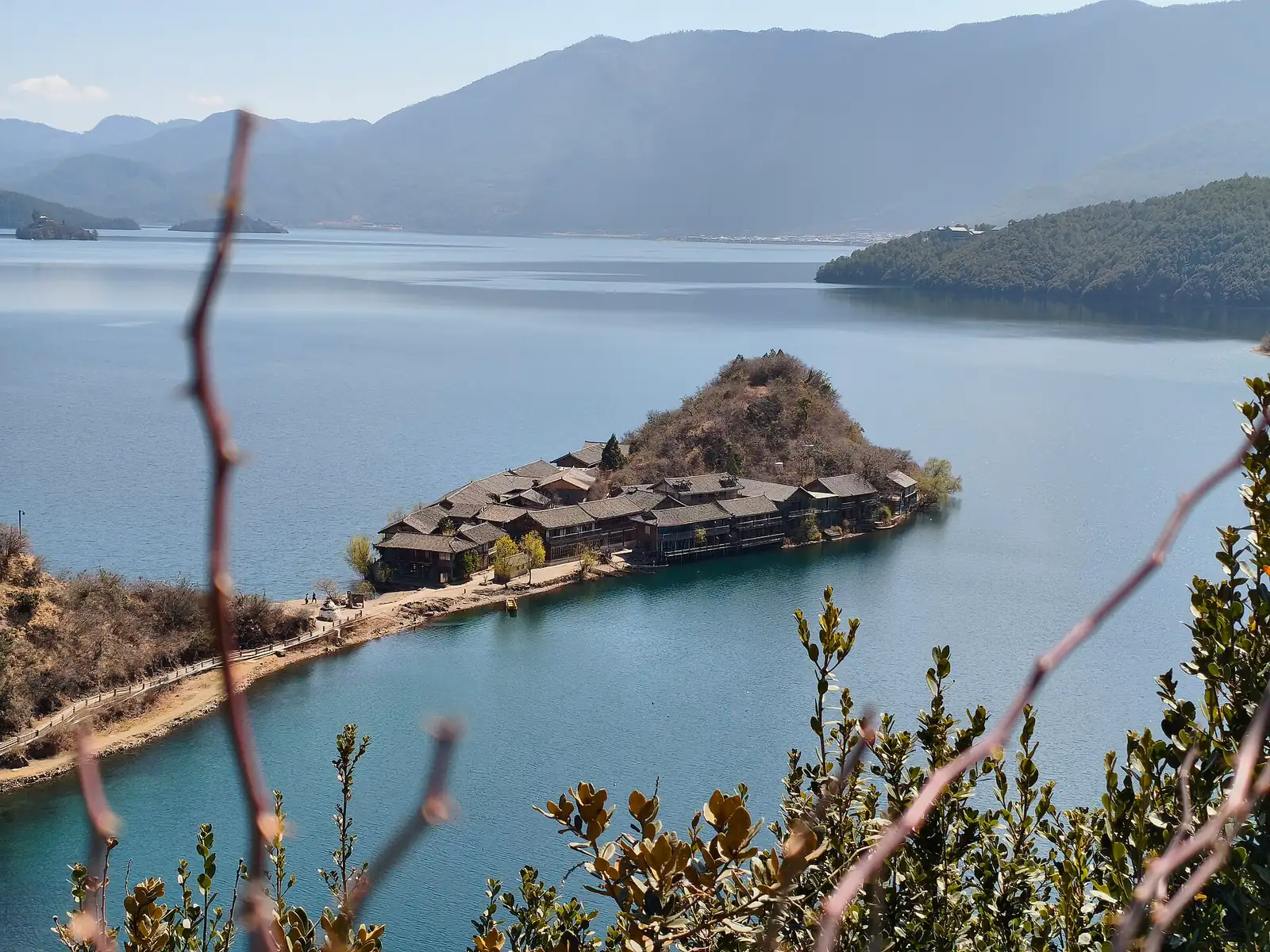
Lige Peninsula 里格半岛
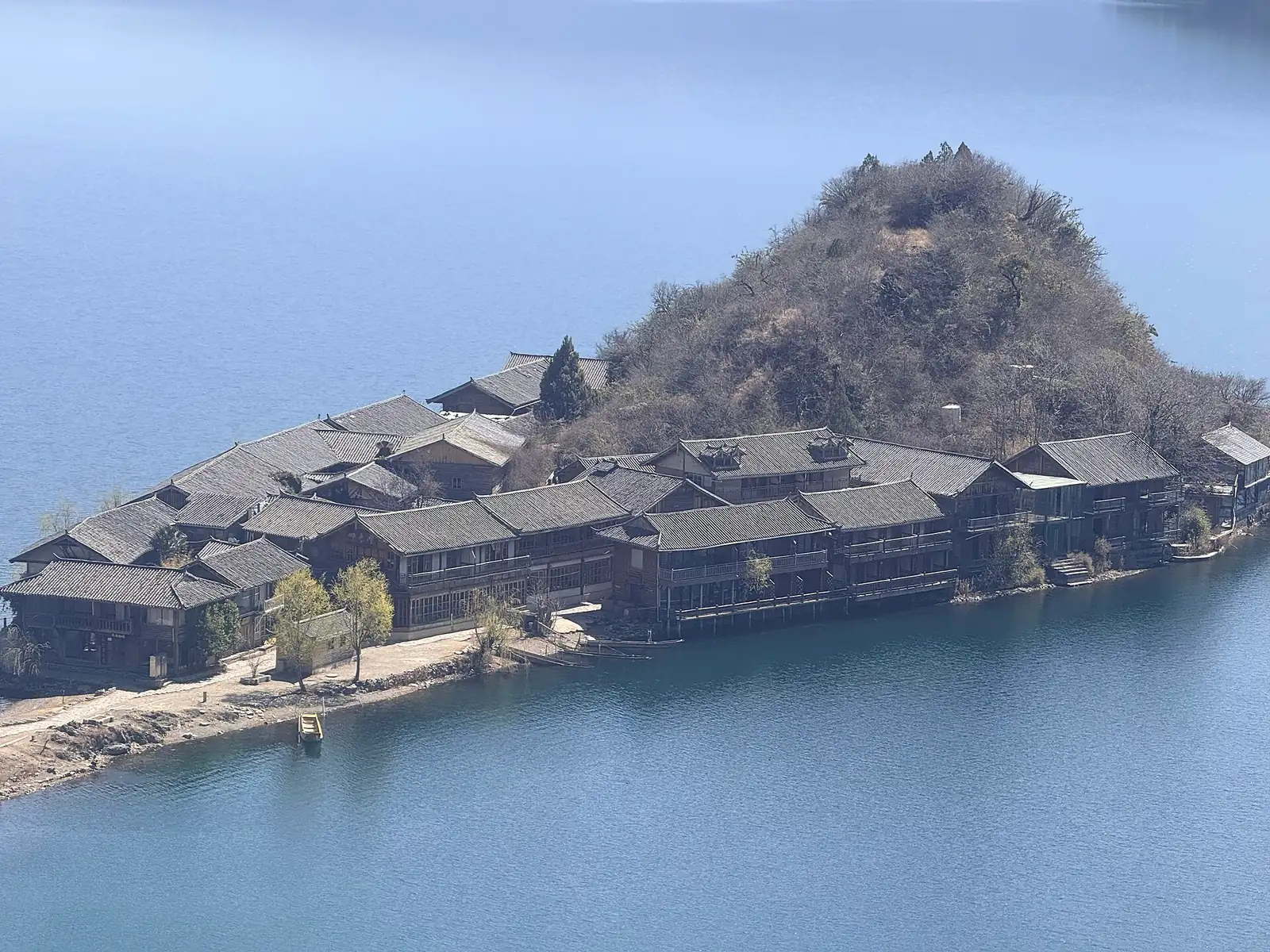
A small village on a tongue of land pushing into the lake. The viewpoint on the road above it gives the classic Lugu view of blue water, forested shore and the peninsula below.
Goddess Bay 女神湾
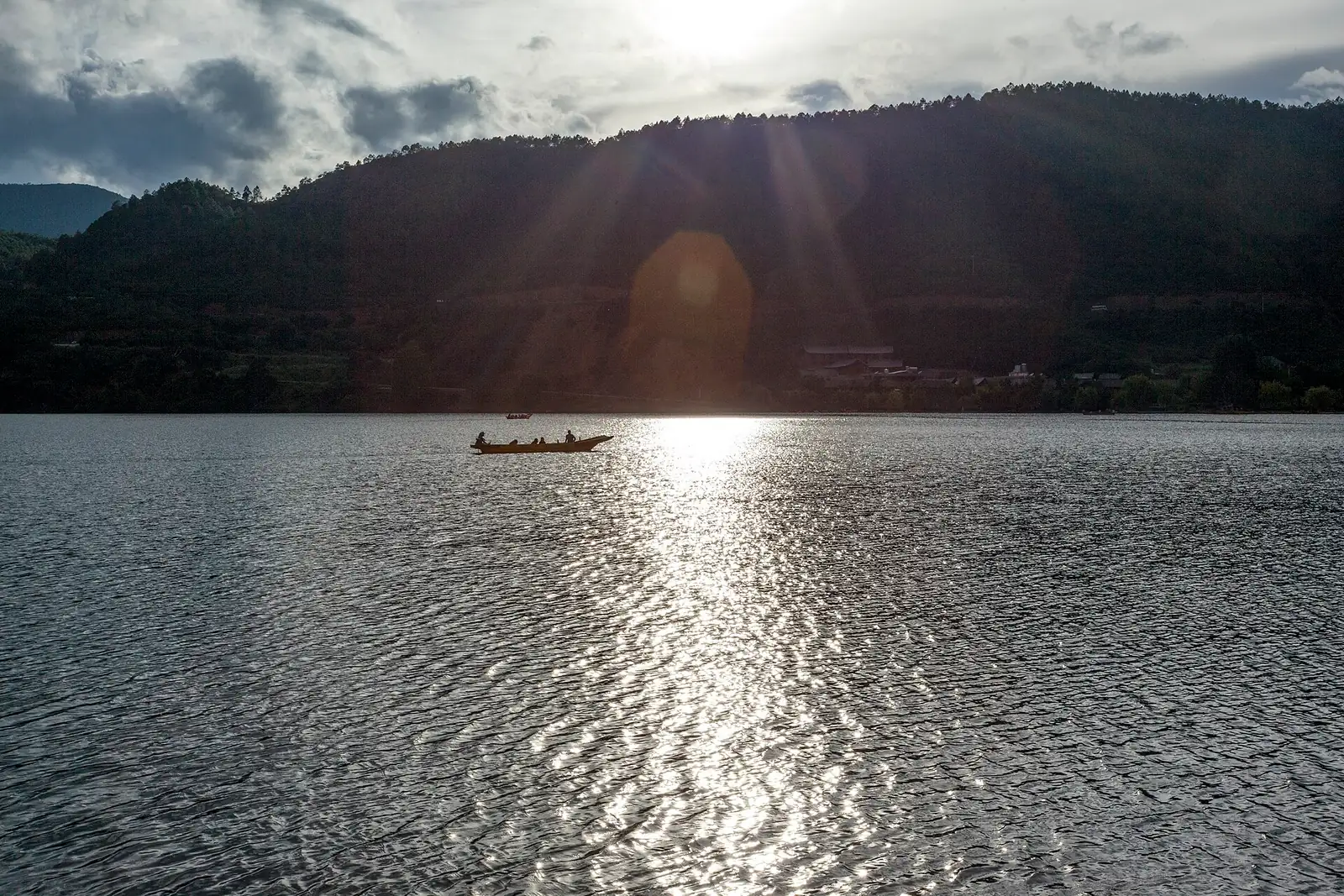
The lake's favorite sunset spot and the natural end point for a loop drive. In peak season, arrive early to claim a place along the shore.
Lovers' Beach 情人滩
A quiet stretch of shore for sunrise, often with mist lifting off the water. Arrange a driver the night before unless your guesthouse is close by.
Pig-trough boat ride 猪槽船
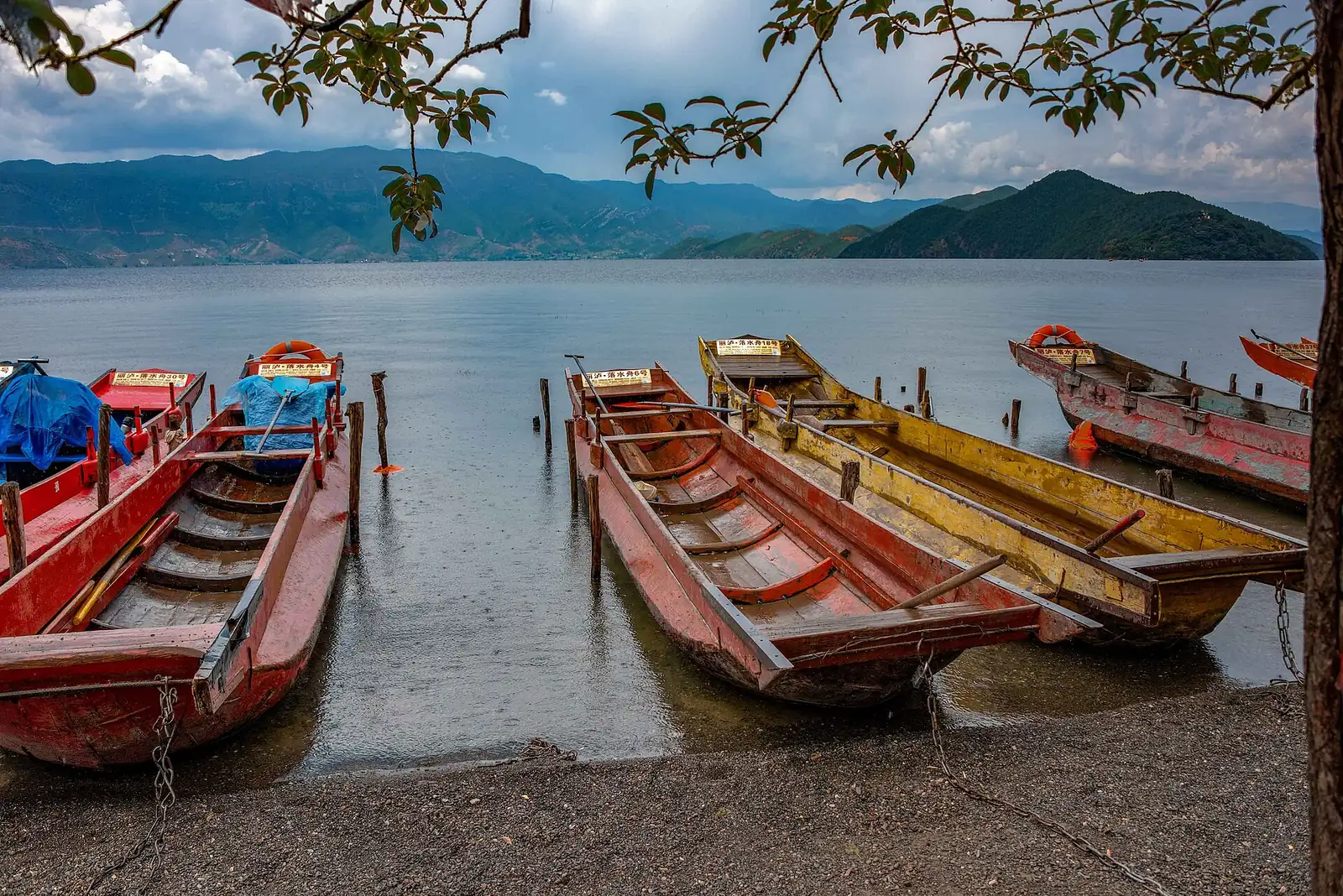
The traditional Mosuo boat is a long, narrow wooden hull named for its likeness to a feeding trough. Local boatmen and women row you out across the lake, and early morning, when the water is still, is the best time to go.
Mosuo Museum 摩梭人博物馆
A small museum explaining Mosuo family life, traditional houses, religion and the custom known as "walking marriage." Go on your first day; it makes everything else you see around the lake make sense.
Where to stay
- Daluoshui 大落水村: The main village on the Yunnan shore and the default choice for most visitors. It's right on the water, with the most guesthouses and restaurants, and it stays quiet at night. Best for first-timers and anyone without a car.
- Lige Peninsula: The scenic alternative, with rooms at the water's edge. It's smaller, with fewer places to eat, and you'll rely on a driver to get around.
Nights are cold for much of the year, so check that your room has heating or an electric blanket.
What to eat
Stone-pot fish 石锅鱼
Fish cooked at the table in a heavy stone pot that keeps the broth bubbling while you eat. It's the lake's signature meal.
Wild mushroom hotpot 菌子火锅
Fresh local mushrooms simmered in broth. Let the staff tell you when it's ready: wild mushrooms must be fully cooked.
Pipa pork 琵琶肉
A Mosuo specialty: a whole pig, deboned, salted, sewn up and pressed into the shape of a pipa lute, then cured for months. It's sliced and fried, and very rich.
Sulima wine 苏里玛酒
A mild homemade grain wine, often offered to guests. Go easy at this altitude.
The honest take
The lake lives up to the praise. Visitors rave about the water, the slow pace, the sunsets at Goddess Bay and waking up by the shore in Daluoshui.
Not everything around it does. The Grass Sea 草海 boardwalk on the Sichuan side gets lukewarm reviews, and the Walking-Marriage Bridge 走婚桥 that crosses it is mostly a crowded photo stop. We'd also skip the evening bonfire parties, which many reviews say aren't worth the time.
The other common regret is not enough time. After 4–5 hours on winding mountain roads, a one-night visit leaves you tired and rushed.
Getting there and around
- By bus: Buses leave from Lijiang's main bus station, take 4–5 hours and cost about ¥70 one way. Bring your passport to buy a ticket.
- By shared or private car: Faster and more flexible, with door-to-door pickup. There's also a direct tourist shuttle from Lijiang; ask your hotel about schedules.
- Around the lake: A chartered car for the loop runs about ¥200 per car for roughly 4.5 hours. Around Daluoshui, you can walk the shore.
- Moving on: Most travelers return to Lijiang, then take the train to Shangri-La.
.jpg)

.jpg)

