Water-Splashing Festival

April · Dai

Water-Splashing Festival

Dai New Year; fixed at 13–15 April in Xishuangbanna, mid-April in Dehong

Next: 13–15 Apr 2027 (Xishuangbanna); Dehong announced locally

泼水节

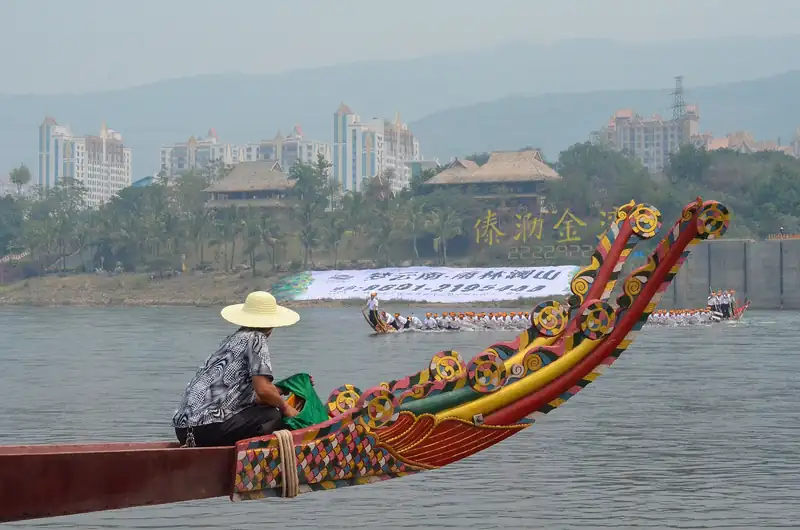
The Dai New Year is three days of ceremony that end in a town-wide water fight. In Jinghong the first day brings dragon-boat races on the Lancang (Mekong) River, the second a riverside market and a costumed parade, and on the last morning water is ritually drawn from the river before the splashing begins. Mangshi and Ruili in Dehong hold their own programs in mid-April, on dates announced locally each year.

How to join: In Jinghong, watch the boat races from the riverbank on the 13th, then on the 15th head for Water-Splashing Square 泼水广场 and the streets around it from late morning with a bucket or water pistol. Book rooms weeks ahead, as Jinghong prices rise for the festival. With children: the main splashing on the 15th soaks everyone, and the crowd around Water-Splashing Square gets very dense, so younger children may do better on a quieter side street or at a hotel's own splashing. Dress them in quick-dry clothes and strap sandals, agree a meeting point, and put a card with your phone number and hotel name in Chinese in each child's pocket. Can't make 13–15 April? The Dai Ethnic Park 傣族园 in Ganlanba stages splashing every day.

Etiquette: Water here is a blessing, so take a soaking with a smile, but don't splash monks, the elderly or anyone clearly not playing. Carry your phone and passport in a waterproof pouch.

Where: Xishuangbanna, Dehong
Spring Festival (Lunar New Year)

February · Nationwide

Spring Festival (Lunar New Year) 春节

Next: 6 Feb 2027

China's biggest holiday.

Where: Kunming, Dali, Lijiang, Xishuangbanna

Details

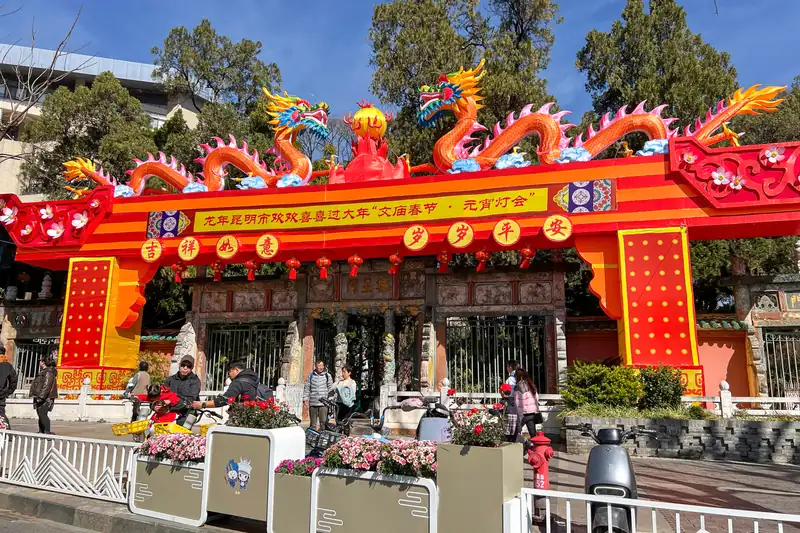
China's biggest holiday. In the run-up, Kunming's Dounan Flower Market 斗南花市 sells armfuls of blooms for the home, families gather on New Year's Eve for a reunion dinner, and in the first days of the year temples such as Yuantong Temple 圆通寺 fill with people burning incense for luck. Warm Xishuangbanna and the old towns of Dali and Lijiang are favorite holiday escapes for families from across China.

How to join: Visit a temple on the first or second morning of the year, walk a flower market, or ask to share a family's reunion dinner. Book trains and rooms well ahead: this is the busiest travel period of the year and prices climb sharply.

Etiquette: Wish people 'xin nian kuai le' (Happy New Year) and avoid talk of death or illness. Many small restaurants and shops close for the first three days.

Munao Zongge

February · Jingpo

Munao Zongge 目瑙纵歌

Next: About 19–21 Feb 2027 (main day 20 Feb); announced locally

The Jingpo people's great dance festival.

Where: Dehong

Details

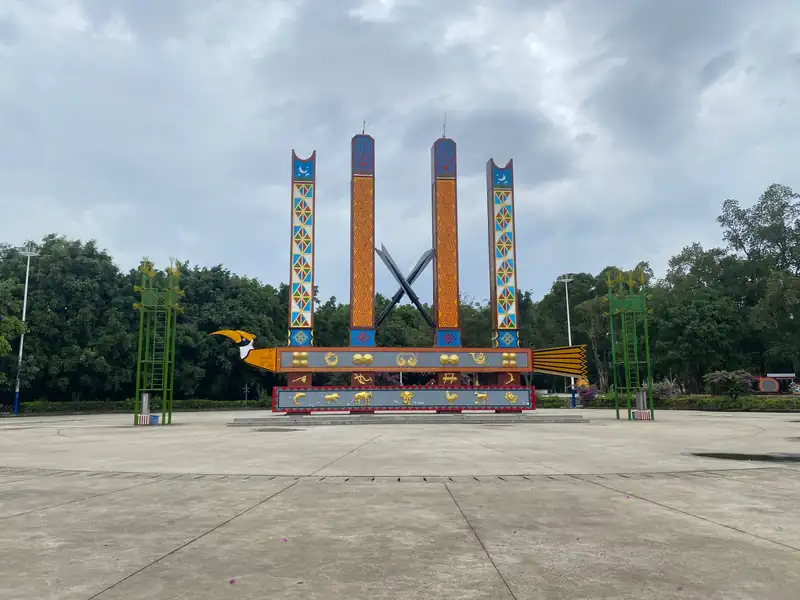
The Jingpo people's great dance festival. Thousands of dancers in silver-studded costumes follow ritual leaders in tall feathered headdresses, winding in long lines around the painted Munao posts to drums and gongs, in patterns said to recall the Jingpo's ancient migrations. Mangshi hosts the biggest gathering, and towns such as Yingjiang and Longchuan hold their own.

How to join: The main venue is the China Dehong Jingpo International Munao Zongge Cultural Park 中国德宏景颇族国际目瑙纵歌文化园 in Mangshi. Visitors are welcome to fall in at the back of a dance line once it moves; roads around the park are controlled on festival days, so plan to walk in.

Etiquette: Never cut across the lines or walk through the middle while the dance is on, and ask before photographing the leaders up close.

Spring tea season

March · Season

Spring tea season 春茶季

Next: Mar–Apr 2027

The first spring flush is the most prized tea of the year in Yunnan's Pu'er country.

Where: Pu'er, Xishuangbanna, Lincang

Details

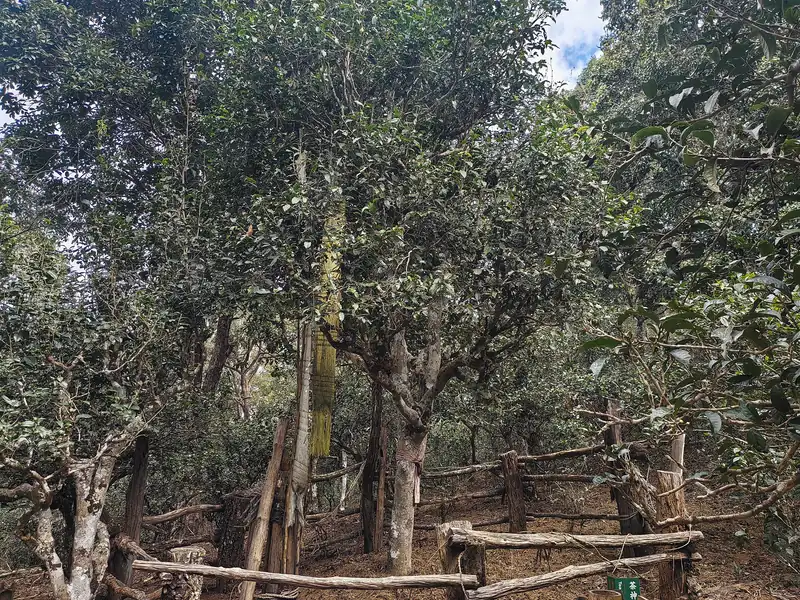
The first spring flush is the most prized tea of the year in Yunnan's Pu'er country. In the UNESCO-listed old tea forests of Jingmai Mountain 景迈山, around Menghai in Xishuangbanna and at Bingdao 冰岛 in Lincang, families pick from old trees in the morning, then wilt, pan-fire, roll and sun-dry the leaves by hand.

How to join: Stay in a Jingmai village such as Wengji 翁基 (Bulang) or Nuogan 糯干 (Dai) and ask your host whether you can join a morning's picking and watch the leaves being processed.

Etiquette: Only pick where your host shows you, since every tree belongs to a family. Tasting is part of any visit; buying is never obligatory.

WhatsApp us